Findhorn Foundation and CIFAL Findhorn
A Critical Statement by Kevin R. D. Shepherd
CONTENTS
3. Hypocrisy and Dissent within the Findhorn Foundation
4. Update 2020: CIFAL Business Shield Terminates
Acute drawbacks attend the recent UN certification of the Findhorn Foundation as a CIFAL centre for ecology. In addition to my own efforts to warn of negative and obscured factors, two analysts in Scotland made a strong attempt to communicate with UNITAR (United Nations Institute for Training and Research) in Geneva. One was a professional who sent to that headquarters the economic analysis of Foundation accounting known to the Financial Services Authority in London. No reply could be elicited from UNITAR, even though the economic analysis indicates "deceit or possible fraud." A process of evasion was at work.
Press reports about the new CIFAL centre stopped for several months after May 2006, indicating that the Findhorn Foundation were lying low in view of renewed criticisms which they feared might affect their plans. Then in late September 2006, the local press were suddenly reactivated by Foundation publicity spokesmen. The Forres Gazette (27/09/06) reported that a "deal" had just been signed in Geneva between UNITAR, the Findhorn Foundation, and Moray Council. All warnings and objections had been totally ignored. The desire of Moray Council for anticipated economic benefits was the facilitating agenda. [The agreement was signed on 22/09/2006 for the opening of the CIFAL Findhorn training centre operating under Company auspices]
The multi-million pound CIFAL centre is to be built at the Findhorn Foundation [according to press reports], a factor which will lend that organisation an exemplary, and even infallible, appearance to uninformed gaze. The awful truth is that the Findhorn Foundation continually suppresses details attesting a rather less than perfect performance. A more obvious fact is that their ecology is markedly compromised by a commercial programme selling alternative therapy and pseudomysticism at high prices.
Shortly before the "deal" was signed, my Second Letter to Tony Blair [dated 01/09/2006] was despatched, involving a strong complaint about the UN project in Moray. The reply was inadequate, and via the Department of Health, rerouted my complaint to the Scottish Executive, who had already proved unreliable and uncommunicative. It is no further use to send letters of this type, as bureaucracy has failed to cope with responsibilities. The larger fraternity of analysts might now study the data that struggled to negotiate new age and political evasionism.
Certain letters of mine attempted to inform bureaucracy, the medical world, academe, and the media, of discrepancies involved in "new spirituality" and the UN project in Moray. The prevalent inertia is not conducive to the public wellbeing. The medical profession may be digging their own grave by their indifference to the alternative scene. The media is an ostrich. Cambridge and Oxford universities (and similar institutions) are too aloof from reality to be socially effective. The new age underworld has been endorsed at the expense of all objections and critical data.
Kevin R. D. Shepherd
October 2006
Shortly after their elevation to CIFAL status, the Findhorn Foundation were reported to have given a misleading reply to the OSCR (Office of the Scottish Charity Regulator), an event which further places in question their misapplied NGO prerogative. This matter is encompassed in my First Letter to the OSCR, reproduced on this website.
21st November 2006
CIFAL Findhorn Ltd, an extension of the "Ecovillage" [meaning the Findhorn Foundation], is currently promoting the theme of a low ecological footprint. While the present writer would usually be enthusiastic over such trends, my mood is tempered by a knowledge of relevant events which are missing from Findhorn Foundation promotionalism. Having been a resident of Forres during the years 1990–1998 (and also having lived in Findhorn village during 1989–90), I am aware of complexities consigned to oblivion by the Foundation management.
A Scottish newspaper refers to a “Findhorn Foundation eco-village” claim to four wind turbines that contribute to being “a net exporter of electricity” (for many years there was only one wind turbine in operation, noted to be inadequate for supply). We are discussing a study of the "Ecovillage" wind power, organic food, and shared washing machines.
That study was undertaken by two local bodies related to the Findhorn Foundation, one of these being the project of Jonathan Dawson, who received “technical support” from the Stockholm Environment Institute (SEI), based at the University of York. SEI have gained repute as “footprinting” consultants. On the basis of the study presented, SEI states that the Foundation Ecovillage has the lowest carbon footprint in the UK. This footprint is said to be a fraction over half of the national average, meaning in terms of consumerism and related waste. Some explanations for this are shared resources, the wind park, local organic food, and low levels of commuting for motorist members of the community.
Foundation ecology spokesman Jonathan Dawson adds a significant proviso: “There remains much to be done to bring the footprint down to the truly sustainable levels that experts are saying are needed.” Honesty does emerge here; however, more realism is necessary in analysing the "ecovillage" situation. Dawson formulates the objective in terms of erecting more eco-houses and reducing the use by ecovillage residents (and guests) of international air flights, plus increasing the proportion of British guests (Pauline Taylor, “Praised for a small footprint,” The Northern Scot, April 20th, 2007).
The drawbacks posed by aircraft emissions were known to ecologists in the 1970s, the very same decade that the Findhorn Foundation changed gear from a UK-based new age community to a substantially overseas supported commune, one establishing a long tradition of dependence upon aircraft emissions. The nascent sense of ecology, nurtured by this community, very seldom paid close attention to aspects of the affluent polluter lifestyle which supported them.
A further article, in the same newspaper, disclosed that Moray Council have been busy encouraging the recent publication of a 36-page document on the theme of raising environmental awareness. This document was launched at the Findhorn Foundation in late April 2007 (Chris Saunderson, “Aiming for a greener future,” The Northern Scot, April 27th, 2007, p. 15). Yet once again, the background to the agenda arouses criticism. Moray Council were not formerly noted for an interest in ecology. The tactic of currying favour with the UN is viewed sceptically by those who are aware that Moray Council have ignored and suppressed objections to their reported “deal” with UNITAR and the Findhorn Foundation. Non-response to a lengthy circular is not proof of correct administrative approach (see About the Findhorn Foundation and UN).
Critical observers interpret such non-response in terms of an ecobiz incentive to factors such as overseas tourism via eco-hostile aircraft. The overseas guests currently supply over half of the input to Foundation programmes. UN (CIFAL) promotion at The Park (Findhorn) will mean more tourism, also more revenue for Moray Council.
Michael Shaw, appearing in a press photo, is described in the accompanying press report (Saunderson, The Northern Scot) as Chairman of Trustees for the Findhorn Foundation. What sort of responsibility menu might we expect here? The promotion neglects to state that Shaw has been visible as a key practitioner of Holotropic Breathwork™ as recently as 2005, being one of a team of “therapists” lacking all medical credentials, who have actively promoted the Grof trademark enterprise in defiance of medical warnings (First Letter to OSCR, point 2).
Another undeclared problem is that the publicity lure of a low ecological footprint, designed to attract more inland subscribers in Moray and elsewhere, will tend very much to act as bait for conversion to the many eccentric alternative ideologies and practices which are commercially rife at the Findhorn Foundation. Polluting aeroplane traffic might be considered harmless by comparison.
CIFAL Findhorn Ltd presents a marked ambiguity for assessors. Readers will notice my reference above to the “new age underworld,” meaning the close links of the "ecovillage" with dubious conceptual components paraded in commercial mysticism (or pseudomysticism). The unfortunate infrastructure of CIFAL Findhorn Ltd exhibits nearly half a century of close relation to commercial therapies, extremist therapies, occultism extending to the sale of Aleister Crowley literature and accessories, guruism extending to validation of Rajneesh and Tantric sex, plus yet other manifestations of doubtful relevance causing many confusions. To find ecology acting as a front for the discrepant interests is not impressive. The eco-activity (and ecobiz) cannot effectively be separated from the supporting trends in commercial mysticism.
The objectives expressed by Jonathan Dawson lack realistic appraisal of the overall situation. It is not merely the reduction of air flights, nor an increase in British guests, that should fill the horizon. The answer to basic problems is surely not more expensive "eco-houses," which have been observed to encourage commercial processes necessitating a substantial level of affluence to purchase these dwellings. There was more idealism in some of the vanished caravans once filling The Park. Ecology as an affluent pastime or investment is not a convincing rationale for sustainability, a very simplistic word in some vocabularies.
Many new age ideologies and practices have been imported to Moray via affluent passengers on aeroplane flights from America. The British contingent of dissidents who were censored in the 1990s, by the supposedly excelling community (i.e., the Findhorn Foundation), faced hostility from a less than benign hierarchy who notably included Americans, Canadians, and Germans. The censored dissident Kate Thomas has to date never been on an aeroplane and has never driven or owned a motor vehicle. That is a performance well below the average carbon footprint of the Findhorn Foundation "ecovillage."
One of the books suppressed by the Foundation management was able to quote from a partisan (but critical) article in One Earth (the Foundation magazine) which lamented the use of motor cars by the Foundation community. In 1995, Patsy Blackstock observed that in one community sector denoted, 74 adult residents in 51 residential caravans and houses had no less than 32 cars. Blackstock complained that this discrepancy was occurring in a community calling itself a model for sustainability. Further, the ratio discernible, of 1 car to 2.3 people, actually exceeded the British national average of 1 car to 3 people (Castro, Hypocrisy and Dissent within the Findhorn Foundation, 1996, p. 192).
The Findhorn Ecovillage study (of 2007) informs that motor cars are used by community residents, while asserting a low mileage factor amounting to just 6% of the national average. This does not seem to tally with the statistics provided by Blackstock over a decade earlier. The claim of sustainability is still in strong query (The Findhorn Foundation: Myth and Reality).
Stephen Castro was another dissident who did not own or drive a motor vehicle, and who never travelled on an aeroplane. His book was pronounced to be “not worthy of review” by one of the international jet set active in a Findhorn Foundation tactic of stigmatising dissidents (Shepherd, Pointed Observations, 2005, pp. 168ff.). The dissident book is reported here (from a web feature dating to 2007):
Hypocrisy and Dissent within the Findhorn Foundation
Towards a Sociology of a New Age Community
Stephen J. Castro
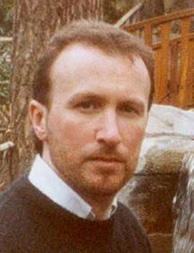
The author
A graphic report by an ex-member of the Findhorn Foundation about discrepancies in attitude and behaviour. Established since the 1960s in Moray, Scotland, the Foundation claimed to have created a "planetary village," and to be a leader in raising consciousness and producing exemplary new social models. Castro focuses upon events, correspondence, and media reports of 1992–5, and strongly questions the presumed role of "a community demonstrating a way of life in conscious co-operation with God." Chapter Six is an account of the Foundation patronage of Stanislav Grof’s Holotropic Breathwork, a trademark therapy which was opposed by Edinburgh University. The Foundation staff reacted to this book by suppressing it and vilifying the author. The book was considered by them to be unreadable. Six years later, in 2002 they placed a now notorious item on the internet which declared that Hypocrisy and Dissent was not worthy of review. Even their collaborator David Lorimer expressed (in private) a misgiving that they were here making a mistake.
Stephen Castro’s book had already received a favourable review in the journal of ICSA (International Cultic Studies Association), which is a far more accurate guide to the contents. More recently, that book was also saliently mentioned in Kevin Shepherd’s Letter of Complaint to David Lorimer and Letter to BBC Radio. Because of Foundation tactics, many onlookers were confused about Hypocrisy and Dissent, being led to believe that the contents must be wrong. In reality, this book is an accurate record of events, duly annotated and indexed.
CONTENTS: Holistic health centre causes scare; New Age narcissism; Friction with the local Scottish villagers; The Breathwork Problem; Critical Author suppressed; The "mafia cult"; An ill-fated college; Royal refusal for ecology conference. Notes, Appendix, Index.
"This informative book is recommended for the general public, as well as sociologists and mental health professionals. It is essential reading on the dark side of the human potential movement" — Cultic Studies Journal, Vol. 13 no. 2, 1996 (ICSA journal)
"The publication of Hypocrisy and Dissent met with an incredible degree of evasion from the Foundation, a fact which further emphasises what the author is complaining about. A responsible organisation would have quickly confronted the issues raised and healed the breach, as was in the power of the Foundation to accomplish with local residents." — Kevin Shepherd, Pointed Observations, p. 168
"Provides an important insight into the disparity between the professed ideals and the actual reality of a New Age community" — Scientific and Medical Network Review
"A sorry tale of how an idealistic group of ecologically-motivated people turned themselves into a typical cult" — The Christian Parapsychologist
Published in the UK, 1996, by New Media Books
ISBN-13: 978-0952688105 ISBN-10: 0952688107
240 + xv pages
UPDATE 2020: CIFAL Business Shield Terminates
CIFAL Findhorn quickly gained company status in September 2006. Five years later, in 2011, CIFAL Findhorn Ltd changed name to CIFAL Scotland Ltd (see Company Information). A national prerogative sounded much more impressive than a purely local activity. This CIFAL business continued to function from The Park, Findhorn. A rural caravan park had become the Findhorn Foundation centre of lucrative "holistic" therapy, advertised internationally with extravagant flourishes. The auspices of CIFAL served to shield the Findhorn Foundation from criticism. By 2016, those auspices were eroding as a consequence of CIFAL director resignations.
The multi-million pound CIFAL centre transpired to be a myth of Findhorn Foundation propaganda, which has for many years excelled in exaggeration.
The underlying purport of the situation is that UNITAR, based in Geneva, ignored all warnings. UNITAR permitted the CIFAL branch in Britain to occupy a contested site, moreover to acquire business profile in a very controversial sector where the economic record showed pitfalls. The evasive Moray Council desired economic benefits from tourism. The public prospect was high charges for sensational "workshops" and a confusing jargon of "new spirituality."
The superficial "psychobabble" was not in favour elsewhere. Therapy lore maintained that all criticism is totally subjective and can therefore be dismissed. This banal belief meant that the Foundation staff, and the affiliated therapists, could effectively do anything they wanted. No process of accountability was recognised.
The CIFAL business project leaders included prominent Findhorn Foundation staff, such as (James) Michael Shaw, a senior Trustee who had quite recently sponsored the reckless and discredited Holotropic Breathwork (HB). Shaw was a practitioner of HB, ignoring earlier warnings from Edinburgh University about hyperventilation, an extremist practice imposed upon gullible clients by unlicensed therapists. In 2009, Shaw became a Director of CIFAL Findhorn Ltd, thereafter maintaining his new prestige role for a decade. Proof of his expertise in ecology was elusive. The Foundation Trustees, including Shaw, had proved totally evasive about dissident complaints, attributing all disagreement with Foundation policy to personal subjectivity (e.g., Castro 1996:231). Accordingly, they did not want to hear any details of complaint (ibid). The convenience was absolute.
The factor of CIFAL auspices at The Park was opportunistically interpreted, by Moray Council officials, as proof of good conduct on the part of the Foundation. Crucial data to the contrary was ignored by a superficial process of assumption. In 2018, CIFAL Scotland Ltd terminated at Findhorn (CIFAL Scotland does not appear in recent CIFAL centre listings of UNITAR). For twelve years, this CIFAL branch at Findhorn effectively neutralised relevant complaint, being lauded by Moray Council and supported economically by the Scottish Government. The BBC were another accomplice.
CIFAL Scotland Ltd (like the predecessor) was very closely related to Findhorn Foundation precincts. According to some indications, UNITAR lost serious interest in the Findhorn Foundation after a few years. The official address of CIFAL Scotland was not UNITAR, contrary to some mistaken beliefs. In June 2013, secretary John C. Lowe signed an official form for a new registered address of CIFAL Scotland Ltd as The Park, Findhorn. The former short-lived address was Moray Council Offices, High Street, Elgin. That address had also undergone transition from Horizon Scotland Forres Enterprise Park.
Not only UNITAR, but also Moray Council, lost interest in the Findhorn eco-project, as events abundantly demonstrated. The Findhorn Foundation was a focus for alternative therapy above all else. Clients were not seriously interested in ecology, only in commercial workshops designed to make them feel "healed" or "transformed."
The Park was a scenario of proliferating business projects and companies, plus numerous commercial workshops and courses in "holistic" activity. Critics viewed this site as an exercise in holistic pretension and profit-making. The high prices stipulated in "workshops" and courses were notorious. This site has for long been advertised as "a model for the future," also "a charitable trust."
The commercial status of CIFAL Scotland Ltd did not pass unquestioned by observers lacking the power to intervene. The fact that CIFAL was a company, active on the Foundation site, tended to endorse the general entrepreneurial activity at The Park. However, the CIFAL company was committed to ecological education, not alternative therapy. After termination of CIFAL Scotland Ltd, reports appeared of suicides at the Findhorn Foundation. The dead persons evidently did not feel that the giant wave of commercial holistic healing (endorsed by CIFAL to the hilt) had solved all problems. A private report surfaced of a hospital in Moray where a number of Foundation clients had been treated for psychological stresses over the years. All details had been suppressed.
An early officer of CIFAL Findhorn Ltd was John C. Lowe, appointed in 2006 as Secretary. He retained the role of Company Secretary during the phase of CIFAL Scotland Ltd. Exactly the same company is denoted by these two different names (which have confused some people). Lowe was a prominent member of the Findhorn Foundation. He was also active in a long term role as Secretary in related Findhorn Foundation enterprises. These included Findhorn Wind Park Ltd, Duneland Ltd, and New Findhorn Directions Ltd. In another capacity, Lowe was the acting Foundation Secretary in correspondence with a British solicitor dating to 2009. I am acquainted with the details because the legal complaint he deviously countered was launched by my mother. Lowe (and a managerial colleague) denied the former Foundation membership of Jean Shepherd (Denial of Membership in Foundation Ruse). That memorable deceit is now fairly well known. This was the discrepant standard of CIFAL auspices in Moray, a Findhorn Foundation facade concealing errors of magnitude.
Some other errors and discrepancies are mentioned at Findhorn Foundation Problems and Letter to Robert Walter MP. A more extensive account is Findhorn Foundation commercial mysticism. For a short read commentary, see Findhorn Foundation Discrepancies.
Kevin R. D. Shepherd
November 2020, modified March 2021