Scientific and Medical Network and the Findhorn Foundation
by Kate Thomas
Contents
Foreword
1. Introduction: Harsh Reality at the Findhorn Foundation
2. The SMN Dorset Group
3. The Kundalini Issue and Contrasting Studies
4. The SMN Annual General Meeting, 2001
5. The SMN Avoidance of an Ethical Issue
6. Contact with SMN Academics
7. My Resignation from the SMN
8. Subsequent Developments
SMN is the abbreviation for the Scientific and Medical Network, a British “alternative” organisation. This report by Kate Thomas (Jean Shepherd) reveals that the official title for activities is misleading, in that popular trends and concepts associated with the “new age” media were salient influences upon the SMN. The criteria employed in this organisation were not scientific or medical, but instead basically “nonjudgmental” according to the relativist attitude popular in alternative therapy. The SMN held conferences associated with academic speakers, and published a journal exhibiting diverse contents not always appealing to scientists or medics. The membership substantially consisted of alternative therapists and related categories, whose entries in the SMN members’ directory could raise the eyebrows of scientific analysts.
Jean Shepherd (1928-2017) used the author name of Kate Thomas. A non-academic member of the SMN, she was unusually principled in her outlook, being a critic of alternative therapy. Two of the entities she frequently mentions in her account are David Lorimer and Dr. Peter Fenwick. The former was Programme Director of the SMN and President of the Wrekin Trust (a related alternative organisation likewise claiming an affinity with spirituality). Dr. Fenwick, a prominent member of the SMN, habitually deferred to Lorimer, whom Thomas found to be an uncontested primary influence.
In chapter 1, Thomas describes problematic attitudes which she encountered at the Findhorn Foundation. This situation relates to subsequent developments within the SMN, who are closely associated with the Findhorn Foundation.
Chapter 2 describes typical "new age" concepts that were found in a regional branch of the SMN, concepts which admit of serious problems, especially when dubbed as scientific and medical. Chapter 3 has been included for the purpose of profiling anomalies in the SMN projection of kundalini, a deceptive subject associated with antique Indian religious texts exhibiting much symbolism. This subject has become a popular (and exploitive) new age doctrine in America and Europe, existing in variants which exhibit pronounced deficiencies and absurdities. Chapter 3 attests that the accredited SMN exponent of kundalini was at a disadvantage with regard to a critical version of this subject then recently published, also with further critical views expressed in the correspondence reproduced.
The confrontation extends into chapter 4, describing events at the SMN Annual General Meeting in 2001. These events attest “workshop” affinities of the SMN, which are not scientific or medical, instead largely deriving from the commercial programme of the Esalen Institute in California (the major “new age” inspiration). The issue of funding is also probed, one which arouses strong questions as to the validity of funding on the part of the John Templeton Foundation for a presumably “scientific and medical” project.
Chapter 5 describes continuing drawbacks demonstrated by the Findhorn Foundation, drawbacks that were effectively sanctioned by the SMN in what amounts to a memorable neglect of ethical considerations. Chapter 6 narrates the author’s contact with SMN academics, amongst other matters detailing the lack of due attention given to such a controversial issue as the promotion of LSD therapy in the SMN journal Network. Thomas was the only member of the SMN to oppose this promotion in print (with the sole exception of a Jungian complaint lacking the same accents). That LSD issue was one of the reasons for the author’s resignation in 2004, an event described in chapter 7.
Aftermath occurrences are mentioned in chapter 8, including the very questionable haven given to Grof LSD therapy on the SMN website, a development occurring at the expense of the contributions by Thomas which had appeared in the SMN journal (Neglected Papers Against Grof Therapy). The account ends with an extension relating to the Wrekin Trust University for Spirit Forum (or Forum for Spiritual Education), a failed project strongly associated with David Lorimer. That project is here further contradicted by Kevin R. D. Shepherd in a letter (dated March 2007) addressing institutional errors and deficiencies. This epistle serves to underline certain emphases in Shepherd’s earlier Letter of Complaint to David Lorimer.
During the last years of her life, Kate Thomas (Jean Shepherd) chose a retiring lifestyle, avoiding the alternative media. She had no further contact with the SMN or related organisations. Her private comments could be very critical. She declined an offer of video promotion, which she considered to be a distraction of the persona vogue now causing enormous confusion online. She maintained that the popular "spirituality" channels are the antithesis of genuine mysticism. She remained non-denominational in her approach. Her critical book on kundalini has been considered unique by close analysts.
Chapter numbers 1-8 should not be confused with the section headings 1-37, supplied here for more convenient reading.
CONTENTS KEY
- Disappointment with Eileen Caddy
- Findhorn Foundation Trustees a Problem
- Ruthless Exclusionism
- Hostility of Alex Walker
- Economics, NGO Status, and Reconciliation Farce
- Myth of Conflict Resolution
- Confused New Age Teachings
- Gaunt's Hall and Findhorn Foundation Anomalies
- Spiritual Emergence Up the Spine
- Scientists and the Lunatic Fringe
- The Economic Strategy of David Lorimer
- A Being from Another Planet
- Malcolm Hollick and Findhorn College
- Aspects of Nonjudgmentalism
- Alternative Therapy Manipulations
- Talkers and Dancers
- The Members Forum
- Future Policy Discussion
- An Esoteric Monologue
- Malcolm Hollick and Eileen Caddy Ignore Principle
- Stephen Castro Confronts David Lorimer
- Conference on Kundalini
- Hertha Larive and Julian Candy
- Grof LSD Therapy a Major Issue
- The Alister Hardy Trust and Chris Clarke
- Disbelieving Bache and Encounter with neo-Advaita
- Max Payne and Research
- Neo-Advaita Guru Andrew Cohen in Dispute
- Blocked by David Lorimer and Mike King
- A Counter to SMN Folly
- Correspondence with Dr. Peter Fenwick
- Prince Charles and the SMN
- Christopher Bache and the SMN Website
- Janice Dolley and the USF Sanction of Drug Use
- Letter of Complaint to David Lorimer
- Wrekin Forum (USF) Seeks Donations
- Letter of Kevin Shepherd to Janice Dolley
1. Introduction: Harsh Reality at the Findhorn Foundation
I became an associate member of the Scientific and Medical Network (SMN) in 1992, but did not directly participate in their activities until the year 2000, when I moved from Scotland to Dorset, at which time I became a full member. A related organisation was the Wrekin Trust, associated with Sir George Trevelyan (d.1996), with whom I was in correspondence at the end of his life. I had met him briefly at an earlier date. During the early 1980s, I attended several of the “Mystics and Scientists” conferences that were Wrekin events, at which I had encountered the physicist David Bohm and others.
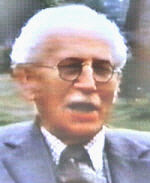 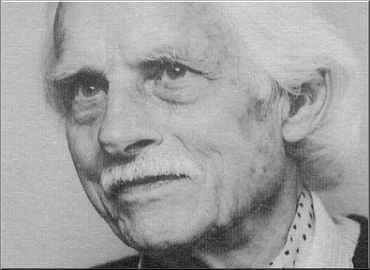 l to r: Alister Hardy, George Trevelyan |
I was also in correspondence with Sir Alister Hardy (d.1985), the scientist who founded the Alister Hardy Trust (or Society), which is an organisation noted for the study of religion and research into religious experiences. I was later a member of that organisation for a number of years. During the 1980s, I was also affiliated to the Institute for Cultural Research, associated with Idries Shah (d.1996). I subsequently joined the Findhorn Foundation in Scotland, where I quickly found myself in conflict with the Holotropic Breathwork of Dr. Stanislav Grof. That dangerous exercise, imported from Esalen, was sponsored by the Foundation director Craig Gibsone. The conflict of values, commencing in 1989, resulted in my expulsion from the Foundation without any due democratic hearing.
I have included a critical report of the Foundation at the end of my autobiography (The Destiny Challenge, 1992), which that organisation suppressed and vilified. I was informed by a solicitor that I had a case against the Foundation rather than the other way round. Yet I chose not to use the legal expedient, being instead prepared to conciliate if due consideration was shown. The continuing lack of that consideration was documented in two further books (Stephen Castro, Hypocrisy and Dissent within the Findhorn Foundation, Forres, 1996; Kevin R. D. Shepherd, Pointed Observations, Dorchester, 2005, part five).
1. Disappointment with Eileen Caddy
I was greatly disappointed with Eileen Caddy (1917–2006), the co-founder and major figurehead of the Foundation. I met her many times, and found her to be very ineffective. She was not anything of a leader, having in fact taken a background position that was merely used by the management as a convenient symbol of “spirituality.” She admitted to me that the management took no notice of her views, and that she had long ceased to complain. This compliance was appalling; she had turned her back upon ethical considerations. Visitors believed in her leadership, which did not in fact exist. She was simply a puppet figure for the whims of Craig Gibsone and other officials. Certain other defects in her attitude were visible. She was treacherous, siding with blatant injustices rather than risk confrontation with those in power. Some of her beliefs were extremely muddled. These had been passed on to the membership with grievous consequences of confusion.
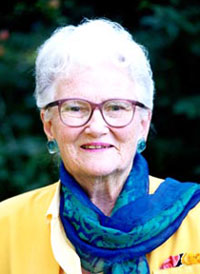 Eileen Caddy |
Amongst many other details, Stephen Castro’s book Hypocrisy and Dissent describes how Eileen Caddy told one of my acquaintances that I did not deserve a hearing – and further, that events did not have to be democratic, as she knew that God watched over the Findhorn Foundation (Castro 1996:151). This conversation occurred in 1994. The same young man (Howard Whiteson) had also approached Lady Diana Whitmore, a Trustee of the Findhorn Foundation, whose reply by letter was similarly dismissive (Castro 1996:151–2). Lady Whitmore was also contacted by my friend Jill Rathbone, and failed to reply. I had been told that she was a former staff member of the Esalen Institute, whose practices did not rise in my estimation as a consequence.
2. Findhorn Foundation Trustees a Problem
Early in 1994, I was expelled from Open Community membership of the Foundation without warning, and was consistently denied any hearing. This denial had already occurred at a former period when I was blocked from renewing my Associate membership [by Eric Franciscus]. The political manipulation within this organisation was acute and oppressive. Key staff members, not the generality, were to blame.
The major obstructions were here Loren Stewart (an American) and Judy Buhler-McAllister (a Canadian, since known as Judy McAllister). The mood of hostility was infectious. On my behalf, Stephen Castro sent a circular letter to the Findhorn Foundation Trustees, outlining what had happened and requesting that they should examine all the extensive correspondence relating to myself and Gemma Whibley, then accordingly pursue a democratic internal inquiry. The Trustees included Lady Diana Whitmore, Mary Inglis, Nick Rose, Francois Duquesne, Michael Shaw (a partisan of Holotropic Breathwork), and Sabrina Dearborn (wife of the workshop entrepreneur William Bloom).
Only Mary Inglis replied to that very relevant letter, in a brief dismissive communication dated June 1994. She stated the unqualified support of the Trustees for the Foundation Director Judy Buhler-McAllister (Castro 1996:230–2), whose extreme hostility towards me had received no due explanation. I telephoned Trustee Nick Rose, who was dismissive to the point of acute hostility. “He refused to let me tell him what had actually happened, asserting that the problem was my own subjectivity, and ignoring all the documentation and the rights and wrongs of the matter” (Castro 1996:231).
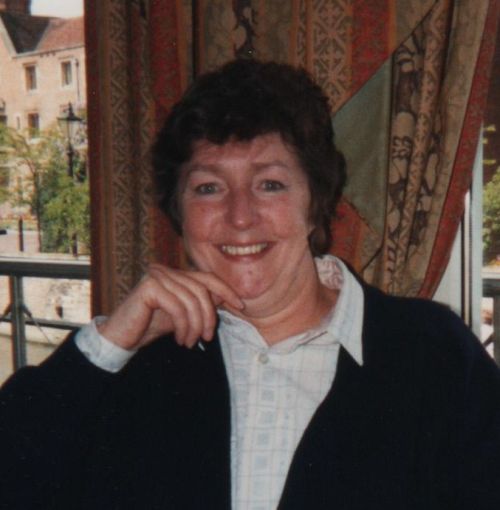 Jill Rathbone |
The Trustees had no conscience, and were the exact opposite of what they promoted themselves to be. They were similarly dismissive of Jill Rathbone’s petition to them. Each of them pointedly made no reply. This negative gesture was of grave significance in view of Jill’s court case, during which the Moray Steiner School were revealed as collaborators with the Findhorn Foundation hostility. What happened here was that the Foundation influenced another organisation into rescinding an employment contract (of Jill Rathbone). In so doing, the Foundation precipitated the Steiner School into legal and economic trouble (Castro 1996:154ff).
Buhler-McAllister effectively supported the defamation of myself created by Eric Franciscus, a domineering staff member who spoke against me without bothering to converse with me or check the facts. This man was in charge of “Education.” Franciscus was known to be a partisan of Sathya Sai Baba, whose ashram in India he had visited. The Findhorn Foundation was prone to strong influences from alternative therapy and various questionable cults and organisations. They were anything but a democratic community, as I found to my cost. They were capable of extreme evasion and duplicity in relation to myself and my friends.
In subsequent years, the only two people in the Findhorn Foundation who would respond to my case were Ken Hills and the late Jeremy Slocombe. Jeremy was superficial in his sympathy, tending to regard his role as that of a political intermediary. Ken Hills was more ethical, though still inclined to be evasive about some details. However, Ken did express concern at what the Foundation officials had been doing, and eventually agreed (in 1998) to pursue the matter of my application for Open Community membership.
This situation only came about because I was misled by another staff member about the situation then current. Judy Buhler-McAllister had lost her position as Director. Something had obviously gone wrong. I was told that she now had no position except that of Game Focaliser, which did not rank high in the status stakes. Everyone now knew that mismanagement had occurred during her period of Directorship. The management team were obliged to resign the year before in a mood of acute embarrassment, after frantic efforts were made to justify the train of events. UN patronage was a desired goal. Adverse publicity had arisen for the Findhorn Foundation because of the harsh manner in which Judy had dealt with myself and my supporters. The staff informant who spoke to me implied that Judy’s actions had rebounded upon her. The informant believed that Judy was now viewed as a problem because of her association with economic deficits.
I had tended to interpret the informant’s comments as being indicative of the new official angle on Judy. This angle proved deceptive, because of the new management team who gained power. Judy had certainly provoked adverse publicity, including the accusation of mafia tactics made in one local newspaper (this in relation to the Jill Rathbone case, which was very serious). I was at first prepared to request a renewal of Open Community membership after speaking to the informant.
In October 1998, I learned that Judy had been elevated to the position of Special Advisor to the Trustees, who were still mainly the same people as in earlier years. I then knew that there would be no hope of reconciliation. Judy had consistently refused any contact with me or any attempt at reconciliation. Her sense of total and ruthless exclusionism converged with the earlier tactics of Eric Franciscus and Loren Stewart. I knew that I could get nowhere with her, and would instead reap ill-health because of the stresses involved.
Accordingly I wrote to Ken Hills, in a letter dated 14 October 1998, saying that I had been misinformed about events, and that in view of Judy’s continuing (and well known) hostility, I wished to withdraw my request for Open Community membership. In this letter I also mentioned the hostile attitude of Alex Walker, who had much influence within the Foundation. This man had effectively adopted the initial aggression of Eric Franciscus and Loren Stewart (who both eventually departed from the Foundation).
Significantly, Alex Walker was a member of the new management team. He maintained his inflexible attitude in various ways, even writing to Jill Rathbone a very pointed letter (dated 27/12/1998) which totally evaded any lifting of the official ban upon her attending Foundation programmes. That brief letter is reproduced here in full:
Dear Ms. Rathbone,
Thank you for your letter requesting that the Foundation lift the ban on your attending programmes. As, to my knowledge, we have never met, I thought it would be useful if I introduced myself in person. Imagine then my dismay to discover that a copy of Stephen Castro’s book was on sale in your shop window!
I can only assume that you have changed your mind and no longer wish to have an association with the Foundation.
Yours sincerely
Alex Walker
This is an example of the Findhorn Foundation hostility towards Stephen Castro’s well documented book. Walker was one of those who hated Stephen for telling the truth about many events which the Foundation consigned to oblivion. Jill Rathbone had opened a shop in Forres to earn her living after being denied her promised employment by the Moray Steiner School, who had been influenced adversely by Foundation officials like Walker and Buhler-McAllister. As her own case was documented in Stephen Castro’s book, Jill naturally stocked some copies of that work to inform the local townspeople in Forres as to what had really happened. This was a crime in the eyes of Foundation officials, who ignored all the details of the court case against the Moray Steiner School. They contrived a denial of the Castro book, or rather an evasion of the contents, which were taboo to mention.
Another official, Roger Doudna, interrogated Jill on one occasion as though she was the guilty party in the “hot seat” of Foundation disapproval. The Foundation could never be guilty, according to his argument (Doudna was an American). At the time Jill was trying to conciliate, but concluded that the “mafia” tactics were beyond endurance. She later married a Scot who had no sympathy with Findhorn Foundation pseudomysticism and bullying tactics against females.
Eric Franciscus had been the person mostly responsible for the slander invented against me in the early 1990s. Alex Walker had commenced his own personal campaign of vilification, apparently because he was mildly criticised in a fleeting reference made in my autobiography. Walker supported Holotropic Breathwork, maintaining that the Foundation was demonstrating the "perennial philosophy." He was also one of those officials who favoured the glib theme of unconditional love, which is a shallow myth at the Foundation. He never bothered to ask me any questions, his judgment being final. He even denied in the local press that I had ever been a member of the Foundation. I was obliged to contradict this misreporting in the correspondence column of the Forres Gazette, supplying the information that I had been an Associate Member for one full year in 1989–90, while visiting the Foundation almost daily from my home in Findhorn village.
I also mentioned in that letter how Foundation staff had sent my unread book to a solicitor, some paragraphs in chapter 14 having been marked in red for his attention. This was the only chapter of my book The Destiny Challenge that they were concerned with, the reason being that it described my contact with their organisation. Their intention was to have my book suspended from circulation (Castro 1996:15–16). Their solicitor was unable to comply with the extreme request. A Guardian journalist came forward to investigate matters, passing a negative verdict on what he found at the Foundation. To prove the relevance of chapter 14, I was obliged to circulate this as an independent document to interested local persons, including medical doctors, who were very interested to find out the nature of events. Many Scottish locals were suspicious of the Foundation and their form of publicity.
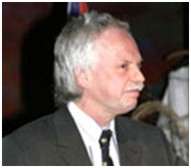  l to r: Alex Walker, Craig Gibsone |
Alex Walker had been one of those acting as a consultant to the Findhorn Foundation, advising on economic and related matters. He supported the new commercial policy of Craig Gibsone, the practitioner of Holotropic Breathwork (a supposed therapy launched by Stanislav Grof). Gibsone had been the Foundation Director until 1991; he wanted to establish improved salaries for the staff. The Breathwork of Grof proved stressful and potentially dangerous, as I and others were able to witness in the aftermath symptoms. This matter was overlooked by celebrities like Franciscus and Walker, who abetted Gibsone’s promotion of the controversial therapy. Grof was a celebrated guest therapist at the Foundation in the early 1990s. He was averse to complaints against his commercial therapy (he did not reply to a letter I sent him on this point while he was staying at Findhorn).
5. Economics, NGO Status, and Reconciliation Farce
The improved salaries for Findhorn Foundation staff occurred at the expense of the economic structure in this organisation. That structure started to collapse in 1995 and was in a chronic state by 1997. All criticisms were ruthlessly blocked by those in power, who feared any leak of information about drawbacks. There was no democracy. Craig Gibsone was by then a new age celebrity who divided his time between South America and Findhorn, where he continued to sponsor the underground cause of Holotropic Breathwork (officially suspended by the management because of the Scottish Charities Office recommendation in 1993). When the entire management team resigned in 1997, many things were covered up.
Expensive new “eco-houses” were appearing, much desired by the new executive staff gaining salaries that sapped the communal coffers. The desired objective of NGO status was achieved, despite the severe economic problem, which was concealed. Nothing was allowed to reflect adversely upon the favoured image of the perfect community with all the answers for the new age, including unconditional love and conflict resolution. People like myself and Jill Rathbone knew to what extent the desired image was false. The real code demonstrated was one of relentless evasion and unreasoning behaviour that did not stop at bullying. It is no wonder that the local Scottish population frequently resented the new age invasion, which demonstrated a superiority complex and thrived upon misleading information.
When the management team resigned, during 1997–98, there was some confusion within the Foundation over what was happening. A few people in that organisation started to query the train of events. However, this trend was quickly stopped by the assertiveness of the new management group (who included Alex Walker and Eric Franciscus). Both the old and new management groups continually ensured that I was not allowed any say. My participation was limited to the role of a cleaner, notably in toilets (though I declined that role in later years).
Ken Hills was the only staff member who admitted faults in Foundation policy (I do not mean the economic mismanagement, which some members did recognise for a time). He was by far the most humane and reasonable of the Foundation personnel. Nevertheless, he failed abysmally when a crisis occurred in January 1999, relating to Gemma Whibley. This Scot had recently returned to the Foundation locale with a preparedness to conciliate, despite the harsh treatment formerly administered to her. A so-called “complaints and reconciliation” meeting was probably the most abortive event I had ever witnessed at the Findhorn Foundation (see Shepherd 2005:183ff).
To save his own internal profile, Ken Hills adopted a policy of submission to the dictates of Richard Mark-Coates, an aggressive official who effectively outlawed Gemma Whibley, while continuing the slander of myself and my supporters. The Foundation version of “conflict resolution” was abortive. Gemma now despised Ken Hills for his cowardly retreat from an ethical standpoint. Mark-Coates acted as though he hated her (for being in support of me, and for believing in the validity of the book by Stephen Castro). She left Scotland (her native country), more or less vowing never to get in close proximity again to the “mafia.” This was the second time she had suffered at the hands of overbearing Foundation officials, the first time being victim to the tyrannical attentions of Eric Franciscus, an episode reported in my autobiography (The Destiny Challenge, pp. 966ff).
The duplicity enveloping the “complaints and reconciliation” meeting was almost unbelievable. The Foundation officials subsequently insinuated that Gemma and myself had not been willing to reconciliate (which was an outright lie), and that the failure was therefore our fault. The bullying Mark-Coates was glorified as an agent of goodwill. Gemma was so afraid of intimidation that she would not attend this contrived meeting unless Stephen Castro was present as a buffer against hostility. His presence made little difference to Mark-Coates, who strongly affirmed that our “energies” were incompatible with his own and those of the Foundation. His irrational discourse, totally self-justifying and loaded with accusations, was clearly aimed at destroying any possible validity of Gemma’s request for reconciliation.
The inverse nature of Findhorn Foundation public relations was stupefying. Their dishonesty in such matters was equalled by their attempt to cover up the huge debt incurred by the management. Not until 2001 did the Foundation staff openly divulge that they were in deficit by nearly a million pounds. Yet they were continually glorifying themselves as the model NGO in the process of creating planetary transformation. The distorting nature of their glib promotionalism has been observed by writers like John P. Greenaway, and from a different angle, by my son in Pointed Observations.
Many people in the Findhorn Foundation chose to conduct commercial “workshops,” gaining a niche where they were regarded as teachers or counsellors. This was a readily available means of income or pocket money, the charges often being noticeably high. What they taught was often misleading. Objections were very unwelcome. The pursuit of status and income was not conducive to any planetary transformation, which like conflict resolution, was mythical.
See further Findhorn Foundation commercial mysticism.
6. Myth of Conflict Resolution
During the period of her Directorship, Judy Buhler-McAllister (Judy McAllister) was so unreasonable, about both myself and Gemma Whibley, that a local medical doctor requested to see her. The visitor went by car to the McAllister abode at the Foundation. Judy refused to see this senior medic, her sense of power and authority obliterating any ethical consideration. When she lost the position as Director, Judy afterwards became one of the Consultancy Service Core Team. This quartet were constantly advertised as working with a broad spectrum of clients, while charging high prices for their services, especially to corporations. Many therapeutic clichés were in evidence here, including conflict resolution, a monotonously overworked phrase.
One of the most hypocritical themes I found in Foundation promotionalism reads: “We need to create a culture in which feedback about how we are living and working can be freely, and skilfully, given and received” (Foundation Courses and Workshops May–October 2004, p. 31). Gemma, Jill, myself, and others were denied all feedback or resolution by the presumed elite of consultants, therapists, and directors of transformation.
In 1999, I left Forres to return to England after ten years, my son insisting that I should move to escape the ill-health attributable to the Findhorn Foundation animosity. I had learnt that the new age was appallingly defective.
See further Kate Thomas and the Findhorn Foundation and Letter to Robert Walter MP. See also Findhorn Foundation: Problems and Findhorn Foundation.
Moving to Dorset, I busied myself with getting into print my book entitled The Kundalini Phenomenon (Forres 2000). That book soon gained the reputation of being unusually critical and forthright. Responses varied. I was in no mood to dilute basic issues after what I had witnessed at the Findhorn Foundation, where kundalini was one of the potted esoteric subjects so glibly referred to by diverse therapists and others. The term kundalini, deriving from Indian Yoga, has become a “new age” convention, with serious consequences of misinterpretation. The subject is currently a commercial toy exploited by the “workshop” mentality.
In the year 2000, I became a full member of the Scientific and Medical Network (SMN). I decided to investigate the local Dorset branch, comprising small and irregular meetings. I was still under the impression that this organisation was scientific and medical in basic orientation. I found with a shock that this was not in fact the case. The confused viewpoints I encountered merely reflected new age beliefs in most cases. Some dangerous issues like Grof therapy had been glorified and regarded as legitimate.
This was an alarming discovery. Even the official Directory of Members was disconcerting, listing the names of many alternative therapists. There were about 2,000 subscribing members of the SMN, and many of them were not scientists or medics. Workshops of new age association were a major preoccupation.
I attended the AGM, held in Dorset that year. I made some friends, but was wary of possible complications. One of these new contacts was Arthur Oram, who was at first very genial and welcoming. I could not immediately fathom some of his interests. He wanted to read my autobiography, which I gave to him accordingly. He then complained that it was too long, indeed much too long for him to read. He afterwards told me that he had perused a few lines “every seventeen pages” in The Destiny Challenge. He had obviously not read this book, and could give no coherent account of the contents.
His reactions to The Kundalini Phenomenon were more pointed. He casually said that he had leafed through this book and considered it “far too critical” of just about everything, and trance mediumship in particular. That remark gave away his spiritualist bias, which was far stronger than I had imagined. He had grasped that I was nothing of a spiritualist, but something quite different.
In the same conversation, Arthur expressed a revealing question: were my books derived from “automatic” or “guided” writing? I then knew that his mind had been so flooded with spiritualist concepts (derived from his mediumistic friends) that he imposed those concepts upon other things he read. I duly told him that my books were straightforward accounts of personal experience, encounters, and reference to sources.
Arthur was a chartered accountant whose interests were listed in the SMN directory as including mediumship, possession, dowsing, UFOs, and extraterrestrials. He had asked me to go and live as his housekeeper in Surrey. I had to disengage myself from any such prospect due to the difficulties in communication. I did not share his interests or his views. Perhaps the only interest I had in common was a belief in reincarnation. However, I was increasingly finding this subject to be unhealthy in new age circles, as when identified with regression therapy, which amounts to a commercial fantasy.
There were worse things than Arthur’s spiritualism in the local Dorset group of the SMN. In the autumn of 2000, Stephen Castro accompanied me to some of the meetings (he had also moved from Scotland). He soon expressed his dissatisfaction, and eventually refused to attend. He thought that the participants were basically irrational, their beliefs representing the exact opposite of any scientific education. Sadly, I had to agree with him. That group was a reflection of the growing problem in alternative thought, a predicament which the SMN was fanning by the curiously lax administrative approach that increasingly became evident to me.
I will attempt to describe some of the beliefs encountered in the SMN Dorset group. One person had mixed Neoplatonist philosophy with "new age" themes, and the result was very offputting. Another was in the habit of quoting with approval the views of suspect “crazy wisdom” exponents. Stanislav Grof was held in high regard by some of those involved; the general impression given was that they had been brainwashed by the SMN to believe in the value of Grof therapy. They spoke in awe about “spiritual emergencies,” a Grof phrase which had achieved an undiscerning currency in the new spirituality vogue spreading from Esalen in California.
A favoured author was Caroline Myss, who was much in demand as a speaker at the Findhorn Foundation. An influential exponent of “energy medicine,” she recommended chakra meditations to all readers of her books and all attendees at her popular workshops. This practice was supposed to create an ability to diagnose illness in the same manner as herself. Severe confusions about chakras and the diagnosis of illness were annually mounting, because of commercial influences like Caroline Myss. In my exasperation with the simplistic emphases encountered, I wrote a letter to the Dorset group dated 20th October 2000, extracts from which are reproduced here:
[Caroline] Myss displays her ignorance, along with many other new age teachers, in describing the kundalini force as a sexual (or tantric) energy and reducing its cosmic attributes to a mere means of (commercial) therapy. In my view this is a dangerous error.… In a similar category is the wholly unsubstantiated statement made at our last meeting on the matter of spiritual enlightenment. I refer here specifically to the assertion made by one member, and strongly supported by others, that ‘enlightenment’ can exist alongside sexual immorality and other deviations and anomalies, and that this same state of enlightenment can be present whilst the human ego is still in the process of developing. This utter falsehood is taught by pseudo-teachers and so-called masters who misuse and abuse the trust placed in them by gullible devotees. This is not just a personal view. A large quantity of research material is available to validate these statements, some of which has been incorporated in my book The Kundalini Phenomenon.
Members of the SMN Dorset group who proffer what is above-queried at meetings should, I feel, be required to substantiate their claims in the interests of science and the organisation we purportedly represent. That does not mean quoting the ‘crazy wisdom’ exponents of this world as unimpeachable sources, as there is abundant documented proof that they are not. Nor does it mean quoting from the works of experimenters like Stanislav Grof, who has created more ‘spiritual emergencies’ with his LSD therapy and Holotropic Breathwork ‘research’ than his adherents would care (or dare) to admit, even to themselves.
What is now necessary is to attempt to rectify, by legitimate (meaning non-harmful) research, the errors now flooding the West (as regards to chakra meditations and kundalini activation) before more seekers in their thousands, and on a scale previously known only in the East, are faced with psychosis, insanity, and subsequent disablement for life, by these misplaced and wholly false doctrines and their associated practices. The consequences, if not contained by reason and sane research, are likely to proliferate at an alarming rate in the coming decade.
This letter was a response to the email of an assertive member of the malfunctioning SMN Dorset group, a man who had blithely expressed the assumption that psychosis and “spiritual madness” were part of spiritual growth. This advocate of “crazy wisdom” was not checked by Dr. Julian Candy, a retired psychiatrist who contributed a talk that was much too “new age” in my estimation. Dr. Candy was too deferential to the Grof factor, and seemed oblivious to any dangers.
Stephen Castro also wrote a letter to the Dorset group at this time, referring to the factor of psychosis that was glibly being mentioned. An extract is reproduced here, having my strong endorsement:
Some, myself included, would say that many expressions of new age ‘spirituality’ are in fact psychotic, that is, contact with everyday reality for the individual (or group) becomes highly distorted. One could go further and state that many new age therapies and practises actually induce psychotic states and beliefs in people. Whilst living near the Findhorn Foundation, I was able to observe at first-hand people indiscriminately being allowed to undergo sessions of an extreme hyperventilation-based ‘therapy’ practice (Holotropic Breathwork), irrespective of any actual need for therapy. Afterwards, they wandered around in disorientated ‘high’ and distressed states of mind without any professional follow-up. Some of these people were actually thrown headlong into a state of ‘spiritual emergency’ (or a psychotic state) through participating in the dubious ‘therapy’ being sold.… Then, of course, there were those channelling messages from Sathya Sai Baba.
The SMN Dorset group seemed immune to warnings. Dr. Candy and others lived in a nonjudgmental world of enthusiasm for the bizarre and retarded. Dr. Candy’s “new age psychiatry” approach was typically benevolent towards virtually any suspect manifestation. The “channellers” of Sathya Sai Baba, at the Findhorn Foundation, were an extremist factor starting to be contradicted by the new information about that guru appearing on the internet. For many years such people got away with their deceptions and delusions, which were part and parcel of the Findhorn Foundation commerce in “spirituality.” I had hoped for a different approach in the SMN. My experience of the Dorset group was a warning that wrong teachings were rife in the miseducated sector presuming to be the forerunners of a glorious new age.
The confrontation between different viewpoints produced effects. Certain persons in the Dorset group reacted to any suggestion that their opinions and standards were deficient. Manifestations of pride appeared, together with attempted put-downs. This occurs almost everywhere in the new age, and certainly in the SMN and the Findhorn Foundation. The problems encountered were so offputting that I withdrew. I also decided to cancel my booking for the Annual General Meeting (AGM) of the SMN scheduled for July 2001.
The SMN event of hosting Grof, at Cambridge in 1995, had produced tragic consequences evident in the Dorset group. This seminar event had assisted Holotropic Breathwork practitioners at the Findhorn Foundation to gain a footing in Dorset at that earlier point in time, when they spread Holotropic Breathwork in England in defiance of the SCO caution. A major venue for the dangerous Grof enterprise was Monkton Wyld Court, owned by a new age community in Dorset who advertised holistic education.
8. Gaunt's Hall and Findhorn Foundation Anomalies
Another new age centre in that area was Gaunt’s Hall, owned by Sir Richard Glyn, and favoured by the SMN. I visited that centre on a number of occasions, feeling perturbed at the many bizarre “workshops” patronised here. Sir Richard seemed oblivious of any discrepancy. In my view, the conceptual standards were appalling.
Sir Richard had allowed a group of Rajneeshis to occupy a large house on his estate. They had recently vacated after some years of residence. I gained permission to inspect this property as my son was then looking for another home. However, Kevin did not wish to live on a new age estate, and Sir Richard was asking a very high rent. The property was actually separate from the main estate. So eventually Kevin agreed to see the house, with some reluctance. We found the condition of this dwelling to be pronouncedly deficient. The exterior woodwork was rotting, and the toilets were in a shocking condition through lack of cleaning by the Rajneeshis. “The new age of dilapidated buildings and lazy inmates,” quipped my son, who refused to entertain any further ideas about this property. Moreover, I found that Sir Richard would not reduce the rent despite the flaws that were so visible.
My son had maintained a total aloofness and independence from the Findhorn Foundation during our years in Forres. He regarded the Foundation as something resembling a cross between a lunatic asylum and a syndicate of confidence tricksters. Unlike me, he never went to new age centres, and believed that they should be closed down by the government for spreading distorted teachings and dangerous practices.
There was an amusing episode when the Foundation celebrity Jeremy Slocombe made his unprecedented visit to our home in Forres, a gesture designed to show that he was “sincere and genuine” in parleying with me about my complaints. Jeremy came with two of his friends. They spoke animatedly as they approached. Jeremy wore a very ostentatious hat of the wide-brimmed variety, and this looked rather theatrical. Kevin happened to see him from the downstairs window, and stared at the visitor for a few moments. Jeremy had no idea who he was. My son came out into the hall and told me that a strange man wearing a big hat had arrived with his noisy friends.
I talked amicably with the visitors on the doorstep for a few minutes. This was all Jeremy wanted. His rather superficial veneer of chattiness seemed to promise due attention. His subsequent letters proved evasive, and he did not repeat his visit. Contrary to the story which had been contrived by other Foundation officials, Jeremy knew that I was not trying to “save” the Foundation. He was probably worried about the adverse publicity that their treatment of me had caused [Jeremy Slocombe was a close friend of Peter Caddy, who died a few years earlier; he had been a member of the Foundation for about twenty years].
On another occasion, Kevin answered the front door and found a woman there who said she wanted to speak with me. He duly went to fetch me. I recognised her with a sense of shock. She looked harassed and much older than when I had last seen her. Only a couple of years before she had been the vivacious partner of one of the Foundation staff. Now she had a tale of woe about how that official had selected another woman to replace her, leaving her in difficult circumstances. She was very disillusioned with the Foundation. [This lady lived in a rented caravan on Findhorn Foundation territory; she was forced to leave her home, with her child, by Foundation staff who planned to build an "eco-house" on that site for their own elite use; some details are in Castro, Hypocrisy and Dissent within the Findhorn Foundation, 1996:105]
There were other cases of disillusionment known to me, but none of these were reported in the popular books by writers like Alex Walker and Carol Riddell. Those accounts of the Foundation were romantic and glorifying, reflecting the official view of the management rather than the reality, which was unconducive to the commercial image. Eileen Caddy’s guidance, the magic of Findhorn, and the new "global village" paradise were all mythologies. Some small problems were admitted, such as Craig Gibsone’s recurring addictions (to alcohol and drugs). Yet the full scale of drawbacks was unknown to the admiring readers and visitors.
In April of 2001, I rashly decided to visit the Foundation after a telephone conversation with a staff member who was very welcoming. I hoped that what I had been told was true. My son warned me not to go, reminding that Foundation talk was unreliable. He said that I would need a police escort in the face of the hostility. Stephen Castro did not want to accompany me this time, being averse to the Foundation staff and himself warning me about the outcome.
I carried through my decision, only to find that the warnings had sound basis. Nothing went as it should have done. No provision had been made, and nobody cared where I lodged or why I had come. There was both a muted and an overt hostility. I was able to confirm that changes had occurred for the worse because of new commercial policies that had, for instance, caused communal assets to be privatised. Confirmation also emerged that the Foundation had incurred a heavy debt which was only just being acknowledged. I returned to Dorset feeling very unwell. My son then vowed that nothing like this would be allowed to happen again (see further Shepherd 2005:180ff).
3. The Kundalini Issue and Contrasting Studies
In my autobiography, I have recorded a protracted inner experience of mine (occurring in 1977) that has since gained comment. One aspect of this was a perception of future events and trends that were subsequently confirmed. These trends included a lethal sexual disease for which there was no cure. I was deeply harrowed by this, and only later heard about AIDS, which was then a very recent phenomenon scarcely understood by many people. I was also overwhelmed by perceptions of the drug user culture, which I saw would get far bigger, strangling the potential of so many young people. I even vicariously experienced glue-sniffing, of which I had never heard at that time.
Yet perhaps even more alarming was the registration of natural catastrophes and climate problems, which would become severe, affecting populations on a large scale. Such emphases merely sounded alarmist at that time. Shock events certainly did not fit the rather complacent ideas about a “new age” that were in process during the 1970s. The enthusiasts talked about a virtual paradise of spiritual values and personal transformation, in which present-centeredness and related themes would solve all problems. Self-realization, enlightenment intensives, and vegetarian food were some of the panaceas. The mood of Transcendental Meditation lingered. Alternative therapy became a craze that was strangely greedy for income.
Certain elements of my experience in 1977 are associated with the term kundalini, an evocative word which attracts some and repels others. The repellent factor is due to the associations in train. The exotic term, found in ancient Indian religious texts, is associated with Tantric Yoga. I was not an adherent of any form of Yoga. Indeed, I actually mistrusted that subject. The mistrust has deepened since my experience under discussion. That experience did not follow the mould of Tantric ideology or practice, with which I was relatively unfamiliar at that date. The only point of convergence is that I experienced the existence of the “inner organs” known as chakras, which conventionally relate to the kundalini force said to ignite them. However, the Tantric symbology was totally absent from my occurrence; there were no lotuses, goddesses, or cosmic serpent, for instance. Nor was there any prior intention on my part of opening chakras, as I had been strongly averse to such prospects for many years. I am even more averse to such fantasised prospects now.
One disadvantage in using obsolete vocabulary is that the word chakra is now a debased popular term in the contemporary market-place. The Western phase of confusion about kundalini lore commenced with the Theosophical Society, who created many distortions about “esoteric” subjects. The misunderstandings grew even worse during the “new age” commencing in the 1960s, gaining a commercial appeal that has been much exploited by “workshop” attitudes. Such inane themes as “chakra balance” have been an underlying ingredient of pseudomystical commerce.
Contrary to the theosophical and new age trends, a basic aspect of my own experience emphasised the very extensive dangers of abuse involved in premature activation of the chakras, or “subtle centres,” associated with the spinal column and the brain. Amongst the problems included in this dire phenomenon are the use of psychoactive drugs, which overstimulate cerebral areas and also act to impair the correct functioning of chakras. Adversely mutated chakras can occur. No amount of “chakra balance” will offset such obstructions in the heedless.
The spiritual experience which befell me was, and is, difficult to describe, meeting with resistance on the part of those committed to simplistic themes like “awakening” and “self-discovery,” popular with a sector of the drugs lobby. Such themes encourage mistaken ideas about “transformation,” a glib transpersonal motto emanating from commercial zones like the Esalen Institute in California. Other major problems include various sexual practices (e.g., Tantric sex) and diverse magical practices.
There are many misinformed Westerners who have practised kundalini meditation in the hope of some benefit. This is very unwise. Such an indulgence can create distinct problems, as some dabblers have found. Yet perhaps a more common diversion is that of extremist “therapies,” which cause much confusion amongst the affluent clientele. Even more temperate “therapies” are clearly an imposition upon public spending.
In a book entitled The Kundalini Phenomenon (2000), I offered a critical assessment of many trends which mislead about the subject (and other subjects also). The critical emphases in that book were repudiated by the nonjudgmentalist outlook governing so much of the new age perspective, a form of blindness indulgently permitting far too many distortions and exploitations. Some of the denials came from the SMN, where I encountered certain problems that I will mention in the attempt to convey relevant information.
9. Spiritual Emergence Up the Spine
In the spring of 2001, I decided to renew my booking for the AGM of the SMN. This was partly because Jean Galbraith was to give a talk on kundalini at this function. She was reputed, within the SMN, to be an authority on kundalini. A member of the SMN, she was described in their literature as a “retired General Practitioner” and also as a “healer and spiritual teacher.” I had misgivings about the role of healer. Hesitantly, I sent a brief email to Dr. Galbraith dated May 27th, 2001. This read as follows:
Dear Dr. Galbraith,
I noted with interest that you will be speaking on the subject of “Spiritual Emergence Up the Spine” (SEUS) at the forthcoming AGM of the SMN. Having been informed by New Media Books that some time ago you purchased a copy of my work The Kundalini Phenomenon, I would much appreciate your professional opinion about what I wrote in that book – and was it of any serious relevance to your research?
My very best wishes,
Kate Thomas
I received a speedy reply, dated May 29th, that was very disconcerting, indeed largely dismissive. I will reproduce much of that reply here:
Dear Kate,
Thank you for your email. Yes I have read all four of your books. They are interesting as background information regarding other’s spiritual pathways. Like Gopi Krishna, yours is a very introspective account; you both also come from the Vedic route of teaching. However, I disliked and indeed was very unhappy at your continuous denigration of other’s pathways. For this reason I am unable to recommend your books to others; nor shall I be mentioning your work when I talk at the AGM – unless I am specifically asked about it. Your attack on the SMN was unfortunate, if you are expecting its members to work with you. My only area of agreement with your views relate to the continued, and I agree potentially dangerous, teaching of meditation up the chakras and then down again. Fortunately some, including the NFSH [National Federation of Spiritual Healers], have changed their teaching so that meditation is taught only from above downwards.
I too have had spontaneous kundalini experiences, without prior work with spiritual teachers, and have required hospital admission for self-harming psychosis. I have as a result chosen to work in a different way to yourself, and have asked for the experiences of others, particularly SMN and NFSH healers.… Your books do not give me new information that I need for this research, in particular you have not experienced psychiatric hospital admission as a result of your SEUS (Spiritual Emergence Up the Spine).… I am sure that your book has had more positive response from others who have followed your pathway more nearly.
With best wishes,
Jean Galbraith
This response expressed a number of misconceptions, quite apart from a bias involved in the view (or doctrine) that psychosis is integral to kundalini experience. The fact is that I did not come from the Vedic route of teaching, and nor even the Yogic. I had not attacked the SMN, of which I was a long-standing member; I had instead criticised a recommendation for the books of Bhagwan Shree Rajneesh (Osho) which had appeared in SMN literature. I had also warned against the infiltration of alternative therapy into SMN and Wrekin Trust events, such as the recent latitude given to “workshop” exercises at a “Mystics and Scientists” conference in 1998. Some other SMN members were in agreement with me about these matters.
I subsequently learned that Dr. Galbraith was associated with Sathya Sai Baba. Further, her doctrine stressing that there was no enlightenment is strongly implicated as being related to her disillusionment with that dubious guru. Instead of grappling with the details and expressing a due conclusion in this matter, she maintained a “nonjudgmental” policy of the kind which hallmarked the new age approach to mysticism. Thus, she herself contributed to confusions about the guru who had misled her, and whose [alleged] abuses are now so well known.
One of the matters I had criticised in my book was the widespread tendency of so-called “healers” to teach kundalini meditation. Such trends create many psychotic and confusing experiences which are nothing to do with constructive kundalini activation. Dr. Galbraith considered herself an expert on the subject of healing. She indicated in her letter that many other healers had negative experiences of kundalini which she was anxious to record and pass on to the medical profession. She was preoccupied with the meditation problems of healers. I had expressed a more wide-ranging complaint in The Kundalini Phenomenon, which warns against the dangers of premature kundalini activation, a subject which is very seldom understood in the contemporary climate of misinformation.
Because of the unfortunate experience of Dr. Galbraith, she had evidently created the belief that enlightenment could not exist. Versions of that subject which contradicted hers could not be tolerated, nor even mentioned, unless specific questions were asked. SEUS meant psychosis, and one should not argue. To my astonishment and dismay, this contraction was viewed as authoritative research by the SMN. Dr. Galbraith was also regarded as a healer. This role was evidently the cause of her being so anxious to condone doctrines and experiences encountered in that sector, such as “from above downwards.”
I discovered that SMN literature advertised Jean Galbraith as having an honorary post with the NFSH (National Federation of Spiritual Healers). Of her four specified articles, three related to bereavement phenomena, spiritual healing, and stress management. Only one related to kundalini (Network no. 71). I felt obliged to send a duly defensive reply to Dr. Galbraith.
Author Stephen Castro saw my draft of this reply, being my computer intermediary at that time. He commented that my words were too apologetic. He also said that Dr. Galbraith was suffering from a superiority complex, being jealous of the fact that I had written a book about kundalini, whereas she had only written a short article on the subject. He emphasised that she had not produced any books, only short articles. He insisted upon rewriting my communication in stronger terms. I could see the point he was making, so I allowed him to send the revised version, which read as follows:
Dear Jean,
Just a short note to thank you for your prompt reply. I am sorry that you found my cautionary and critical work on the subject of kundalini a “continuous denigration of other’s pathways” – I had hoped that my references to harmful syndromes and deviant gurus would make a small contribution towards preventing further cases of induced psychosis through the indiscriminate use of various techniques and practises. Some “pathways” and gurus can, and do, cause much harm to people, and will continue to do so irrespective of your personal, or even professional, dislike of my work. My own particular concern is with the prevention of such psychoses, and for this reason I have incorporated authoritative statements by sociologists and other professionals into the text of The Kundalini Phenomenon that substantiate my own critical comments.
I do not mind if you do not publicly endorse my work. You make plain in your email that it does not meet with your approval, and that furthermore you do not grasp the necessity for caution in the areas of concern described by me. In my view it is essential to have a comprehensive understanding of the subject matter before attempting to instruct others, as you appear to be doing. Within the kundalini process there are many subtleties and complexities overlooked by most writers, who have no concept of the underlying causes of this phenomenon.…
It would seem by your comments that my lack of psychiatric treatment is a factor against me. In truth, I did not need any such treatment, nor did I have the least impulse to self-violence or any other psychiatric symptom. My son ensured that I ate, and this was the only assistance needed.
Yes, thankfully my book has had a “more positive response from others,” even among SMN members who were prepared to overlook, and in some cases agree with, my critical observations of some members’ dubious practices (which you have deemed an “attack”).
With best wishes,
Kate
A brief reply to the above was received in early June. Dr. Galbraith said that my communication had removed itself from her computer before she could print it out. “I can only assume that Divinity has Its reasons,” she commented. This seemed very odd. Stephen was sceptical, believing that she did not wish to confront my email and was deceiving herself. I shared his view, but decided to phone her in order to smooth matters over, as my intention was now to attend the imminent AGM. I mentioned that Stephen had reworded some of my phrases in the email. She knew that I was being conciliatory, and expressed her conclusion that I was a nice, sympathetic lady who was at the mercy of an interfering computer intermediary. It was obvious that she could not take any criticism.
She responded by sending me two of her articles. The material contained a photograph of herself in the role of healer. Stephen asked to see this material, and reacted strongly to the photo. He felt that Dr. Galbraith was acutely misleading people about her pet subject, and complained that her preferred role as healer did not mean that she was an expert on abstruse matters.
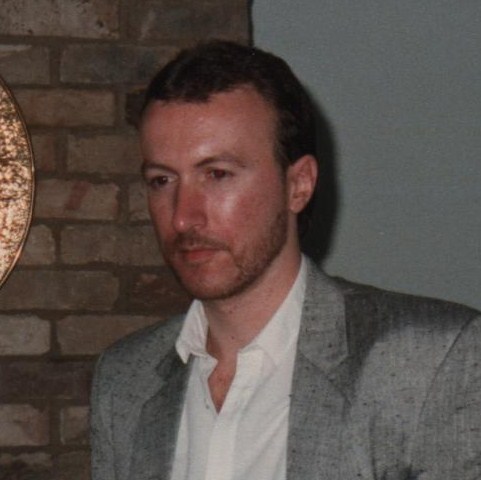 Stephen Castro |
Of his own accord, Stephen composed a letter to the healer in defence of my book The Kundalini Phenomenon. He chose a head-on tactic of confrontation. I reproduce his email here (dated 16/06/01):
Dear Dr. Galbraith,
Please forgive me for imposing upon your time, but ever since a recent lunchtime conversation with Kate Thomas, I have felt obliged to write to you. Let me, then, firstly state that (a) I helped produce The Kundalini Phenomenon and am also the author of Hypocrisy and Dissent within the Findhorn Foundation, and (b) I am an associate member of the SMN.
During the conversation with Kate, she mentioned the contact with yourself and that you had put forward the opinion that her book was a “continuous denigration” of others “pathways” and therefore not suitable for recommendation. In the interests of clarity, I must ask: Is one to infer from this that as a medical doctor and member of the SMN you are prepared to endorse the following?
1) A revoking of the intervention by the Scottish Charities Office in the matter of the indiscriminate use of a hyperventilation-based breathwork practice on members of the general public within the Findhorn Foundation. A public that, in 99% of cases, needed neither therapeutic treatment or to undergo such an extreme therapy. A hyperventilation-based practice that even fellow breathworkers have described as a “rape of the soul,” and which is furthermore said to induce unwonted kundalini activation.
2) Discarding all attempts to ascertain what actually constitutes authentic spiritual experience as opposed to psychotic or psychopathological, and differentiating between a true “spiritual emergency” and a technique-induced psychosis.
3) The use of psychotropic drugs or breathwork practices to induce alleged “mystical” experiences for experimental, commercial, or recreational purposes.
4) The use of deviant and cultic Tantric sexual practises as described in chapter 2, pp. 129–139 of The Kundalini Phenomenon.
5) The indiscriminate and commercial use of sweatlodge ceremonies and drumming tapes to induce ASCs. Ignoring also the dangers of hyperventilation, heat exhaustion, or the side-effects of such ASCs.
6) The indiscriminate and commercial use of subliminal message cassette tapes and videos to condition the mind. Ignoring also the unbalancing effects these may have on the psyche.
7) The promotion of stage hypnosis, despite known dangers of certain suggestive commands.
8) The use of witchcraft and magical ritual practices in an attempt to acquire power and fulfil base desires.
9) The sale of DIY Kundalini-Raising books and tapes.
10) Discarding any sociological research that reveals the deviant and cultic behaviour of gurus such as Rajneesh and Muktananda.
11) The acceptance of all absurd and unsubstantiated claims regarding the subject of kundalini, including those made by self-styled “experts” such as Gene Keiffer, Yogi Bhajan, and others mentioned in the book.
Now, the above represents but a fraction of the issues and concerns referred to in The Kundalini Phenomenon, concerns which should surely be of consequence to any conscientious member of the medical profession. But strangely, for you, a retired GP, the above is just a “continuous denigration” of others “pathways,” and to be completely dismissed as having no relevance! What if one were to transpose the situation and present it more obviously, thus:
1) The medical profession should let anyone practise medicine irrespective of their degree of knowledge and competence. All quacks are welcome to offer their nostrums, even if such nostrums turn out to be poison.
2) Drugs should be freely available to everyone. Prescription by an authorised medical practitioner is not necessary. People can pick n’ choose to take whatever drug they please, irrespective of the actual medical need or effect of the drug.
3) In the interests of nonjudgmentalism and pietism it is forbidden to criticise any observed medical malpractice. Everyone has the right to follow their own path, irrespective of whatever harm is done.
Do you agree with the above, Dr. Galbraith?
In my (non-medical practitioner) opinion, The Kundalini Phenomenon contains a number of very graphic and educational first-hand descriptions and references not only to the partial awakening of the kundalini force and the resulting physical and psychological problems this can cause (information much-needed for comprehensive research purposes), but also highlights the inauthenticity of a number of gurus, New Age entrepreneurs, and alleged “spiritual” and therapeutic practices. To totally dismiss Kate’s work in such a naïve and sanctimonious manner leaves you, Dr. Galbraith, in a position to be duly criticised and remarked upon. Furthermore, the author is not merely expressing an opinion based on scepticism or bias, but upon the insights derived from a personal experience of kundalini (that did not require either hospitalisation or psychiatric assistance) following on four decades of a wide range of extrasensory and transpersonal experience.
Yours sincerely
Stephen Castro
PS Having read your contribution to issue 71 of the SMN Network review (Is Spiritual Emergence Up the Spine always a Benign Process?) I applaud your attempt to bring this controversial subject to the attention of the medical profession; however, the dismissive and irrational manner in which you have treated Kate Thomas’s contribution makes me seriously question your objectivity in this field.
There was a lengthy delay in response. It was not Dr. Galbraith who replied, but her friend Katrina Brook, who noticeably used a letter instead of email. This reply was cautiously expressed. Stephen’s confrontation had evidently caused an effect. The reply, dated 07/07/01, was still evasive about basic issues, adhering to the nonjudgmental standard of assessment. Brook was replying on behalf of Galbraith, stating of the latter: “Her response was rather more brief and perhaps less considered than she now believes appropriate.”
However, the reply via Brook clearly strained to justify basic aspects of the earlier response from Dr. Galbraith. Brook stated that about seventy people had reported “spontaneous SEUS” to Jean, who gave advice and offered support mechanisms to sufferers. The crux of the Brook mediation was expressed in terms of: “Jean continues to be concerned at the negative focus in Kate’s book; Jean would agree that there are some outstanding examples of dishonourable and dangerous practice which she does not condone; it remains the case that thousands of people, including Jean herself, have received invaluable personal and professional help from many of the individuals and organisations mentioned in Kate’s book.”
I should here state that I had never formerly used the phrase “Spiritual Emergence Up the Spine,” and nor the abbreviation of SEUS. This phrase was the innovation of Dr. Galbraith. I still feel that the “spiritual emergence” theme is contradicted by the overall emphases of Jean Galbraith. The realistic description here should surely be “Psychosis Up the Spine” (PUS) rather than the more embellished statement. I would also like to state here that I am thoroughly averse to all the current kundalini hype, having concluded that it is not practical to address the subject of spirituality in such terms. The new age industry of “kundalini” is a commercial vampire, which I totally disown. For this reason, I have abandoned any attempt to produce the book formerly mentioned under the prospective title of Kundalini and Conscious Evolution. There is no due audience for such a book as I had envisaged (cf. The Kundalini Phenomenon, p. viii).
The communication from Brook/Galbraith annoyed Stephen, who sent a forthright reply from his own angle. I actually asked him not to send this, feeling that it was pointless to respond further, especially as I intended to talk with Jean at the imminent AGM. Stephen was concerned to emphasise the questionable nature of the Galbraith assertion that “thousands of people” had received invaluable “professional” help from many individuals and organisations mentioned in The Kundalini Phenomenon.
As I had anticipated, there was no reply to this forthright email. I felt that Dr. Galbraith would be incensed by the implied criticisms, a misgiving that transpired to be correct.
10. Scientists and the Lunatic Fringe
Meanwhile, having decided to attend the AGM, I consulted my son Kevin about the potential situation of conflict. He was a writer who lived nearby in the annexe of a mansion. To be more specific, he had temporarily given up writing, placing his manuscripts on hold for publication, and instead devoting himself to the renovation of antique furniture and clocks. His home was full of what he called the “old age.” He would have nothing to do with the "sensational new age." Kevin had recently penned a brief but graphic document declaring his aversion to “seekers, groups, and retreats” of the kind which some people associated him with as a consequence of his appearance in my autobiography.
Kevin had refused to join the Findhorn Foundation while he lived in Scotland. When he returned south, he erected further ramparts against the “maniacs and exploiters” as he called them. He sometimes received quirky letters from people who tried to contact him in an inappropriate manner. An obsessive enquirer demanded to see one of his unpublished manuscripts. Kevin simply sent this person a copy of his abovementioned Statement Disavowing Mystical Role. That document was quite pointed.
 Robert H. Thouless |
Another very different person to Dr. Galbraith was Dr. Robert H. Thouless (1894-1984), a psychologist of Cambridge and a senior Fellow of Corpus Christi College. I met him in 1980 when I lived in Cambridge. On a number of occasions I was invited to his home in one of the pleasant streets associated with academic inhabitants. Dr. Thouless became interested in my “kundalini” experience of 1977, asking me many questions on the subject, concluding that unusual features were involved which were not readily classifiable. When he learned that my son had been present during part of the experience, he expressed a desire to meet Kevin. My son evaded this attention, being averse to “metaphysical probes” as he called them. However, he did eventually agree to pass over one of his annotated manuscripts to Dr. Thouless for inspection, and this was well received. Dr. Thouless subsequently provided Kevin with a letter of recommendation to the relevant admissions official of Cambridge University Library (CUL).
Dr. Thouless, who had taught Educational Psychology for many years at Cambridge, was internationally renowned. He had earlier taught psychology at the universities of Manchester and Glasgow. In his later years he developed an interest in parapsychology. Indeed, he wrote much on psychic phenomena, not as an enthusiast, but in the context of a scientific approach. He had been president of the Society for Psychical Research in the early 1940s. Though convinced that ESP existed, he was very critical of favoured procedures of experiment. Dr. Thouless coined the term "psi," later to be used very loosely by many enthusiasts.
I was surprised to learn that Dr. Thouless had read about all (or certainly most) of the Indian gurus who had recently become popular since the 1960s. He regarded such investigations as part of the psychology discipline. He was willing to acknowledge merits where these could be found. However, his approach was basically critical and exacting. He loaned my son one of the more scarce works on Sai Baba of Shirdi. He wanted to assist Kevin, feeling concerned at how my son would survive without official funding. Dr. Thouless thought that Kevin's intensive study pattern was very unusual, and was surprised at his sense of total independence, remote from seeking favours or academic honours.
Early in 1981 my son commenced an intensive phase of unfunded private research at CUL, which involved the accumulation of many painstaking notebooks. This extensive library had unusual amenities. Kevin tackled anthropology and the history of religions, also gaining acquaintance with many scientific and medical journals. He complained at the numerous conflicting theories in evidence amongst the sciences, which were hindered by so many prevalent uncertainties.
At a subsequent period, when he temporarily relaxed the pace of his studies, Kevin consented to attend two retreats I conducted in 1986 as part of my project known as the Cambridge Research Centre for Metaphysical and Evolutionary Studies. Kevin specified that his own activity was the more intellectual IRCA (Intercultural Research Centre of Anthropography), which he had recently formulated as an extension of his study programme. The other retreat participants had difficulty in understanding his emphases. He soon stopped mentioning IRCA, instead adopting a more instinctive response that was occasionally laconic.
Kevin disliked metaphysical discussions, which he regarded as an indulgence. “Talk is not metaphysical,” he would say pointedly. He would never refer to subjects like kundalini, and regarded new age “workshops” as a distraction to due education. He laughed when I suggested that he become a member of the SMN. He emphasised that the SMN membership had incorporated too many alternative therapists. He complained that he could not see the “scientific and medical” relevance of this organisation. My encounter with the SMN Dorset group had confirmed my son’s misgivings. He expressed horror at Dr. Galbraith’s “kundalini healers,” or “kleptomaniac society” as he called them, implying that they stole from Eastern teachings what they did not understand. He felt that Dr. Galbraith was avoiding a rational confrontation about her favoured subject. He did not believe that the SMN was a fertile field for discerning responses.
I argued that there must be serious scientists within the SMN. Without actually denying that, Kevin asked why they would wish to be associated with the large numbers of alternative therapists and “nutcases” who had infiltrated this organisation. Just who had allowed in the lunatic fringe?
4. The SMN Annual General Meeting, 2001
Stephen refused to accompany me to the AGM, although I offered to pay his expenses. This was a solo venture. In mid-July 2001, I journeyed by rail from Dorset to King’s Cross en route to the AGM venue at St. Andrews. The SMN secretary had informed me that fifteen SMN members would be travelling on the same train, and I wondered if I would recognise any of them from the previous AGM. Though I had never met her, I did recognise Jean Galbraith immediately, from a photograph. She was seated in the same carriage where my own seat was booked. I knew that she recognised me also, from the photos in The Destiny Challenge. My seat was at the further end of the carriage, but I stopped to speak with her, as the adjoining seats were not yet occupied.
I asked how she was. She was rather edgy and replied “Very upset.” She said that she had felt like this ever since reading Stephen’s first email (dated June 16th), which had offended her by the outspoken content. It was quite clear that she had reacted to criticisms very strongly. She was very severe in her attitude to Stephen, who was regarded as being terribly unjust. I spoke in a very conciliatory manner, adding that Stephen was well-meaning, having regarded her statements about my book as being unfounded. I said with honesty that I had asked him not to send his second email of recent date. Jean was unable to concede any validity to his viewpoint. The outcome was that she relaxed her attitude towards me and warned me against Stephen. We agreed to talk together at some point when we had settled at St. Andrews. I had some misgivings.
I had a comfortable journey dozing and reading. Upon arrival at Leuchars I met up with the other SMN members on that train (none of whom I had met before). We availed ourselves of the taxis awaiting us. The AGM was being held at St. Salvator’s Hall, affiliated to the University of St. Andrews in Fife. We appeared to be the first arrivals. My large college bedroom was a single with washbasin. Jean Galbraith was on the other side of the building. The official date for the function was the weekend of July 14th–15th, though my batch arrived in advance. We soon found that the meals were excellent, self-served in a large annexe to the spacious dining-hall where we sat at trestle tables. There were three meals each day, breakfast, lunch, and dinner, plus the extra of afternoon tea (or coffee) served with assorted deluxe biscuits.
Shortly after we had settled in, at the first evening meal I seated myself next to Dr. Malcolm Hollick, whom I had met several times (though briefly) at the end of my residence in Forres. He was pleasant and polite, and we talked very amicably. Yet an element of discord arose, in the form of Jean Galbraith and Dr. Julian Candy who sat facing us. Dr. Candy had apparently read or perused my book on kundalini, though he knew very little about me. At the end of the meal, Julian referred aspersively to The Kundalini Phenomenon and commented to me, “Why don’t you ever say something positive?” Jean Galbraith then supported this angle very strongly. They both proceeded to give me their opinions, which were not congratulatory. Dr. Candy was expressing the angle of new age nonjudgmentalism, while Dr. Galbraith was rather awkwardly emphasising her pet theme of psychosis while simultaenously trying to defend new age heroes. Dr. Hollick looked on with puzzlement.
I pointed out that my recent book was a cautionary critique, not being written from a mood of scepticism but from an angle of direct experience. This angle was deeply positive, though difficult to describe in a contemporary context. I emphasised that my concern was for all the trusting seekers and aspirants who were damaged and impeded by the use of various techniques and too much meditation. This standpoint was evidently quite foreign to Dr. Candy.
Dr. Hollick also seemed oblivious of the implications, in a different (non-hostile) manner. He was eager to change the subject and referred to the forthcoming Findhorn Foundation conference to be held in October. He seemed very enthusiastic about this, being a recent Foundation recruit. He was described in a Foundation brochure that year as having had a long academic career in Australia, his major interest apparently being ecology. He had left the University of Western Australia in 1997, preferring to develop "holistic education" at the Foundation. He was of senior age, apparently in his fifties.
I already knew that the October conference was advertising Margot Anand, the disciple of Rajneesh, as a speaker on the subject of spirituality and sexuality. I asked Malcolm if he knew about this woman’s major interests, which were well known via her controversial books. She was an exponent of Tantric sex and magic, her notorious emphases including the ritualistic use of female orgasm to obtain worldly desires. Dr. Hollick (who was not a medic) evidently did not know about Margot Anand. Indeed, he was markedly vague and seemed to know nothing at all about the underlying realities of virtually everything in the Findhorn Foundation. I had met people like him before during my years in Scotland. He seemed to take everything on trust, as many others did. The critical faculty seemed to be missing, or in abeyance.
After the meal, we moved into a large reception room containing a bar from which drinks could be purchased. There were perhaps forty or fifty people present, though I cannot be certain of the number. David Lorimer, the SMN supervisor, then talked to us about the forthcoming programme. One by one, we were asked to introduce ourselves and say something about our interests. Then everyone relaxed, seating themselves at the small tables available. Most of the others purchased drinks and engaged in conversation. For the most part, I listened and observed.
That night I had a vivid dream of Jean Galbraith, in which she telephoned me and was crying, saying she was sorry. The dream left a strong impression, so much so that I did not attend the optional daily meditation which commenced before breakfast (Friday). At breakfast I again sat next to Malcolm. Later I spoke to Jean, and then mentioned my dream. She said immediately that she knew what it meant. She had “seen” that in a past incarnation she had wielded occult power and had used this against me. She went on to say that she had “failed” in the past incarnation she referred to, and that she had to make some karmic recompense accordingly. She stressed that the problems in her life had been created by her own “bad karma.” I had not expected such an admission, which surprised me.
Jean seemed to be quite genuine on these points. However, in a subsequent conversation, a note of flippancy occurred. This time she remarked that I also had power in a previous incarnation when I was a “trained seeress,” and that we had both “strutted about in our robes,” the implication being an abuse of authority. I made no attempt to counter these comments, feeling that she would be resistant if I did. I have known various people who talked about “past incarnations” in a rather glib manner. I was still very aware of the support which Jean had expressed for Dr. Candy’s negative reflections on my “over-critical” book. I subsequently learned that references to past incarnations were a habitual feature of Jean’s conversation.
The first AGM session was held in the University Lecture Hall. I remember very little of the Panel discussions, which were rather boring. However, I do remember closely the small group discussions that occurred afterwards, which were conducted in a more comfortable (and much warmer) room. It was too wet outside to use the lawn. During the tea-break, Jean introduced me to her Swedish friend Anne; all three of us had tragically lost our daughters and she felt that this created a common bond. Anne was still in a state of acute bereavement, though my own anguish had, in the main, greatly lessoned and could be concealed.
Before we commenced discussion in the small groups, we were separated into groups of six, in a random manner. I found myself in David Lorimer’s group. Each group was given a subject for discussion that had been mentioned during the earlier Panel. The subject for my group was synchronicity. I was wary of this Jungian theme, in relation to which I had heard some rather extreme views expressed in the past. A young professional woman immediately held forth on the teaching of Jung, monopolising the conversation. I noticed that David made no attempt to intervene. Several of the others made interjections. Each of these were capped by the monopoliser with a Jungian theory. The listeners were not all in agreement. My own efforts to present another viewpoint were repeatedly deflected, to such an extent that an older woman (Doreen) protested. This protest on my behalf made no difference. I then ceased to respond and merely listened. My silence was evidently much more acceptable.
At the end of our allotted time, David Lorimer said that we should each express our views, and say whether these views had been assisted or altered by the discussion. He added that he would be our spokesman to sum up and present the result to everyone at the AGM (meaning all fifty or so of us). The plan was for each group to be thus vetted. The expectation appeared to be that some positive consequence was in the offing. Because I had experienced such a negative consequence, I declined to comment when my turn came to speak. I merely said that I had “switched off” earlier in the discussion because my views were so consistently negated by the Jungian advocate. I tried to make this brief explanation sound as inoffensive as possible.
The following day, the Jungian expositor apologised to me in private about her domineering form of expression. In the meantime, I had myself apologised to David for declining to comment at any length. I pointed out that I had already been “chopped” by two persons since my arrival (by Jean and Dr. Candy), adding that I felt upset at my viewpoint being so frequently (and rudely) stamped upon by the Jungian. David expressed his awareness that this form of put-down had occurred. He did not seem to know what to do about it, making no further comment in this regard.
11. The Economic Strategy of David Lorimer
At lunchtime I sat with David and a few others who were all interested in what was called the new Consciousness Manifesto. This was in fact the basic reason for my attendance at the AGM. I had understood that this subject would be widely discussed. I had actually suggested a small introductory meeting to this end. That suggestion was made to David by telephone, and he was in agreement. He had now decided that lunchtime would be a good idea for the meeting, having referred to this schedule from his speaker’s platform earlier on.
The result was pathetic, and even alarming. There were only a few people who congregated for the special meeting. David’s main concern was expressed in terms of fundraising. The theme of “Consciousness” was rather elusive. The Manifesto, whatever it was, needed funds. There was no element of spontaneity, nor indeed what I would have called commitment. I silently wondered to myself how on earth I had managed to organise (in 1984) a two-day seminar for thirty-four people, complete with buffet meals, new chairs, and participating speakers – in my own home, and without any funding at all. The supreme irony (to my way of thinking) was that the John Templeton Foundation had already contributed over £90,000 for the SMN project of a Consciousness Manifesto (or Science, Consciousness, and Ultimate Reality), and was even now considering a further donation of £75,000.
 David Lorimer |
This episode served to bring home to me how David Lorimer was operating. He was clearly the economic mastermind of the SMN. I read that he had been Director of the SMN from 1986 until 2000, and was now a consultant who continued to edit the SMN magazine Network. However, that was misleading coverage. In fact, David continued to be the organisational control in the SMN [and was Programme Director]. Having an M.A. degree, he was formerly a teacher of languages and philosophy at Winchester College. He still favoured Winchester as a setting for the “Mystics and Scientists” seminars, strongly associated with the Wrekin Trust, in which he was also a major figure of long-term stature.
David Lorimer’s most recent book was an edited work called Thinking Beyond the Brain, which appeared the same year I attended the St. Andrews AGM. That book included a contribution by the psychedelic advocate Dr. Stanislav Grof, a factor which I found disconcerting. My son Kevin had been very alarmed when Dr. Grof had been booked by the SMN to appear in a conference at St. John’s College, Cambridge, in 1995. This event had caused confusion. The conference was sponsored by David in collaboration with the Institute of Noetic Sciences (IONS), based in America.
David’s new book noticeably informed that the SMN had over 2,000 members, while IONS had nearly 50,000 subscribers. My son felt that David was trying to increase economic support for the SMN via the IONS membership, who were susceptible to alternative therapy and the Grof cosmology. Kevin surmised that Grof was bait for American subscribers in an undeclared strategy. David evidently had no scruple about what Grof was expounding. The books of Grof promoted the “transpersonal” use of two illegal drugs (LSD and MDMA).
12. A Being from Another Planet
After the disappointing meeting, at 2.30 pm I attended the “optional workshop” conducted by Dr. H. F. This was entitled “The Use of the Third Eye to Discern Discrepancies between Inner Energy Patterns and Outer Action.” In my view, that workshop confused the “third eye” with psychic sensing, having no intrinsic conception of the subject promoted, which had long provided a fantasy theme for occultism, more recently being appropriated by diverse therapists for commercial ends. I did not express any of my misgivings, as that would have been disruptive.
Towards the end of her talk, Dr. H. F. asked for a volunteer to assist her in a series of “experiments” in the power of focused thought. A woman was selected from the audience, who was clearly disturbed by what followed, even appearing to resist the mental intrusion of Dr. H. F. I felt that this event should not have been allowed to occur. Others in the audience thought the same way. One man got up to leave in disgust, and so did I. Several others quickly followed. All agreed that the “demonstration” should have been stopped.
I was by now feeling very wary of practically anything in occurrence under the “scientific and medical” aegis. At 4.30 pm, I attended a talk by a therapist on the subject of integrity. This was much more prudent than the preceding workshop, nevetheless tending to rest upon the assumption that contact with an innate integrity and wisdom was quite easily achievable. In my experience, this is an area of potentially very strong delusions, also dangers.
Afterwards, the entire assembly met in the comfortable tea room. I did not say anything, but merely observed and listened. That evening I decided against the slide-assisted talk given by Dr. Bart Van der Lugt, not because of the content, but because I had attended this last year at a Dorset venue of the SMN. The talk, relating to the home nursing of terminal illnesses, was medically sane, unlike “third eye” misconceptions. Yet I was not in the mood for this again, feeling rather frustrated at the lack of something more inspiring to connect with. The Consciousness Manifesto was a mirage, I had concluded.
I sat in the main reception room, being joined at one of the small tables by Anne and Doreen. Anne soon left for other acquaintances, and Doreen commenced to talk about radionics. She was so insistent that I excused myself as adroitly as I could. When I returned, Doreen had engaged with other friends. I then sat in a spare chair beside Isabel Clarke (a psychologist at a hospital) and Jean Galbraith. There were complexities here. Both of these women were listening intently to Suzanne and her friend, whom I commenced to observe closely. Suzanne was doing most of the talking, and in an extravagant manner, which offput me.
Suzanne and her friend both appeared to be mentally disturbed. Jean nevertheless believed that some element of kundalini phenomena was at work here, and was rather vocal on this point. Suzanne spoke about her experiences of beautiful scenery, happiness, ecstasy, and wise beings in direct inner contact with her. She expected us to believe all this without query. Yet there was something wrong, I felt. Suzanne was regarded by her friend as a virtual saint; the junior had commenced having similar experiences a few months earlier. I felt that the follower had contracted a syndrome from Suzanne, who was more than a little obsessive about the experiences mentioned.
I started to feel ill, knowing that I was absorbing something from Suzanne, psychically or no. I had experienced similar impingements many times before; the causes vary greatly. I felt that I knew what was wrong with Suzanne, but I could not even begin to describe this, particularly in view of Jean’s adamance about kundalini. Eventually I left the room, wishing that I had not come to the AGM at all. Just how did such people become involved in “scientific and medical” activities?
The acute disturbance soon dispersed. My necessity had been to remove myself from the intimate range of problem emanations (which are not understood by many therapists). Not long after, I returned to the reception room, to find that Jean and the two disturbing women had left the scene. I felt rather relieved at this development. So I shared a table with the more down to earth Isabel, who was disposed to be friendly. We were soon joined by Elizabeth Fenwick. These two women were the wives of two prominent men in the SMN, namely Prof. Chris Clarke and Dr. Peter Fenwick.
Isabel had heard (from Jean) about my kundalini experience and asked about it. I was wary of saying much, as Isabel seemed to rely upon Jean for information concerning kundalini. Jean seemed to be regarded by so many SMN people as a knowledgeable researcher on that difficult subject. Isabel shared Jean’s belief that psychosis was part of spiritual experience. I briefly explained that my personal experience of the kundalini energy was entirely different to the cases investigated by Jean, and also to Jean’s own experience which she had described. I warned against the interpretation which emphasised psychosis, as delicately as I could. Both Isabel and Elizabeth responded positively. Each of them asked questions, though not of a complex nature. I remember that at one point, I referred to the overview of time that I have recorded in my autobiography, which was a basic facet of kundalini experience for me. I knew that Elizabeth had researched near-death experiences with her husband, whom I afterwards met. There is a big difference between near-death and some other types of experience. I noted that neither of these women enquired about details of publication, and deduced that they would not actually follow up by reading the account I had referred to.
It was not appropriate to say anything further about Suzanne, as Isabel fully accepted Jean’s viewpoint. Elizabeth did not seem concerned about Suzanne, probably because Jean was considered to be an expert in such matters. I could not get past this authority screen which Jean represented. Basically, the situation amounted to Suzanne being deemed acceptable because Jean had endorsed a kundalini complexion to the former’s experiences.
I did not discover the full details about Suzanne until the afternoon that we all departed from the AGM venue. I then happened to pick up some free brochures from the reception hall. I now discovered that Suzanne was being promoted as Madame X, a being from another planet who was helping to save mankind from folly. She was also described in that literature as being in regular contact with even greater beings to whom she communicated about the state of humanity. Subsequently, I was dismayed to find that Suzanne was listed in the new SMN Directory of Members, which described her as the president of an alternative organisation, giving the impression of a valid authority.
13. Malcolm Hollick and Findhorn College
On Saturday, Dr. Malcolm Hollick was scheduled to give a talk at 9 am on “Findhorn College: A New Educational Initiative.” David Lorimer chaired, being clearly enthusiastic about the subject matter. I learned that David had recently met Dr. Hollick at some other event and invited him to the AGM. David obviously regarded the Findhorn Foundation College as a promising enterprise. Indeed, Malcolm even stayed overnight at David’s home in Fife throughout the AGM schedule.
 Malcolm Hollick |
I was far more sceptical about the new College, having been intimately familiar with earlier forms of education at the Findhorn Foundation since 1989, when I had moved from England to Findhorn village. I have described my disillusionment and other factors elsewhere. Dr. Hollick gave a glowing talk about his new project, concluding with a request for assistance from those interested. At the end of the talk, the audience were (as always) invited to ask questions or proffer their own view.
I felt exasperated by the fluency of Malcolm’s talk, which totally omitted any reference to negative events that were on published record. There were others who asked questions. I had to put my hand up repeatedly before David indicated that it was my turn. I then spoke very firmly, expressing a form of address rather than a question. My basic theme was that before the Findhorn Foundation advertised their "new" College in such glowing terms, they ought surely to correct past wrongs and clear any outstanding problems.
Briefly, Malcolm was the principal of the new College; he was now asking for assistance on behalf of the Foundation. I allowed that he might not be aware of past wrongs committed by the Foundation (whose official “history” was abortively manipulated). To learn of this factor left Malcolm with the onus to revise his format. I mentioned the matter of my own expulsion without a hearing, a situation which had developed in the wake of my criticism of the Foundation promotion of Grof’s Holotropic Breathwork, which had caused havoc amongst some of the subscribers. I also mentioned the fate of five serious and intelligent people who had all moved from England to the Foundation vicinity, only to be stigmatised in various ways by staff for supporting my request for a fair hearing. I touched upon the case of Jill Rathbone, who had left her job as part-time tutor at St. John’s College Choir School, Cambridge, when promised a new post at the Moray Steiner School. Foundation staff had conspired to deny her the new job after she made the transit in location, solely because she was my friend.
At this point, and before I had finished, David Lorimer stopped me rather abruptly. He looked worried, evidently fearing my report. Such disclosures were not part of his expansionist plan. I had made a point of saying that the details I gave could be checked in a published book written by Stephen Castro some years earlier. David had not taken sufficient heed of this book, which I doubted he had ever seen. Malcolm seemed in complete ignorance of the Castro book, a factor reflecting the strategy of suppression exercised by the Foundation staff.
Malcolm was obviously shocked, clearly not knowing what to say. I stressed that he was not responsible in any way for the events which had occurred, being a recent recruit. Some of the audience were also shocked at my disclosures. Three people approached me afterwards, expressing their horror at what had been done by the Findhorn Foundation under the guise of spirituality. A little later, two more sympathetic people came over to me, both of whom were professionals.
David Lorimer’s subsequent attitude about these matters proved revealing. Although he was prepared to fleetingly acknowledge in private that Foundation policies had been amiss, it was also clear that he did not want to upset existing political arrangements. As the months progressed, I learned the extent of his regard for the Findhorn Foundation as a source of subscribers to the SMN and the Wrekin Trust. Ethical considerations were squashed.
14. Aspects of Nonjudgmentalism
Meanwhile, after the talk by Dr. Hollick, I attended the talk given by Prof. John Clarke, who was associated with Kingston University. He was clearly interested in Jung and Eastern thought, which was the title of one of his books. An upset occurred when he demonstrated a minor breathing exercise. He asked the audience to join in, a gesture made in the “workshop” vogue. That gesture rebounded upon him, because the exercise induced in Jean Galbraith various traumatic symptoms, including severe shaking. She associated these symptoms with her former experiences that she described as “kundalini awakenings.” She then dramatically walked out of the room. The basic factor to note is that, insofar as I am aware, nobody at the AGM duly confronted these confusions passing for “scientific and medical” activity.
There followed a talk by Dr. Benvenuto Andrean, who taught biology in the Netherlands. I was told that his main inspirations were Teilhard De Chardin and Jung. The Jungian influence was apparent in his talk entitled “The Shadow: A Constant Companion on the Path.” His address was quite interesting, being an autobiographical account of experiences including severe shock. Known as Ben to the others, I found Dr. Andrean to be one of the more likable persons at the AGM.
After these talks we moved to the comfortable room used for tea-breaks. We were then each asked to give our views on the talks, and for this purpose again sat in a big circle. Someone brought up the matter of my complaint to Malcolm Hollick. Dr. H. F. (the “third eye” expert) then expressed the view that I “needed to learn to do things differently.” Two other women (who were therapists) then stated something similar. They did not express any comprehension of the events I had mentioned. Their basic theme was in the idiom of nonjudgmentalism, which means that nothing is to be criticised, therefore there is never anything wrong except on the part of the critic.
The implication was that I had “created my own reality,” therefore being responsible for my expulsion from the Foundation. I did not feel obliged to accept this shallow version of events, and responded with a few further details. I noticed that David Lorimer and Max Payne (a prominent SMN council member) said nothing in my defence. The new age talk about “creating your own reality” seems to have a mesmeric effect in environments where the critical faculties are suspended. Ironically, Dr. H. F. afterwards came over to me and apologised for what she had said. She even embraced me, obviously feeling that the resistance had gone too far.
When the assembly returned to the lecture room, we now had a choice of three talks given in different parts of the building. The greater number (including myself) chose to attend the talk by Dr. Galbraith. The subject of kundalini evidently held a fascination for the audience, though I could lament at the misconceptions prevailing. Jean had written down her assessment of kundalini experiences, and we were each given a copy. At the end of her talk, which I found very confusing, a number of persons put their hands up to speak. I was actually the first to do this, my intention being to point out that there were other, and quite different, types of kundalini experience which did not involve hospitalisation and nor any impulse to self-harm. The damage done in that one talk might take many years to rectify, given the non-critical complexion of new age assimilation.
Although I was quite literally the first person to hold up a hand, the chairman (Dr. Julian Candy) ignored me repeatedly, continually choosing one of the other persons to speak. He had no excuse for missing me, as I sat only two rows from the front and he stood close by. He nevertheless concluded the session while still ignoring me. I then duly protested. Dr. Candy replied that I had been too late in putting up my hand, and anyway, I could speak to Jean later. There was something very wrong with his attitude.
I started to leave the room. Anne had been sitting next to me. I became aware that she had gone over to Dr. Candy and was remonstrating with him. She was very indignant, saying that my hand had each time been raised first and that she had been hoping to hear what I had to say. Dr. Candy did not like this counter. However, Anne stood her ground. She was so emphatic that he finally gave in. He followed me and apologised rather abjectly, saying that he was truly sorry to have passed me over.
I knew that he had been influenced by Jean’s version of my inferior role, and also by his own nonjudgmentalist interpretation of my book. He was prone to various “new age” biases, despite his former standing as a consultant psychiatrist. He had not read my autobiography and nor the book by Stephen Castro. Like many others, he was ignorant about the Findhorn Foundation. I believe that he had interpreted my counter to Malcolm Hollick in terms of an unmerited interruption. He subsequently thawed out towards me, grasping that there were other aspects to the situation.
At lunchtime I sat next to Dr. Hollick, who had clearly decided to display sympathy. He even put his arm around my shoulders for a few minutes to emphasise this. I was nonetheless wary of certain other gestures, however well-intentioned. He told me that his wife Christine would give me healing if I felt in need of this. I replied very firmly that I did not need healing, that my protest was not made from the level he assumed. He afterwards told me that Christine was “teaching” now, that she had undergone a kundalini experience when he was away for a few days. She had to be hospitalised on that occasion, I learned. Malcolm evidently associated me with her because of “kundalini experience.” Upon returning home, he had removed Christine from hospital, after which several Foundation women who “knew about kundalini” looked after her until she recovered. There was no mention of insights or profundities. I do not believe that the Foundation women he referred to had any knowledge of kundalini. I was familiar with their dispositions, which were typical of “new age counselling” and the hazards denoted.
Dr. Hollick seemed flustered by my aversion to healing. He suggested that he would talk to Eileen Caddy and request her guidance on what to do next. I had to take a deep breath here, knowing a great deal about the responses and habits of Eileen Caddy, the nominal Foundation leader. She was so docile to the Foundation management that she had long ago ceased to complain at their policies, as she herself had admitted to me, her reason being that they took no notice. Although Dr. Hollick seemed quite sincere in his wish to rectify matters, I doubted that he possessed the temperament to push forward with such a cause. However, I left him with the option of following up his suggestion, which he said that he would carry out.
As we all left the dining-room, Jean Galbraith came up to me. I could see that she was trying to adopt a revised assessment of the situation. “It will all be alright,” she said. “Something better is in store for you.” She seemed in earnest. I asked what she meant. She replied that she had received “guidance” telling her to assist in any proposed reconciliation between myself and the Foundation. I made no comment. I knew that she had registered Dr. Hollick’s attempt at sympathetic liaison, and also the attention given me by some others.
Jean now wanted to be my patron. Yet she had not assimilated my disagreement with her more or less “official” version of kundalini experience. Dr. Candy had prevented my objections to her talk given earlier; basically, I knew that these objections would not be acceptable to her. She did not comprehend my angle. One problem for me now was that if Jean were considered to be assisting me, then others would confuse her version of mystical experience with my own.
15. Alternative Therapy Manipulations
That afternoon I attended a workshop entitled “The Aura as a Guide to Inner Action and Outer Growth.” This was conducted by a woman advertised on the SMN programme as a therapist and healer. She concluded long before the allotted time. In my estimation, the contents of her talk were puerile, and indeed nonsensical. An early tea-break followed. I happened to talk with another therapist, a male, who expressed the same low opinion of the aura workshop. Nil out of ten was his verdict. He added that, if several of us wished, he could fill up the gap in the time schedule that now loomed by demonstrating his own modus operandi. He was quite persuasive, and five of us agreed.
We moved to a pleasant room that was unused. The therapist (whom I shall call Tom) had us sit in a loosely arranged circle. Two rather elegant female therapists were included, and also the speaker on the aura. I felt that Tom had a sense of mission. There followed an intense and unofficial episode.
Tom commenced with pleasant conversation and asked seemingly innocuous questions. He said that the replies would indicate the level of truth we spoke, i.e., whether we were spontaneously honest, evasive, or downright dishonest. After a few moments I grasped what he was doing, playing one person against another. His ruthless methods were too much for the aura specialist, who speedily left the room in an aggressive mood.
Tom was triumphant. One down, four to go. I knew that he was inclined to regard me as an accomplice. He flattered me by saying that the person who spoke most openly was myself. He then engaged me in an interchange that evoked comments from the others. The dialogue was designed to show that the therapists were themselves in need of therapy. Doreen could see that Tom was pitching me (or himself) against the two female therapists, so that she was really superfluous. She departed at this point on some pretext.
Tom intensified his manipulations. He told me that I tended to put myself in a bad light at the beginning of a conversation by stating apologetically that I had no academic qualification. This was honest but unnecessary, he indicated. My opponents then accused me of being my own worst enemy by creating negative realities; this was how they interpreted my counter to Dr. Hollick. I rejoined that neither of them (the two female therapists) liked me, as my concepts differed from theirs.
Tom sat smiling, clearly delighted at the situation he had created. My opponents were then galvanised into retaliation, saying how wrong I was, that they were being quite objective. It was me who was programmed wrongly, not them; I could only see from a certain limited aspect, while they had the totality of a holistic healing vision. They had not read my books, and did not need to.
The situation was a deadlock, nothing being resolved by the therapy. I am still persuaded that what the new age needs is not therapy, but improved education.
The meeting broke up, as the next talk was imminent. I opted for “The Magic of Conflict” from Peter Hopkins, a managing director and promoter of the controversial Neuro-Linguistic Programming. The talk actually transpired to be a series of role plays between the speaker and his wife, designed to show how one could behave in stressful situations either aggressively or non-confrontationally. I sat next to Ben (Dr. Andrean), who was very communicative. We had conversed formerly about his problems, and now he expressed much sympathy at the way the Findhorn Foundation had behaved towards me.
There was a short break before audience involvement, and Ben disappeared. Tom took Ben’s seat, at which the latter showed much indignation upon his return. Despite this, Tom did not get up. Tom advised me never to demote myself in any conversation again, saying that in his view I had something of consequence to say. Not long after, he departed, complaining that he could stand no more of the banal role plays that we were watching. Tom was younger than most of the others, and more impatient.
In the evening, a concert was held in the main reception room. A number of SMN members sang, recited poetry, or performed in various ways. Most of them were elderly, being academic or professional in background. The level of talent and good humour was quite striking and a joy to watch. They made fun of themselves and their own pomposity, while some clearly relived earlier years when Britain was a place of patriotism and integrity.
The bar was open and the audience were seated at circular tables. Malcolm sat next to me in this relaxed atmosphere. I suggested that he should not worry about what had occurred earlier. I repeated that he was not to blame for Foundation errors, and that I was not persuading him to reopen my case. He could drop the matter if he wanted. He replied that he still wished to consult Eileen Caddy about the issue of myself and my friends. We had a very amenable conversation. I also had positive conversations with both Ben and Tom.
Dr. Peter Fenwick came over for a few minutes. A very reserved man, he nonetheless expressed sympathy concerning the Foundation issue. However, he could not get my angle on events in perspective, asking if I had felt an “emotional release” when I spoke out against Dr. Hollick. He had no comprehension of the events which had occurred during the 1990s in the far north of Scotland. Dr. Fenwick had not read any of the literature I referred to. II assumed that he would now do so (in fact he did not, and I eventually sent him some material of my own accord; discrepantly, he did not reply for many months, and evaded basic issues when he did).
At 10 pm, several of the gathering began to retire for the night, including Tom and Ben. Diana Clift (a Council member) then launched into the dance programme, playing some lively pop music on a cassette player. Several couples got up to dance. Diana remembered me dancing at the SMN function the previous year, and now teamed me up with Peter Hopkins, whose wife had gone to bed. Peter was quite lively, and somewhat younger than me. At first I became breathless and had to pause, afterwards finding that I could keep up with him quite well. Eventually I chose to sit down, and he then partnered someone else.
I watched the dancers with great interest. A white-haired man named Tony Pritchett (involved in tv and broadcasting) was performing a vigorous solo as if his life depended on it. Another soloist was Dr. John Roberts (a computing consultant). Although in his sixties, John would occasionally do a somersault, landing clean on his feet each time. He had already told me of his interest in martial arts. John now came over and took my hand and we danced together in a way that was popular just after the war. As the music changed to a faster rhythm, I found myself moving with it. Soon I let go of John’s hand, and suddenly did not care who was watching or what they thought. I had been worried about losing energy, but this did not happen. Then I saw with surprise that John was still there and copying whatever movements I made. Later I had to slow down (being over seventy). At ten minutes to one I retired to bed with no after-effects.
The next day was Sunday, July 15th 2001, the last day of the AGM. At breakfast, I listened as Jean discoursed on kundalini to Dr. Fenwick, who listened intently. She did not ask me for my view, but instead encouraged comment from another woman whose experience was similar to her own. I found that I could not get a word in, and not for the first time. Jean dwelt upon the need for hospitalisation as a consequence of attempted suicide and “insane” behaviour. What she said was so wide of the mark, in my view, that I felt nauseated.
Dr. Fenwick moved off elsewhere, and I did not get an opportunity to talk to him. On a later occasion that day, I disengaged from Jean and went to talk with Brian Snellgrove who was sitting alone. I had already conversed with him several times. I was amazed at what Jean said when I returned. She loudly thanked me for approaching Brian and said that I had been spiritually delegated to do so. This was because she had been talking to someone else, though it had actually been her task to communicate with Brian. Her disclosure left me speechless.
I had already found that a conversation with Jean meant listening to her, as she seemed intent upon minimising response, at least in my case.
 St. Andrew's AGM of SMN, 2001, bottom row David Lorimer, third row (far left) Kate Thomas |
Official AGM activity was the main agenda that final day. The Members Forum transpired to be revealing. The members sat in a large circle, David Lorimer acting as chairman. We were all invited to ask questions or make comments. David at last raised the subject of the Consciousness Manifesto, though in a very economic context. He was concerned about what should be done with the £90,000 from the Templeton Foundation, and also the further large sum anticipated from the same source.
The financial preoccupations were confirmed by our introduction to Jayne Warren, a lady who sounded like an American publicity agent. We were told that her task was to link the SMN and the new Manifesto proposals (mainly in the form of conferences) with television, leading journalists, major newspapers, universities, and other channels. Jayne did not seem interested in consciousness, only in publicity media. Yet that was not her fault, as she had been delegated a role.
A printed handout composed by Jayne Warren was prepared for the AGM. This was entitled Public Outreach, Development & Speaker Service. An outline was here given for the SMN programme envisaged for the coming year, including a conference on the theme of “Intuition in Business.” This handout described the SMN in terms of an “inclusive, nonjudgmental approach.” Reference was made to “the SMN’s ability to bridge often cutting-edge or complicated scientific views with an intuitive, spiritual or mystical perspective, thereby gaining a reputation for open-minded exploration and, above all, real INTEGRATION.”
I was very sceptical of this promotionalism, which was glossing too much, including the Grof issue. I did not feel that the "new age" theme of nonjudgmentalism was the best solution for an organisation claiming scientific and medical expertise.
I decided to be bold when my turn came to speak. I said that there were dangers in the route being taken by the SMN. I had mentioned this point last year, in private, to Elizabeth Fenwick. My contention was that too many dubious “new age” ideas and practises were being introduced into SMN procedures. I described how shocked I had felt when receiving the Directory of Members. The listed interests of some members were very disconcerting, including a variety of alternative concepts and fads that would not be considered viable by many analysts. There was also the factor of activities not listed in the Directory; these were being furthered by some members in widespread workshops and courses of a dubious nature, very obviously commercially oriented. I mentioned also my feeling that if this diverse information was pooled, by some disaffected member, and released to the press, then the consequences might crash the entire organisation.
The last statement produced an effect. Several persons present quickly acknowledged that possibility of mishap, with an evident feeling of concern. I seemed to touch an underlying nerve here. A number of those present knew well enough what I was talking about. However, they were not in the habit of discussing such things, perhaps because they were discouraged from doing so. One member of the SMN council even came over to me, emphasising that I had raised a vitally important issue long overdue for expression.
David Lorimer looked shocked. He acted as though he did not know about what was being said. He commented that he would like to be informed of who these potentially controversial people were. I could sense his antagonism. I knew then that it was pointless to push this angle when he was in charge of proceedings. It was David who had allowed in so many alternative therapists and related entities, to swell the membership and gain subscription fees. The original scientific core of the SMN had been submerged by the accretions, to the extent that banal and misleading “workshops” were now a feature of AGM events. Nobody dared to challenge David Lorimer, whose organisational talents had become the crux of operation. I was already unpopular with David for having confronted Dr. Hollick, who was connected to a party (as described above) infiltrating the SMN via such entrepreneurs as William Bloom, a workshop hero of the Findhorn Foundation.
My comments really did arouse some interest. At lunch soon afterwards, Ben sat next to me along with Stephan and Mats. These men were all doctors; they expressed total support of my position. They asked me various questions for further elucidation.
At 2.15 pm, we were back in the main meeting room for the last AGM event. David announced that four topics had been selected for group discussion. Those topics arose from the administrative concerns in process. We could each choose which topic we wished and then go to the area of the building allocated for that purpose. I selected “Future Policy” and followed several others to the room where Tom had held his unofficial therapy session the previous day. There were nine of us, myself being the only female. We were about to commence when others arrived at the last minute, including Doreen and several other women. The PR lady Jayne Warren was amongst them. David Lorimer and Professor Chris Clarke (an SMN official) were also in this final batch. I had apparently chosen the most important topic.
David asked who would like to begin the meeting. One of the men immediately responded, saying that he wished to conduct a guided meditation. To my surprise David agreed. The proposing meditator did not inspire my confidence. We were then launched into a lengthy visualisation which entirely altered the atmosphere. I joined in very half-heartedly. Just as I commenced, I saw (in my mind) each person present standing in full sunshine with a rainbow above them. It became evident that this scenario was the intended culmination of the visualisation. I concluded that I had ingested the details telepathically. I believe that such visualisations are a distraction.
The presiding meditator appeared to revel in this opportunity to “guide” and teach. I had witnessed this tendency in the past. At the end, the presider requested that we each relay what we had experienced. To my further surprise and dismay, David permitted this also. The PR lady became bored, or so it seemed, as she left the room; I noticed that she had rather casually sat on the floor at the outset, perhaps an indication that she did not regard the event as being of any great consequence. Was David merely passing the time? The decisions would never be made by the members, only by the organiser.
I was the last person to speak. I said with honesty that the “meditation” had radically altered the atmosphere, the follow-up comments merely serving to strengthen the distraction. This meant that the necessary cerebral basis for a Policy discussion had not been achieved, but instead offset. I added my view that, unless this event was duly stabilised and a certain dynamic generated, the meeting would yield nothing, as most of those present were no longer in the right state to meet the objective. These comments caused some vexation and disbelief, especially from the women present.
David did not seem pleased. He briefly said that there was only half an hour left, and we must get on with the schedule. Neither he nor Prof. Chris Clarke said anything at all during what followed. Several people began to put forward their viewpoints, none of which I felt had any sound basis. However, I did not express my own thoughts, instead remaining silent, convinced now that it was pointless to participate further in such a disjointed situation. I noticed that Tom also remained silent.
When this awkward meeting ended, some people hurried off to catch trains. Tom then came over to me and said: “You were one hundred per cent correct !” I then knew that he similarly regarded the meditation as a distraction. Nobody else made any comment.
People were milling around in the main hall and reception room saying their goodbyes. Six of us were staying overnight, and so had to move out to another building owned by the university. A taxi was ordered for myself, Jean Galbraith, Ben, Tony Pritchett, Dr. John Roberts, and Prof. John Clarke. We were taken to Hamilton Hall, a former hotel now used for students and overlooking the famous St. Andrew’s golf course. My room was on the first floor, while Jean was on the fourth. Four of us arranged to have a meal that evening in a local restaurant. Prof. Clarke pleaded fatigue from too much unaccustomed dancing the previous night. Ben told me that John Clarke had been affronted by the way Jean had walked out of his talk (in trauma); the Professor did not wish to engage with her further.
In due time we walked through the town, which Jean knew well as she had been a university student here. We found a small restaurant and sat at a central table for four. Jean talked throughout, virtually non-stop, on the subject of kundalini and related matters. Further, she spoke in a very loud voice which I felt certain was enough to impinge upon all other clientele. She ordered wine, which I declined for orange juice. Jean and Tony ordered haggis and salad, while Ben settled for a fish dish. I contented myself with soup. I noticed that the bill for Jean was £17 and £15 each for the two men. My share was £5. I had been accustomed to frugal expenditure for much of my life. I was often surprised by what people spent in restaurants.
Tony managed to gain space, in Jean's esoteric monologue, to inform us that he had prostate cancer. This deeply saddened me. I then realised that his frenetic dancing of the previous evening was his fond farewell to such activities. Under the softening effect of wine, he also related what he believed to be an attempt at contact from his father who had died eight years ago. This obviously gave him comfort. Jean insensitively demolished his case with her own theory that a facet of his mind was at work, nothing more. This from a person who continually claimed to receive “direct guidance” from non-physical realms (or “upstairs” as she called these realms).
I knew that Tony was upset by Jean’s remarks, though he concealed this quite well. I managed to express an aside to him in which I confided some relevant experiences of my own, from which I believe he derived some comfort. The only other loophole for me, in Jean’s monopoly of talk, was a brief word with Ben. He was trying to sort out his own strange experiences following an extreme shock concerning his daughter. I suggested that he write out the whole of the sequence in an attempt to understand it. I did not mention my conclusion that Jungian theory (in which he was steeped) was an impediment to his thinking. That theory so often achieves ideological confines.
At breakfast the next day, a rather amusing situation occurred. John Roberts entered the room and came over to me at the breakfast table, wishing to tell me what had happened the previous evening when he had met a former acquaintance dating back many years. He went down on one knee and expressed his sadness. Jean happened to enter the room at that juncture, remarking that he looked like a Victorian lover about to make a proposal. Afterwards, in private, she told me that she could “see” that what I needed was a lover. I was unable to agree with this. Such “psychic” perceptions so often utilise associations of ideas, and are not in fact psychic at all. While gaining the wrong impression, Jean was insensitive to John’s emotional state, of which he did not tell her.
When breakfast was over, I fetched my belongings to join Jean in the pre-ordered taxi that would take us to the railway station. John Roberts had already left. Jean said goodbye to the other three men who were looking on. She went outside, then I said my own farewells to Ben, Tony, and Prof. John Clarke. Rather to my surprise, each one of these sedate gentlemen embraced me and kissed me on the cheek.
Upon boarding the train, an ordeal commenced. This was because Jean (who was several years younger than me) continued her lengthy reminiscences and esoteric references. That event was described in my subsequent letter to David Lorimer, which I wrote with the intention of emphasising that I wished to maintain an independent stance from Dr. Galbraith. This letter, dated July 18th 2001, is reproduced here in full:
Dear David,
Firstly, please let me say how much I appreciated this year’s AGM programme.
However, my reason for emailing you is a rather disturbing development which I feel it necessary to mention.
On boarding the London train from Leuchars on Monday morning, Jean Galbraith and I discovered that British Rail had seated us together at a 4-seater table. The train was full and all other seats occupied – several persons at the end of the carriage were even obliged to stand for a while. Upon seating ourselves, Jean immediately commenced to talk in an abnormally loud voice and continued to do so throughout the journey – from 9.30 am to 3 pm. Her subject matter primarily concerned her “kundalini” experiences, the electrical impulses she releases as a consequence, which in turn fuse lights and computers, certain “miraculous” healings she was instrumental in activating, and her alleged very wide range of personal past incarnations.
Whereas I am quite happy to discuss these seemingly extrasensory matters at the appropriate time and place, I am not happy to have them loudly discussed with me in a public place and to the very obvious discomfiture of members of the public. Facing us was a young woman aged around twenty-four who looked like a graduate and was reading a printed document, also a middle-aged intelligent and professional-looking woman who was likewise perusing printed literature – as far as I could judge, about environmental matters. Dr. Galbraith’s comments became more and more indiscreet, and first one, and then the other woman, removed themselves as soon as nearby seats were vacated at a station. They were clearly deeply concerned by what was being expressed, and rightly so. For me the climax came when Jean asserted that she had been with the Avatar “Krishna” in a BC life; that he had given her a special task to prepare her for future world service; that she had quarrelled with him over a point with which she disagreed, and he had been “unable to forgive” her for a number of lifetimes.
Without wishing to give offence to a fellow SMN member, I merely said I had no similar experience and repeatedly endeavoured to switch the subject to saner issues. Personally, I have to say I simply do not believe this particular “past-life” memory, nor the “memories” recounted afterwards concerning myself (along with the proffered “spiritual” guidance) – though I did not argue. I consider these “recollections” to be delusory.
Jean commenced to speak of what you purportedly said at the conclusion of Malcolm Hollick’s talk on Saturday am. Being somewhat deaf in my old age, I may well have missed this part of the proceedings, as I have no recollection of it. I asked her to repeat what she had heard, and wrote down the words attributed to yourself, following my public comments to Malcolm re the way the Findhorn Foundation had dealt with a number of serious and intelligent would-be workers for that charity-status organisation (he was asking for assistance from the SMN, if you remember), simply because they verbally supported my request for a fair hearing following expulsion. According to Jean, you apparently said: “I think you will all agree that this situation is unacceptable and that we will have to find some resolution.”
Jean now told me she has since received directions from “upstairs” (i.e., from spirit) on this matter, and was about to set something in motion concerning my future wellbeing. She said she would be writing to you, also to Malcolm Hollick, and that she would work with you to bring the entire affair to a conclusion. I must, as a consequence of the whole of the above, let you know that I wish to disassociate myself entirely from Dr. Galbraith’s views on both kundalini and spiritual development. I most definitely do not wish her to be my spokesperson in any prospective interchange with the Findhorn Foundation.
In my layperson’s opinion, Dr. Galbraith still suffers from intermittent psychotic states – she said, for example, that she walked out of Professor Clarke’s talk when he asked his audience to participate in a brief exercise of inbreathing and outbreathing whilst raising and lowering the arms – as this produced in her an immediate violent shaking throughout her body that she associates with her two former “kundalini” activations, both of which led to hospitalisation and psychiatric treatment (during the first instance she tried three times to commit suicide, and in the second she says that she was “completely insane”).
I have to say that the above confirms what I wrote in The Kundalini Phenomenon, a cautionary work which was considered too critical by Dr. Julian Candy and several other members of the SMN, including Dr. Galbraith (the former attempting to silence any input from myself at Dr. Galbraith’s talk, being afterwards obliged to apologise for so doing).
In view of the foregoing, I am sure you will appreciate that I do not wish to be associated with Dr. Galbraith’s viewpoint, in any way whatsoever, by other SMN members. I must therefore make this quite clear, without disrespect to Jean, but in the interests of my own work.
With sincerest best wishes,
Kate Thomas
One of the many exotic details afforded by Jean, during this memorable journey, was in relation to the exit she had made from Prof. John Clarke’s workshop at the AGM (see above), when she exhibited traumatic symptoms during the breathing exercise. A rift had occurred between these two as a consequence. Jean now interpreted this event, very fluently, as a reflection of an earlier occurrence in a past incarnation. She described herself in this context as a male in what appeared to be an oriental university. The theme here was that she had fallen out with John (Clarke) over some matter of academic note in that past incarnation.
I merely listened, feeling sceptical. Jean knew that I believed in reincarnation, but she did not appreciate that my angle was very different to her own. I do not believe that it is possible to gain recollection of the past except in very rare states of mind, which are very different to the “regression” syndrome currently afflicting alternative therapy. There is no direct link in consciousness between the impressions active in the mind in different incarnations. Iimagination is no substitute for relived or remembered impressions, which are almost impossible to recapture, especially when completely expended.
5. The SMN Avoidance of an Ethical Issue
David Lorimer’s reply to my letter about Dr. Galbraith was disappointingly brief. His emails were rather perfunctory. In the hope of further feedback, I had sent a copy of my letter to Prof. Chris Clarke, but he did not respond. David had supreme prerogative in the SMN. Nobody else ever appeared to contest his method of approach. David’s reply is here reproduced in full:
Dear Kate,
Thank you very much for drawing our attention to this incident and its fallout. It is clear that Jean was not behaving with due sensitivity in a public place. These kind of conversations are really for private spaces as you say.
I have no recollection of committing the Network in any way to resolving your predicament at Findhorn. It seems to me a matter between you and the Foundation in which we have no brief to interfere. If Malcolm sees fit to help in some way, then that is his prerogative. And I agree that it would not be appropriate for Jean to be involved. I imagine that, after a week, she will have other things on her mind. If she writes to us, I shall reiterate that I don’t see it as our role to be a jury on the affair.
With all good wishes
David
This email made clear David Lorimer’s stand-off attitude to the Findhorn Foundation issue. As I had suspected, he was not concerned to resolve that ethical matter which had begun to worry Dr. Hollick. Ironically, even Dr. Galbraith was more sympathetic, despite her confusing role projection as the miracle-working healer guided from on high (“upstairs”) in her latest incarnation. David Lorimer’s attitude set the pattern for subsequent responses within the SMN. The stand-off cue was the most convenient, the most official, and the most ineffective disposition of the Scientific and Medical Network.
I ventured a reply to David, in late July, which included the comment:
I have no expectation of the SMN whatsoever. If the SMN corporate image does not include either morals or ethics, then so be it. In this respect, the SMN is no different to the Foundation. Malcolm Hollick’s initial response was admirable, but his sudden dismissal of myself once the questions become pertinent does not convince me of his sincerity in helping to resolve the issue.… If I am still viewed as a ‘threat’ within the Foundation, and if this was the reason for my exclusion and the exclusion of those that supported me, then I wish to know why I am considered a ‘threat’ and to whom. After all, to be called a threat by a charitable organisation is quite an accusation, one that surely needs to be substantiated if it is not to be considered as slander.
I also included in this email the observation that the Foundation were in a “predicament” rather than myself, the relevant documentation having been published (in the book by Stephen Castro). David sent a very brief reply which said next to nothing. I do not believe that he was interested in relevant documentation, instead being motivated by his fear of me as a potential interference in his plans for expansion via Dr. Hollick’s new enterprise, which could gain the SMN more annual subscribers.
20. Malcom Hollick and Eileen Caddy Ignore Principle
Meanwhile, events surrounding Dr. Hollick were revealing. I knew he had not read Hypocrisy and Dissent, like so many others in the SMN. So I mentioned this book to him in a communication dated July 18th, 2001. I also told him briefly about the difficult train journey with Dr. Galbraith, during which she had told me that David had said he would be personally looking into the matter of my past expulsion from the Foundation. I added:
I do not wish any further misrepresentation of my affairs and Dr. Galbraith is in no position to either comment upon them or interpret them. Our views, for instance, on the matter of kundalini experience are widely divergent. In my view, her suicide attempts, self-mutilation, ‘days of complete insanity,’ hospitalisation, and subsequent psychiatric treatment following her own ‘kundalini’ experiences are not proof of a correctly aligned interior development. Nor do the conversations I have had with her convince me that she has fully recovered from her acute traumatisation.
Dr. Hollick sent a reply as follows:
Dear Kate,
Thanks for this information. David didn’t say anything to me about this, so I have no idea what if anything he plans to do. I will await Jean’s contact with interest.
In view of the way this is progressing, I probably should read Hypocrisy and Dissent.
Let’s hope Eileen (Caddy) has some wise guidance for all concerned.
Blessings
Malcolm
I was not impressed by this communication, which was too casual in my view. Furthermore, instead of reading the book I had mentioned, only a few days later Dr. Hollick was closing down the issue completely.
I telephoned him to find out exactly what was occurring his end (at the Findhorn Foundation). He was very flat. I could tell that he had encountered serious difficulties. He confirmed that he had received a letter from Jean saying that she was withdrawing her proposals in relation to myself (after being telephoned by David Lorimer). Her contribution would anyway have made no difference, because the Foundation management had “no interest at all” in bringing up the past. Malcolm had sent a letter to Eileen Caddy, suggesting a talk with her. It was clear that everything now depended upon Eileen’s response to the situation.
Dr. Hollick sent me a copy of his letter to Eileen, which included the comment: “I find it hard to see Kate as a threat to the community now.” He also requested guidance for me from Eileen, in addition to guidance for the community. I objected to such wordings, as I had not requested guidance, and had never interposed myself as a threat. Dr. Hollick, who wrote as a virtual devotee of Eileen Caddy, was a victim of the lack of factual reporting which hallmarked the Foundation. He was under the impression that Clive Kitson (a Foundation official) had convened a meeting on my behalf before I left Scotland, whereas in fact that meeting revolved around Gemma Whibley. That meeting was abortive in the extreme. Dr. Hollick seemed totally unaware of the details, which have since been reported from reliable sources (Shepherd, Pointed Observations, pp. 183ff).
Dr. Hollick sent a reply to my clarification of these matters:
Dear Kate,
Sorry if some of my perceptions and interpretations of the weekend (AGM) were not appropriate from your perspective. We all see things differently, and I simply wrote what I experienced and what I thought I’d heard.
To me it seems clear that some in the Foundation did, and probably still do, see you as a threat. Why else ban you from any connection? There was no other meaning in the word.
Thanks for the clarification about the meeting with Clive (Kitson) et al. I know asking Eileen for guidance was my idea, but again I had the impression that you thought it a good idea. I realise in hindsight that my last sentence referring to guidance for you is inappropriate as you didn’t ask for that – I apologise.
Blessings
Malcolm
The description of myself as a threat did not probe into the details of events denoted. Due literature was shunned at the Foundation. Dr. Hollick likewise had not read any of it. I sent another communication thanking him for his efforts, but again querying his usage of the word “threat.” The date was July 20th. I concluded with:
It was I, and those that supported me, who were ostracised by the (Foundation) community. For us the Foundation was undoubtedly a threateningly dangerous, painful, and miserable place to be if one dared to publicly question certain policies initiated by those in power. Who, then, was the real ‘threat’? I can only conclude by saying thank goodness that these days there is a new Human Rights Act. No-one need experience such cultic behaviour on the part of an organisation ever again for asking questions.
Not long after, Dr. Hollick sent a brief communication which proved to be his last. This read as follows:
Dear Kate,
I really don’t have time to get into a long discussion about this, and there is no inclination here to re-open the issue.
Eileen sends you her love and blessings, but, as usual, declines to give any guidance to others. She encourages us all to go within. Perhaps that is the only place healing can occur now?
with love
Malcolm
I never heard from him again. It was obvious what had happened. I knew the ways of Eileen Caddy quite well. She had not dared to go against the management, and principle suffered once again. She had been like this for many years. I had met her in the past many times. Her continued habit was to withdraw from any confrontation with those in power, who used her as a convenient figurehead, as she was the co-founder of the Foundation and the most famous member of their community. Dr. Hollick now proved that he had a similar temperament to her own.
21. Stephen Castro Confronts David Lorimer
I accepted this unsatisfactory situation with a sense of stoical resignation, not having believed that anything would change (although at the same time I was saddened at the betrayal by Dr. Hollick and the fact that wrongs were never corrected). Stephen Castro was more reactive, deeming Dr. Hollick to be a useless yes-man. On July 21st, 2001, he sent an email to David Lorimer which included the following remarks:
I believe Mr. Hollick has a Ph.D., which just shows you that academic degrees become worthless when the mind becomes saturated with New Age rhetoric.… It is now up to the conscience of the SMN to continue to sponsor or not the Findhorn Foundation’s ‘educational’ activities.
David Lorimer evaded this issue. He stated that the SMN would not endorse the Foundation attitude of exclusionism. However, that was a fleeting tactic of convenience expressed in private. In practice, David said and did nothing to change the situation needing redress. Instead, he sponsored Malcolm Hollick’s new College at the Foundation while continuing to invite Foundation people into the SMN and Wrekin Trust. Past wrongs did not matter, only finances and the shallow image of spiritual integrity claimed by various parties involved.
 .jpg) l to r: Stephen Castro, David Lorimer |
Stephen Castro had become an associate member of the SMN. His complaint was thus additionally relevant. Now he refused to continue with his subscription, which accordingly lapsed. He said bitterly (in private) that David Lorimer was only concerned with membership subscriptions, magazine subscriptions, payments made by conference attendees, and donations from trusts.
David did not bother to read Stephen’s book Hypocrisy and Dissent, and nor did he comment on it. A well known bookshop in London had declined to stock this informative book, on the grounds that the Findhorn Foundation could not be hypocritical. Stephen supplied the real reason: this shop stocked much Foundation literature and made a profit accordingly. The greater source of profits had priority. That same year, the International Cultic Studies Association (ICSA) published a very favourable review of Hypocrisy and Dissent. This did not immediately become general knowledge. The SMN failed to register the implications [the SMN were singularly indifferent to "cult" issues, also the accountability of organisations holding charity status].
During these rather fraught events, I made an attempt to smooth the situation with Jean Galbraith. I telephoned her and stressed that I had not myself been seeking reconciliation with the Foundation. My confrontation with Dr. Hollick, at the AGM, had left him with the option to do something about the events concealed by the Foundation management. Ironically, Jean was better informed about those events than either Lorimer or Hollick, as she had read my autobiography, if in a rather haphazard manner. She was not familiar with Stephen’s book, and wanted to know about the case of Jill Rathbone, my friend who had supported my right to a hearing that was never given. So I told Jean about Jill’s travail in the Scottish law courts and her case against the Moray Steiner School. This subject aroused interest. The conversation ended on seemingly excellent terms.
As a consequence, Jill briefly contacted Dr. Galbraith via telephone. The former reported to me a thinly veiled hostility on Jean’s part towards myself. Jill still lived in Scotland, and had no wish to join the SMN. She was still estranged from the Findhorn Foundation, who had treated her very badly over the years. She had received rebukes, vilifications, coldshoulderings, evasive letters, and doubletalk. Yet she had done nothing wrong, except to act from conscience. She felt that David Lorimer’s response to the new episode, involving Dr. Hollick, afforded a parallel to some responses of Foundation personnel to herself.
In reply to Stephen’s accusation that Dr. Hollick’s Ph.D. amounted to new age rhetoric, David Lorimer sent an email dated July 22nd as follows:
Dear Stephen,
Thanks for your letter. There are, understandably, very strong emotional reactions and undercurrents in this whole exchange. I do not think it appropriate for me or the Network to be drawn in any further.
The Network has not and will not be sponsoring the Findhorn initiative. It is up to individual members whether they wish to be personally involved.
Best wishes
David
Stephen felt that it was useless to send any further communications to David, whom he now deemed an accomplice of the Foundation management. No individual members of the SMN came forward to respond in my direction, including David Lorimer, who effectively blocked any such occurrence by not mentioning anything further.
In response to David, I sent an email about Dr. Hollick’s “sudden dismissal of myself,” an email dated July 22nd in which I stated: “I have no expectation of the SMN whatsoever.” David sent the following brief reply dated July 24th, maintaining his perfunctory spirit:
Dear Kate,
Thanks for your detailed letter. It is a great pity that there is still no movement at the Findhorn end. It seems more time needs to elapse, but I realise that this is hard on you given their position.
Best wishes
David
Stephen caustically commented that ten years had elapsed since the Findhorn Foundation had ousted me for no good reason, and that the leniency of the SMN towards the Foundation sense of timing could only be interpreted in terms of economic benefits meanwhile accruing. My son agreed with him. Such comments were made solely in private.
In October 2001, I moved from my country cottage to a house in Wimborne. I was now uncertain as to whether I should maintain my link with the SMN. Stephen urged me to drop the connection and thus avoid further disappointments. I resolved to continue, reasoning that the best course was to contact other members of the SMN who might be more flexible (and sensitive) than David Lorimer. I therefore decided to attend further conferences of the SMN.
Not until early 2002 did I conceive a more definite plan of action. I knew that it was useless to make an issue of the Findhorn Foundation matter, despite the pressing nature of that matter in both legal and humanitarian terms. SMN academics had not bothered to read the relevant dissident literature. Would they now take an interest in other aspects of that literature, relating to subjects which they continually discussed as being of relevance? Stephen derided the possibility, saying that they were only interested in their own version of these subjects. I decided to give those concerned the benefit of the doubt.
Primarily because of the Dr. Hollick episode, I commenced to circulate material to over twenty SMN members, including Dr. Fenwick. I did not dwell upon the Foundation, instead keeping to my own inner experiences. I hoped that a deeper investigation might follow. This project transpired to be basically disillusioning. Although the persons concerned were interested in parapsychology, their own commitments appeared to leave little room for unconsidered matters. Many of the people I contacted expressed polite receipt of the material, but little more. They were clearly not interested in following up. Responses did vary however, and a few tried to be helpful.
I sent Dr. Peter Fenwick a detailed letter dated January 2002. He took a whole year to reply, a delay which I interpreted in terms of being influenced by David Lorimer’s negative assessment. Dr. Fenwick’s reply was dated January 9th, 2003, and was fairly brief. He politely suggested four parties who might be interested in my details and experiences. Those parties were the American Soc. for Psychical Research, Prof. Robert Morris (who represented parapsychology at Edinburgh University), Prof. Deborah Delanoy of Northampton University, and Jean Galbraith. The inclusion of Dr. Galbraith was here disconcerting, for reasons indicated above.
Dr. Fenwick evidently subscribed to the general SMN estimation of Dr. Galbraith as a researcher into kundalini experiences. “I am sure she would be very pleased to hear from you and gain knowledge of the experiences you have had.” Like the SMN at large, Dr. Fenwick was ignorant of events which had occurred. The difficulty in telling these people about those internal SMN events was considerable. They did not have sufficient time to listen, and were basically uninterested in matters outside their own immediate schedule. That was confirmed by Dr. Fenwick’s tardy response.
I had already contacted both Prof. Morris and Prof. Delanoy some months earlier. The latter did send a responsive letter dated 2nd July 2002. She stated what I had learnt already, that postgraduate research students are “held to an extremely tight programme of study which, regretfully, allows little time for exploration of areas that are not of immediate relevance to their dissertation work.” She further explained that the parapsychological research being conducted at Northampton University was primarily based upon laboratory experimentation. She added: “Experimental psychological research is generally held in greater esteem by those who control the purse strings than is other forms of study.” She expressed the possibility that “perhaps we could arrange for you to participate in one of our ongoing experiments if you are ever visiting the area.”
I decided against the provisional participation in experimental research. I knew that my experiences and background would not be measured easily by this means, if at all. It was becoming clear to me that mystical experience needed a different form of research to what was generally applied in academic channels. Meanwhile, the enormous confusions would persist in the public sector, along with the exploitation and organisational ruses such as I had encountered.
David Lorimer was polite but uninterested; his mood probably influenced some others I contacted. At the end of 2002, in response to my complaints about the internet tactics of the Findhorn Foundation with regard to myself, he apparently sent a message to the Foundation management via Janice Dolley, who was his close colleague in the Wrekin Trust and a Foundation Trustee. I gathered that he had expressed a (mild) disagreement with their policy in this respect. However, Janice Dolley was unyielding, and so supportive of Foundation attitudes, that I found difficulty in believing that any caution had actually been expressed.
Stephen Castro received a message that the Foundation would only delete their internet stigma if he deleted his response. He declined to do so, saying to me that if he complied, this would remove the testimony that was now embarrassing to them. Furthermore, he argued that they would be liable to mount another internet ploy if he removed his response, meaning that he would have to respond all over again.
One of the SMN members whom I contacted was Professor Ervin Laszlo, reputed to be an advisor on science to UNESCO. His reply was polite but basically dismissive, indicating that his time was taken up with preparing an alternative version of Grof’s cosmology. He took Grof seriously, and was also known to be in sympathy with the Findhorn Foundation at this period.
A very different response came from Emilios Bouratinos, an academic who lived in Greece. He was an M.A. with interests in philosophy. I had sent him my book The Kundalini Phenomenon. His response, dated March 5th, 2002, was not dismissive but disengaging. He said that he was in favour of criticism of the new age, though he tended to reduce my book to the issue of criticising the exploitation of Westerners by Eastern gurus (an erroneous interpretation). He admitted that he was uneducated in the paranormal. He commented that he did not share my concern about the exploitation, here resorting to his theme “each person gets the guru he deserves.” He was not obviously not interested in reading any further, stating that the paranormal was not in the forefront of his interests. In contradiction, he added that he was fully convinced of the importance of this realm. Bouratinos reflected: “We need to know a lot more about what happens to individuals undergoing such experiences; we also need to know why they happen so rarely in the Western cultural milieu.”
Bouratinos remarked that my “texts” were “a little on the polemical side,” while conceding that my reasons for this approach were sound. However, he had only read one of my books [The Kundalini Phenomenon], which I suspect he had merely scanned quickly, as is common in such situations. My reply, dated March 15th, pointed out that my autobiography was not polemical. Bouratinos evidently needed a recommendation from elsewhere before reading the longer work. Lack of time was one of his explicit excuses, in common with many others. He did kindly direct me to contact Prof. Deborah Delanoy, and also recommended Prof. David Fontana at the University of Wales. I was able to tell Emilios Bouratinos that Prof. Fontana had sent me a friendly note saying he would be in further contact on his return from France (the upshot of this was that Prof. Fontana also had no extra time, despite his salience in the SMN).
There was a more positive response from Professor Brian Lancaster, who kindly offered to organise research of my autobiography by one of his M.Sc. students at John Moores’ University (Liverpool). Unfortunately, the young man who came forward in this respect proved to be unstable, to the embarrassment of his tutors. That student ingested cannabis according to the contemporary fashion amongst undergraduates. He reacted to the disciplinary emphases in The Destiny Challenge (and also the length of that book), saying defiantly that he would prefer to write a thesis on his experiences with cannabis. I no longer wanted any association with him, wondering who would ever check the lax tendencies in vogue at educational institutions.
I made some contacts within the Alister Hardy Trust (or Society), associated with the University of Wales. I was a member of the AHT for some years, having been in contact with Sir Alister Hardy before his death. In particular, John Franklin was very supportive, being one of the very few persons in those circles who actually bothered to read my books. He did not have an academic role, but was a Trustee of the AHT. Unfortunately, one of the other AHT Trustees (Dr. Michael York) had written a misleading article about my conflict with the Findhorn Foundation, being one of their supporters and too influenced by their hostile views, which he accepted as the truth without making any enquiries in my direction.
There were other seriously disconcerting activities of some academics. One of my contacts warned me of a certain Professor who charged fees for his “workshops.” This eccentric man believed that he was justified in teaching techniques to stimulate ESP faculties in anyone. An SMN academic wrote to me and affirmed enthusiastically that the Theosophist Charles Leadbeater was trained by a master in kundalini yoga before he was able to use his “astral tube” as a form of microscope to investigate the atomic structure of elements and isotopes. I am not a believer in the abilities of Leadbeater, instead being a critic of his confused and deviant career.
Because I had written a book about kundalini, some people imagined that I subscribed to the same ideas they themselves held about this subject. My views were actually diametrically opposed to the popular versions of that distressed topic. When an opportunity arose in the SMN to give a talk on kundalini, I nearly declined to be included for various reasons. Afterwards I felt more optimistic, hoping that the event would serve to distinguish my version from that of other interpreters. The difficulties comprised by this event are relevant to dwell upon here.
David Lorimer permitted a conference devoted to the subject of kundalini, which was held at Regent’s College in London. The date was November 9th, 2002. There were only three speakers, all women, though Prof. Chris Clarke was added to the agenda as a scientific assessor. The event was chaired by Prof. Peter Stewart, who was sympathetic towards me. The audience was fairly substantial (about forty people) for a minor SMN event. The three speakers were myself, Jean Galbraith, and Hertha Larive. The title for the event was “Kundalini – Experimental and Theoretical Aspects.” The proceedings were tape-recorded.
Hertha, a member of both the SMN and the Wrekin Trust, was a close acquaintance of David Lorimer. She prevailed upon him to include the Kundalini conference in the official SMN schedule. The SMN had never before undertaken a programme committed to the unusual subject matter. I was far less happy about the results than the other two female speakers.
I had reflected that, here at last was my chance to be heard alongside Jean Galbraith, who still dominated the SMN perspective on Kundalini. I had not spoken to such a large audience since the time I had been president of a church forty years before. I had always preferred smaller gatherings, preferably in groups which met regularly. I decided to briefly describe my own experience in 1977 (recorded in my autobiography), with some extended comments. My talk was number three, after both Hertha and Jean adopted standard ingredients associated with the new age interpretations. They primed the audience to familiar cues. Expectations ran very much in this direction.
Jean was the second speaker, maintaining her psychosis interpretation. She denied any possibility of enlightenment. She undertook a form of guided meditation, expressing many themes associated with alternative therapy. The audience were evidently happy with this. Dr. Candy tended to congratulate her during the ensuing question session.
I now doubted whether I could gain a rapport with this audience, who were basically new age enthusiasts. I proceeded as I had planned, speaking extempore, without a single note on paper. Several people noticed this with surprise, including Dr. Candy, who later reported the detail to David Lorimer (who was not present). Although many of the audience listened attentively, I was aware that they would not agree with some of the details I might have expressed. This caused me to trim down my descriptions quite substantially. I modified many of my statements.
After about twenty minutes I felt that such an event was a waste of time, because the audience expectation had been programmed in many respects by the two preceding speakers (especially Jean). There was a pause, and the chairman gave me a cue to continue. I did not feel the due response from the audience, but was careful not express this. I avoided going deeper into the experiential level, instead stating that science was the only way forward, qualifying this in terms of “science combined with psychology.” Not everyone was in agreement, as I knew, even with this basic statement. I emphasised that science could help to retrieve humanity if it (science) moved in the right direction. However, I warned against genetic engineering and other factors. I also spoke against Grof and the drug culture.
I deliberately backed off during the subsequent question period. This was because some people became assertive and others asked diverging questions. One woman aired her knowledge of ida and pingala. I responded that I did not know about the matter. This was not actually true. However, I knew the pointlessness of argument with the Sanskrit vocabulary attitude, which is not experiential. The questioner believed that she knew all about the subject.
Dr. Candy was very disappointing, attempting to briefly justify Christopher Bache’s promotion of Grof LSD therapy. Psychedelic experience was the horizon here. Nonjudgmentalism (or premature judgment) was so much in evidence that the truth had no chance, whether called science or no. Dr. Candy even implied that my autobiography was too long, indicating an unreadability (this was in fact his attitude, as I had already discovered). Long books are not necessarily disproven by armchair convenience in psychiatry.
The fourth and last talk on the agenda was given by Professor Chris Clarke, being entitled “Methods for Future Research.” This address transpired to be very sceptical in tone, giving the impression that the speaker was a disbeliever in Kundalini, though he adopted a jovial form of expression. I could agree with a number of the points he made, but the overall complexion was almost nihilistic. As justification for his scepticism, he referred to “internet kundalini,” which was offputting to non-enthusiasts.
I knew what he meant. The commercial Kundalini advertised on websites can be very calculating. That sector certainly does not amount to viable research into different experiential varieties of the phenomenon. Furthermore, Chris (a mathematician) did not evidence any awareness of the basic differences in approach within the events of that day, i.e., between Dr. Galbraith and myself. As he had not read my autobiography, that consideration would have been the more difficult to honour. I doubted that he had even read my book on Kundalini. Future research seemed a dismal prospect, to judge from the official SMN approach. The possibility loomed that any such research would be wrongly conducted.
23. Hertha Larive and Julian Candy
My contact with Hertha Larive proved interesting. We did not agree on all aspects of spiritual development, but we were disposed to be friends. She was much less assertive than Dr. Galbraith, and not given to the same complexes. We developed a habit of telephone conversations. Through Hertha, I learned a great deal more about the SMN and the Wrekin Trust. She was often very forthcoming, being frequently critical of David Lorimer, to my surprise. She believed that he was too reckless in enlisting speakers. Hertha hinted that the set-up with conferences was much too commercial for her liking. She complained that David took no notice of her cautions, nor those of others who dared to voice warnings. He liked to do things his own way, having established that habit over the years.
Hertha knew much about the lecture circuit of which the SMN was part, informing that many speakers were paid well for their talks. They often received hundreds of pounds in payment. I am glad to say that the three speakers on Kundalini did not receive any payment, and nor did they ask for such (an SMN fee of £20 per head was levied on attendees).
Hertha had astutely perceived that some speakers were conceited. I was not surprised when she said that one SMN speaker more or less thought that he was God when stepping on the platform. She had expected that some others would downgrade the Kundalini event at Regent’s College, and expressed pleasure at the extent of feedback encountered on the day of the talks. According to her, the audience was so much more responsive that day than on other SMN occasions. I did not share her enthusiasm in this respect.
Hertha Larive was one of the few in those circles who grasped that something was wrong with the Findhorn Foundation. She listened to my report of past events with horror, and asked to read Hypocrisy and Dissent. She was so impressed with this book that she set about circulating it amongst the Trustees of the Wrekin Trust, of which she was a prominent member. That was in the summer of 2002. She loathed Aleister Crowley, and personally phoned the Foundation bookshop (anonymously) to check on the situation with reading materials. She was irate to discover that this branch of Foundation commerce was busy selling books and accessories of Crowley so many years after I had warned about this matter.
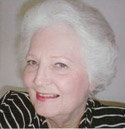 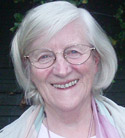 l to r: Hertha Larive, Janice Dolley |
Hertha had trouble with Janice Dolley, another Wrekin official and a Foundation supporter. Janice accused me of sending the Castro book to the Wrekin Trustees. Hertha knew that I was innocent. Janice Dolley also countered Hertha’s support of me by promoting a copy of the Metcalf attack which appeared on the internet that year at the instigation of the Findhorn Foundation. This item was derogatory of myself, and contained untruths. Janice circulated the misleading creation to Wrekin Trustees. However, Hertha reported to me that none of those Trustees considered the aspersive Metcalf item to be convincing. Janice was also a Foundation Trustee. Her letters to me reveal a staunchly partisan attitude to the Foundation that was prepared to adopt extremes.
People like Dr. Fenwick remained completely unaware of such events. He seemed totally screened off from these; no ethical discrepancy could disrupt his contentment with the status quo. His leisurely reply to my letter after a whole year (as reported above) tended to underline the difficulty in communication. In my response (in early 2003), I reported that twenty-two SMN members had been sent the same material as himself. “A few did not reply, the rest sent their thanks, but with one exception there was no further follow-up.” My earlier enthusiasm for these contacts had accordingly abated. In earlier letters I had mentioned positive responses from Prof. David Fontana, Dr. Andrew Powell, Prof. Chris Clarke, Dr. Julian Candy, Canon Michael Perry, and others. Those responses were actually superficial.
An irony is that the initially hostile Dr. Candy did maintain an interest, being the exception referred to. However, his reading schedule was lax to a marked degree. He could not get down to reading my autobiography. Eventually I had to send him a list of selected chapters and passages to read, which was the only way he could be enticed to give the time. Even then, he read through the lens of his nonjudgmental disposition; his erratic (and very judgmental) interpretations tested my patience.
Dr. Candy had declared himself to be a fan of Goethe and Ken Wilber, so I hope that he read those authors more thoroughly. He could not understand many of my themes. For instance, he found reincarnation a difficult concept. He complained that I did not refer to divine love and grace, also there was “no prospect of Jesus to redeem us.” Another criticism from Dr. Candy was: “Why bother in this life if there must be so many [more lives] to come.” He had evidently resorted to Wilber, and also Henry Corbin’s version of Sufism, to offset some doctrinal rigidities. He only read the few chapters of The Destiny Challenge that were specified, remaining in complete ignorance about many supporting details. To him, long books were an ordeal.
Another problem was Hertha’s reticence. Though she was sympathetic to my plight with the Findhorn Foundation, she would not openly state the anomalies introduced by Janice Dolley. Nor would she decisively confront the flaws of David Lorimer about which she complained to me. This drawback effectively abetted David’s tactic of silence about issues that might prove upsetting to subscribers. Hertha had developed a habit of muting discrepancies. This meant that injustices could be ignored by official policy, funding being so important to David. Hertha told me that David could travel in comfort abroad as the SMN ambassador; she strongly implied that his career depended upon funds rather than ethics.
24. Grof LSD Therapy a Major Issue
In 2002 a major issue developed, one that was to become basic for my stance within the SMN. David Lorimer wrote a glowing review of Christopher Bache’s Dark Night, Early Dawn, a review which appeared in the SMN magazine Network. That book by Bache amounted to a promotion of Grof therapy, the experiences described arising from LSD psychotherapy and Holotropic Breathwork [Bache was an American promoter of Dr. Stanislav Grof, the entrepreneur of Esalen].
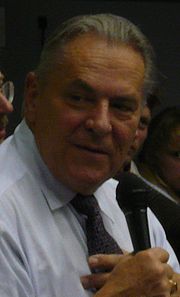 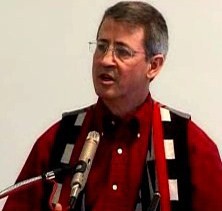 l to r: Stanislav Grof, Christopher Bache |
David also booked Prof. Bache to appear in an SMN conference the following year. Bache was a disciple of Grof, so I was careful to read his book. I began to protest at the dangers involved, but nobody took any notice, save Hertha. David was clearly resistant to any suggestion that he was promoting the wrong influences, despite the LSD factor [the mind-manipulating Grof had dosed clients with LSD and MDMA, an easy way to keep them in thrall; this activity merits strong criticism, whatever the enthusiast delusions of "self-development" via potent drugs].
I decided to express my objections in an article planned for Network. I knew that David might reject the article (he was editor of Network), so I took the precaution of enlisting the support of Dr. Julian Candy. I sent Julian the new article in November 2002. He wrote back saying that my contribution:
states an important case, reads well, and which I hope David will publish in Network; while I don’t go with everything you say, the debate you open is necessary, and at the least your input helps to balance too casual an attitude to these matters.
Julian also informed me that Bache had become Director of Research for the Institute of Noetic Sciences. This American organisation had been profiled by David in his edited work Thinking Beyond the Brain (2001). David was obviously continuing to make strong overtures to this large body of potential subscribers. Yet at what cost?
Largely because of Dr. Candy’s attentions, David agreed to accept my critical article for Network. This contribution was entitled “Transpersonal Experiences – a Need for Re-evaluation?” (See Neglected Papers Against Grof Therapy) The item was scheduled to appear in the April 2003 issue. After reading my article, Dr. Candy had become less endorsing about Bache, grasping that the latter’s therapy book was more hazardous than he had assumed.
David was rather careful to evoke a written response from Bache that was included in the same issue. At the same juncture in time, David selected Bache as a leading speaker at the “Mystics and Scientists” conference associated with Winchester. I refused to attend that particular conference, held in 2003, on a point of principle. It is a fact that a fair number of SMN members were not clearly aware that Bache was advocating the use of LSD as a “sacred medicine path.” Many of them had not read his book. They only became aware of the psychedelic emphasis through Bache’s written response to my article. Even then, the general lethargy was very disconcerting.
David himself had known about the psychedelic orientation of Bache. I spoke to him about this matter. David was evasive, not admitting any error in selection; he was merely being open-minded, he said. I did not accept the validity of that explanation in view of the dangers posed by drug ingestion and Holotropic Breathwork, quite apart from the issue of a spiritual complexion imparted to illegal drugs by Bache and his inspirer Stanislav Grof.
David prudently conceded that my viewpoint was an important one. He also significantly insisted that my article be reduced from 5,000 words to 2,500 words, the reason given being lack of space.
Bache made his standpoint very clear in his reply to my Network article. His own article was entitled “Is the Sacred Medicine Path a Legitimate Spiritual Path?” There was no mistaking his meaning or intention, which was to affirm LSD therapy (aided by Holotropic Breathwork) as a spiritual path. This was dubbed the “sacred medicine path,” a description open to repudiation in that LSD is of recent laboratory manufacture and did not exist in shamanist societies.
The revelation of Bache’s basic teaching did raise some eyebrows in the SMN. However, the influential David Lorimer showed no concern whatever. The implications of the whole situation were alarming. How many susceptible people would be drawn into the “sacred medicine path” as the consequence of SMN sanctions and tolerances? How far had the practices of Grofian LSD therapy actually infiltrated the SMN? These were questions generally avoided in the SMN as being indiscreet. David Lorimer’s presiding nonjudgmentalism (and economic agenda) caused an increasing blindness and confusion.
A further twist to the Grofian issue occurred at that time. David had persisted in accepting an advert in Network for Grof’s Holotropic Breathwork retreat in Switzerland. He completely ignored my protest on this matter. That retreat was very commercial, involving a high fee for clients. Stephen Castro then sent David an email specifying Grof’s own acknowledgement of potential dangers in the Breathwork. As a consequence, David applied a disclaimer to the advert, using a virtually microscopic print (Shepherd, Pointed Observations, p. 362 note 34). When he saw this very diluted measure, Stephen remarked that more integrity could be found on the back of an aspirin pack than in David Lorimer's feeble disclaimer of an extremist therapy.
25. The Alister Hardy Trust and Chris Clarke
Some of the SMN people were surprised when the Alister Hardy Trust (AHT) conceded my case by offering an avenue of research. This came in the form of a letter from Professor Paul Badham dated April 7th, 2003. This man was Director of the Religious Experience Research Centre at the University of Wales (Lampeter). Their research committee (who included Dr. Fenwick) had been consulted. Professor Roland Littlewood had offered to provide the supervision needed. Professor Badham explicitly acknowledged, and agreed, with my view that it is important to establish the difference “between spontaneous transpersonal or religious experiences and the altered states of consciousness that can be induced either by Holotropic Breathwork or by drugs.”
I was duly grateful for this attention, though problems were encountered in the stipulations involved. I had to find a suitably qualified research student able to devote three years to the proposed research. I also had to gain the funding required for this. At first I thought that I could acquire funding, but this plan evaporated. By that time also, I had strong doubts about the success of a research project along the lines laid down. I had been in contact with several research students in the past year or so, discovering that their horizons were strongly bounded by career prospects and personal predilections that could even prove unstable (as at Liverpool). My own preference was for a group of researchers working on more informal lines. There was an extreme difficulty in gaining support for any such unconventional possibility.
Within the SMN, Prof. Chris Clarke had initially been helpful the previous year. He had given me information about research grants. I told him of my confrontation with Jean Galbraith, adding that “my interests do not actually lie in the field of kundalini research, Chris, but in the field of consciousness studies and interior growth, sometimes termed spiritual development” (letter dated 10/02/ 2002).
The irony was that, because of limited interest, my SMN profile narrowed down to kundalini research. However, I managed to get the tag broadened for my listing in the SMN directory, just prior to the AGM of June 2003 in Wales. I was here described in terms of “consciousness, mysticism, ESP and kundalini research.” I was still not happy with the definition. I was continually subject to an intuition that I would have to leave these circles. The Bache controversy had aggravated the whole situation. Very few people could see what I meant.
In June 2002, I had sent David Lorimer a detailed statement of my proposition for a disciplined research group that did not work on the conventional academic lines. Included was a proviso that “anyone wishing (or willing) to speak should do so as a contribution to research, without a fee, in order to enable both the SMN and the AHT to cooperate fully with the project without the inhibitory factor of financial considerations.”
David was very cool in his reception of my prospectus. I sensed that contributions without a fee were alien to his own organisational methods, and probably to many of the SMN academics. My son had complained to me that academics received payment for virtually everything they did, from research grants to lecture fees. He himself had undertaken many years of research (in library conditions) at his own personal expense, with no grants to assist. He was too retiring to be a speaker, so he gained no pocket money in that direction.
As I had suspected, complications ensued with the AHT avenue to research in the spring of 2003. My prospectus had been totally ignored by the SMN, while the more diligent AHT proved rather unyielding on basic points of their own concession.
 Chris Clarke |
Prof. Chris Clarke (of the SMN) sent me an email (dated May 7th), briefly offering to assist in some form of recommendation to Prof. Badham of the AHT. It was not quite clear to me what Chris was proposing to do; I had formerly been puzzled at the variations in his attitude towards me. Although he had at times been very helpful and considerate, on other occasions he was rather peremptory and disconcerting. For instance, in the summer of 2002, I offered to make him a gift of the three volumes comprising my autobiography. He declined to accept them, evidently wishing to distance himself completely in that respect. He had never read those volumes.
In response to the email sent by Prof. Chris Clarke, I telephoned him to check on the situation. There was more than one phone call involved here. He was able to contact Prof. Badham and elicit further information. I was told that the three volumes of my autobiography would have no part in the envisaged student study programme proffered by the AHT. I would really have no say whatever in the research project being discussed. Prof. Clarke had formerly mentioned to me that, if I could find a researcher, the SMN might possibly produce the means of funding. He now indicated that the necessary funding could be obtained, though subject to the conditions described.
I had many misgivings at this juncture. I decided that I could not accept the conditions, even if the funding did actually materialise (and I was in considerable doubt about this after the responses of David Lorimer). Prof. Clarke meant well no doubt, while distancing himself from my project to a marked extent. I did not believe that he could speak for David. Another basic problem was the inflexible attitude of the AHT research committee, who were for some reason prohibiting my autobiography in the proposed research. Nothing made sense about how these organisations approached “research data.”
I accordingly sent a letter to Prof. Clarke dated May 27th, 2003. I stated that I had originally approached Prof. Badham with the hope of something completely different to what was now occurring. I was unable to negotiate the prohibition on my autobiography. I expressed my feeling that one lone student would be insufficient for the project as demarcated by current stipulations, not least because the student might not be able to competently distinguish the substantial difference between spontaneous mystical experience and the Grof/Bache records of psychedelic ASCs. I added reference to my own prospectus (which had been ignored by the SMN) concerning professionals, retired or otherwise, who might bond to do the needful research on an independent basis and write articles suitable for publication. I observed that only two professionals in the SMN had shown a passing interest in my autobiography. I concluded by saying that I now wished to withdraw from this project as bounded by the AHT. Copies were sent to David Lorimer, Dr. Fenwick, Dr. Candy, and others. The feedback was dismal, as usual.
Prof. Clarke did reply quickly (28/052003), via one of the ubiquitous emails tending to an abbreviated mode of communication. The wording was rather terse, and is reproduced here:
Dear Kate,
I’m sorry to hear that you are stepping back from the project – where by “project” I mean the proposal which I had been pursuing, and which we discussed, to fund a PhD wholly or partly from the Theoria to Theory Fund of the Scientific and Medical Network. This project had not even reached the stage of approval by the committee of the Fund, after which it would have been taken to the Board of the SMN, and so the other members and officers of the SMN (recipients of your letter) may not be fully aware of it.
Since my motivation had been entirely that of engaging with your own concerns (it is not one of the highest priority for me) I will not take it any further. A pity, since I think it would have been very worthwhile.
Best wishes
Chris
That email went to the computer of Stephen Castro, who was more than a little annoyed by the wording. He emphasised to me that the “project” was too nebulous, not having been approved by Lorimer and others (which I knew full well). Stephen had endured for many years the evasiveness of the Findhorn Foundation officials. He was not convinced that SMN officials were much in advance of such retarded standards. He thought that the discriminating phrase “not one of the highest priority” should not have appeared in an academic and official communication. He knew to what extent the SMN had ignored any investigation of my contact with the Findhorn Foundation. He boiled over with frustration at this point. Despite my entreaty, he quickly sent a response (28/05/2003) on his computer to Prof. Clarke, which read as follows:
Dear Professor Clarke,
A very clever reply to a seventy-five-year-old lady’s expressed concerns? I think not. However, it is a response that quite evidently confirms what actually is the “highest priority” for you. Your last sentence is of course meaningless, because if you really did think that “it would have been very worthwhile” – surely a quite different response would have been made. Yes, “a pity,” isn’t it?
Sincerely
Stephen Castro
PS Kate begged me not to send this email, but as I have the unfortunate task of dealing with her emails, I do find it difficult at times to remain a detached observer, especially when it comes to professorial anomalies.
A speedy reply came back the same day from Prof. Clarke, as follows:
Dear Stephen,
Before receiving your email, and prompted by a very thoughtful and considerate message from Shirley Sharpe, I had started to look for other ways of finding funding that would have involved Kate more genuinely than the approach I had been taking. However, on reading your email I realise that you both obviously hold me in such derision that I will receive nothing but insults if I continue. I will accordingly keep well out of it. I am sorry to have bothered you with my unwanted attentions.
PS Oh, and just to clarify: I do not regard Kate Thomas as “a seventy-five-year-old lady” as you patronisingly put it, but as the clearest expositor we have of certain aspects of the Kundalini experience.
This email referred to Shirley Sharpe, an SMN member who was sympathetic to me and who had no academic status. It was obvious that the Professor knew there was some deficit in the approach he had been taking. He had no basis in my direction for anticipating insults. Stephen sent another reply ending with: “Surely you would do better to clarify your stated position with Kate. I do not think for one moment that she holds you in ‘derision.’ But in my humble opinion you do seem to send out conflicting signals."
Chris Clarke telephoned me immediately upon receipt of the above, and we had a friendly conversation. I smoothed over the matter of funding, as I knew that this avenue would be difficult for anyone to succeed with. Professor Clarke had more conscience about what was occurring than other SMN officials. However, he did not get to grips with basic details such as my "kundalini" experiences and my conflict with the Findhorn Foundation. His role as a mathematician made it difficult for him to concede more elusive factors in mystical experiences than were favoured by his version of alternative science.
26. Disbelieving Bache and Encounter with neo-Advaita
Shortly after, I sent a letter to David Lorimer (dated 01/06/2003) expressing my decision to resign from the SMN. The main reason given was my dismay at the inclusion of adverts for Holotropic Breathwork in the official SMN magazine. Yet in truth, there was much more than that, including the lavish patronage of Christopher Bache and the lethargic SMN response to my objections contained in the "counter to Bache" article published in Network. My son told me that I was correct to resign, as the muted support for my beleaguered research project occurred in the shadow of Bache’s exaltation by Lorimer [the SMN were effectively a pro-Grof and pro-LSD channel, a factor which critical analysts were quick to discern].
During the next two weeks, several SMN members expressed dismay that I was resigning. They urged me to stay and persevere. Dr. Fenwick came out of his shell and expressed more sympathy. A number of people had registered my criticism of Bache, though they did not seem to know what to do in this situation. I now wrote a follow-up article in response to Bache’s own (resistant) reply to me. I deliberately kept the sequel brief, knowing that David would be averse to a lengthy article (he had contracted my earlier article by half, a substantial gesture of reluctance).
This second contribution was entitled “Disbelieving Sacred Medicine.” I added annotations, a number of which were contributed by Stephen. I quickly retracted my resignation. David agreed to publish my article in the December issue of Network. However, this time my contribution was classified as a letter. David placed my article in the correspondence section of the magazine, while reproducing the notes in a very small print. My son privately expressed annoyance at this, saying that my contribution was of sufficient importance to have been given “special feature” status, given the nature of the controversy signified [David Lorimer was definitely attempting to minimise the protest at LSD lore, a fact which spoke much for his own preferences; his overbearing attitude will long be remembered as a pro-Grof significator].
In July I encountered the supercilious attitude found amongst some academics with complexes about mysticism. At the AGM I had met Dr. Mike King, a reader in computer art at the London Metropolitan University. This man was becoming prominent within the SMN. He seemed interested in my background, so I offered to send him my books, which I did. He wrote back, expressing a muted appraisal in which a strangely condescending emphasis emerged as the major feature: “Is there scope for me [Dr. King] to teach enlightenment to seers, healers, clairvoyants, mediums etc? My starting point would be to recognise and value their particular, and varied, gifts, but also to point out that if they are genuinely interested in enlightenment they would need to unlearn everything that they had so painstakingly worked for.”
This insulting put-down of myself was made on the basis of reading part of my autobiography, and skimming The Kundalini Phenomenon, which was clearly beneath the attentions of Dr. King. To emphasise his point perhaps, he said that he would return the books to me, as he did not have any free shelf space. [Correspondence reveals that Mike King expressed an affinity at this period with psychedelic theories of Grof and Bache; in their support for Grof, some academics are supercilious towards critics, believing that they are "enlightened" and others are stupid]
Dr. King sent me a few more letters, written in a less superior vein. The inspiration for his “teaching enlightenment” tendency was here clearly revealed: his partiality for neo-Advaita teachings as expounded by Westerners like Eckhart Tolle and Andrew Cohen. His own personal teacher was, however, Douglas Harding. I heard much about the latter when I had lived in Cambridge many years before. Harding was widely considered to have a bizarre teaching. In a letter to Dr. King dated 21/07 2003, I stated:
I remember when Harding’s controversial ‘Headless Way’ first became a craze among young students in Cambridge, where I lived. I also remember reports of the psychological problems arising from the sense of disembodiment that the attempts at ‘headlessness’ caused. My concern has always been with the potential damage certain practices can create.
Despite the moral support I received from a few other persons in the SMN, none of them actually did anything about the Bache issue and David’s promotion of that ardent pro-Grof exponent. I suspected that they were scared of David, or did not wish to court his displeasure. He did so much of the organisational work that they all depended upon him, with the consequence that he set in motion more or less what he wanted.
The only person who did come forward to contest Bache was a man formerly unknown to me. This was Andrew Burniston, who made a contribution in the Jungian mode, though acknowledging my “dialogue” with Bache. His contribution was accepted along with mine for the December 2003 issue of Network, and likewise classified as a letter, being placed in the correspondence section of the magazine. Andrew sent me a specimen copy of his contribution, and we had a brief exchange of letters. He likewise hoped for a wider debate in the SMN over the Bache issue. We were both going to be disappointed.
I was surprised to learn from Andrew that his friend Dr. Leon Schlamm had used some of my material for a course at the University of Kent. Andrew suggested that I make contact with Dr. Schlamm, and I accordingly did so. The latter proved friendly, though we did not meet.
Meanwhile, Max Payne had become my major contact within the SMN. I frequently spoke with him at SMN venues, and he commenced a habit of telephoning me. He was a lecturer who lived in Sheffield. An SMN official, Max became very interested in what I was trying to achieve. He agreed with me that the SMN could be doing more than the routine programme. Max had noted my disagreement with Jean Galbraith, saying that he felt my version of kundalini to be more appropriate. He expressed admiration for my counter to Prof. Bache, admitting that he had not formerly been aware of all the complexities.
In August 2003, I wrote to Max saying that Shirley Sharpe and another woman wanted to participate in a serious research project, adding that both of them wished to speak with him about this. “If you really think, Max, that I have something useful to offer, I would be most grateful if you would consider setting up this project as you think best, including supervision of all that follows. I know that you will be strongly supported by Julian Candy, as he was very disappointed when my earlier proposition fell through” (letter dated 11/08/2003).
I here commented that I felt “a worthwhile undertaking for the SMN” would be to research information on the effects of techniques used by Grof, Bache, and others, plus information about authentic and artificially induced kundalini experiences, the lastmentioned requiring due focus for the frequently disastrous consequences requiring medical attention.
Max was very keen to take up this onus, and enthusiastically enlisted the assistance of Dr. Candy, who was more than willing to become a “kundalini researcher.” They spent more time talking about the research than actually doing it. A setback arose when one of the female participants pressed for the proceedings to become a “process.” Here I intervened. In October I wrote to both Max and Julian stressing the need for an intellectual (or academic) overview of relevant materials rather than attempting an experiential process, which could be hazardous. Max and Julian had prepared a questionnaire for prospective participants; I felt this was much safer than alternatives. My difficulty was to get those concerned to read the varied books I had mentioned (not just my own, but a fair number of others). I had written papers in mind (by the participants) as the outcome, not adventures into esoteric experiences, which are a sure bet for potentially serious complications.
Another difficulty was the rendezvous, the participants living in different parts of the country. I did not attempt to join in, as I was too uncertain of the initial outcome. Indeed I tended to withdraw, not feeling that maximal efforts were being made. Both Max and Julian complained of a basic lack of time, and did not themselves read very much. Julian had not improved upon his lethargic repast of selections from my own books, and Max proved rather similar. I was surprised when Max admitted that he had “speed-read” my autobiography. His remarks confirmed that he had not assimilated basic events. Neither Max nor Julian gained familiarity with the book by Stephen Castro. They tended to narrow down my experiences to the kundalini factor, not having had such experiences themselves. Max contacted me quite frequently, though Julian did not, which made for further difficulties.
I was puzzled when Julian entertained the idea of joining a Sufi group. He did not associate this prospect merely with his favoured author Henry Corbin, but also with me. I emphasised that I had discontinued all of my former incentives in the direction of Sufism, especially in view of the fact that my earlier inspirer was now deceased. As with other matters, Dr. Candy did not understand what I meant. He tended to rely heavily upon Corbin’s book about Ibn al-Arabi to make comparisons in respect of Sufism. His version of the latter subject was rather limited, in my view, though I did not mention this reservation.
Some time before, I had sent Max a copy of my son’s longest book. Kevin was annoyed when I told him this, as Max had not asked for the book. Kevin disapproved of books being distributed to indifferent or random parties, believing that books could only succeed if there was a strong motivation to read them. Kevin predicted that Max would do nothing with the book referred to. This at first seemed contradicted by the enthusiasm Max expressed about the gifted volume. Max said that he was amazed at the erudition evident with regard to Indian religion. Indeed of his own accord, he offered to review the book in the SMN magazine. However, the review was never actually forthcoming. I do not believe that he finished reading the gifted work, though he doubtless intended to do so. He made no attempt to follow up by reading other works of my son. He was simply too busy.
Kevin would never press his books on anyone, and would never ask for reviews. He was, on principle, an elusive author. Stephen Castro repeatedly offered to provide him with a website, a prospect which Kevin consistently declined. Stephen had been puzzled at why Kevin wrote long books with annotations that made for a less than commercial appeal. Kevin once responded: “Readers are not worth having unless they are intent and can decode what one is saying.” He disagreed with my attempt to make my autobiography known to the SMN, predicting a dismal result.
My son would say to me that if dedicated scholars wanted a book, they would be single-minded in obtaining it. He himself had paid substantial sums for academic and scarce books that he wanted to read. He had been asked by one or two learned scholars overseas if he knew where to find such and such a rare work. Books that are valued, he would say, would be pursued over the globe by the literati. “If you have to press books upon the heedless, or upon a commercial market resembling the e-bay sector, the result will be proportionally shallow.” He was correct, I have to admit.
I had given Kevin the tape recording of the kundalini talks at Regent’s College, requesting his view of the contents. He listened to the tapes and expressed a strong aversion. Kevin complained in particular about Dr. Galbraith’s guided meditation, which was so fluent in sensational idioms. He warned that my modified version of my 1977 experience sounded too much in places like a new age adventure. He said that the audience responses betokened acute miseducation. He also complained that I had mentioned him (Kevin), though very briefly, in my talk, reminding me that I had promised not to mention him in SMN circles (which he regarded in terms of eccentric workshops, seminar distractions, and Grof psychedelic lore). I was careful to follow this prohibition to the letter thereafter, feeling concerned in case Max might ask questions about my son. Strangely enough, Max never asked a single question in this direction, despite his receipt of the lengthy annotated book abovementioned.
28. Neo-Advaita Guru Andrew Cohen in Dispute
Publication in the December 2003 issue of Network, of the articles by myself and Andrew Burniston, made no difference to the prevalent lethargy of the SMN. No further critics of Bache emerged in that sector. There were known supporters of Grof amongst the membership of the SMN, whose tendency to alternative therapy was acute. I felt that the counter articles (or “letters”) may as well not have been published. David Lorimer was keenly intending to publish Bache’s response. I was correct in deducing that this pro-Grof contribution would gain a more prominent space in the SMN magazine.
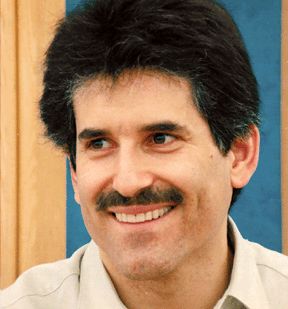 Andrew Cohen |
This situation came to a head when I openly expressed my disagreement with David Lorimer about his inclusion of the American neo-Advaita guru Andrew Cohen in the forthcoming “Mystics and Scientists” conference scheduled for Winchester in March 2004. I sent a letter to David dated 30/01/04, copies of which went to Max, Julian, Dr. Fenwick, Hertha Larive, and Dr. Bart Van der Lugt. The letter read as follows:
Dear David,
I cannot express how horrified I am to learn that you have booked the so-called “enlightened” guru Andrew Cohen to participate in the forthcoming “Mystics and Scientists” conference. As I mentioned to you some months ago, Cohen’s own mother Luna Tarlo (formerly his devotee) denounced him in her published book The Mother of God (1997), which you said you would obtain and read. She clearly did not do this lightly, and from what she said, the factors surrounding her son’s purported “enlightenment” are suspect in the extreme.
Likewise, having read numerous copies of Cohen’s magazine What is Enlightenment? (WIE), I am equally appalled at much of the material presented and the quite sickening advertisements for all manner of supposedly spiritual development promoted by a large number of highly suspect “gurus” and organisations. Does the SMN really wish to be associated with the viewpoints contained in the type of articles I have appended to this letter? (from the Fall/Winter issue 2001). To highlight but two of the concepts presented: Tantric sex, and homosexuality as a God-designated “spiritual path” or direct route to spiritual growth. I am not homophobic, having had many connections with homosexuals in the past, but there is no way I can consider this aspect of human life as specifically arising to assist inner growth.
In that letter, I noted also the convergence with recent trends in the Findhorn Foundation, deducing that Cohen’s magazine was viewed as a legitimating support by the persons responsible in the Foundation for promoting workshops suggesting that “being gay is a spiritual calling.”
The responses were revealing. Max and Hertha sided with me, though both were careful to express their views by telephone, not on paper. They obviously feared David’s disapproval.
A disappointing reply came from Dr. Candy dated Feb. 9th, 2004. He typically argued against me, though without being categorical. This response read as follows:
I have read the articles (and indeed have come across this magazine on one or two occasions before), and although of course the topics you mentioned are referred to, my impression is that Andrew Cohen distances himself from these ideas rather than endorsing them. Of course, it may be that he is disingenuous or indeed deceitful in this, but on the face of it I didn’t get the impression that he is advocating homosexual or other ‘deviant’ encounters as a preferred way of reaching enlightenment – surely any human experience can be used as an opportunity for spiritual growth, provided it is firmly ethically grounded. I guess you’d be saying that ethically grounded is precisely what it is not. I hope that he does come to Mystics and Scientists, so that he can be challenged on just these issues. I very much hope to see you there too of course.
Max and I are meeting soon to thrash out some issues about the kundalini research. Thank you for your contribution and effort. It’s all happening rather slowly, I’m afraid, though that’s not surprising I suppose.
I had not actually said that Cohen was advocating the encounters mentioned, instead implying that he was effectively supporting the views of others and spreading them to a wide audience via his commercial magazine. There were no due ethics discernible in his very open-handed tactic. It was useless to rely upon Dr. Candy for moral support, even while he was justifying the snail’s pace progress of the research project set in motion.
Another evasive reply came from David Lorimer, one more inflexible and perturbing than the psychiatrist had ventured. This email, dated 11/02/04, is reproduced in full:
Dear Kate,
Thank you very much for your letter and the articles enclosed from What is Enlightenment?.
As you will be aware, we have had a discussion arising from the points you make but do not feel that now is the time to rescind an invitation. Moreover, if there are points to bring up about Andew Cohen (from the books that have been mentioned), then the Mystics and Scientists conference provides a public forum in which to do so, as was the case with Chris Bache last year. Most of his lectures are delivered to devotees.
WIE is produced in an American style which is not ours, and readers have to exercise their discrimination about what to follow up, if anything, in terms of adverts. Of the two articles sent, I personally found the treatment by Miranda Shaw of the Tantric tradition entirely responsible. She put the emphasis on the initial understanding of emptiness and did not sensationalise the material – rather the reverse. It was also made clear that this is not a path for everyone. The second article addresses the difficult issue of the relationship between spiritual practice and sexual orientation and opens up exactly the same issues as are currently being deliberated within Christianity. I don’t interpret this orientation as in any sense a route to spiritual growth, but rather asking the question: how can a person with such an orientation pursue a genuine spiritual path? Does their orientation exclude them by definition, as some suggest? So I don’t think the magazine so much supports the viewpoints, as you argue, but provides a forum in which they can be openly addressed.
I should add that I have been impressed by the level of debate between Andrew Cohen and Ken Wilber in WIE.
All good wishes
David
I was very disconcerted by this response, which I felt was entirely the wrong approach, one that could be accused of being heedless and catering for commercial horizons. To get a second opinion, I asked my son what he thought, as I was staying in his home at the time. Kevin said that David’s letter amounted to a seriously defective exegetical gloss, observing that the article on homosexuality was related to the Dalai Lama’s necessary curtailment of permissive impingements upon Buddhist monastic discipline. Gay activists in California had been countered by the inoffensive Dalai Lama. There was far more about gay activists than the Dalai Lama in the WIE article, which tended to be misleading. I have known homosexuals in Britain who were fully aware that their lifestyle was not a spiritual route, and the best of them would have been shocked by what some activists were now saying. As for Miranda Shaw’s erotic version of Buddhism, this is a minefield for sensitive Buddhists who can differentiate extremes from genuine practice.
My reply to David, dated 14/02/04, included the following:
A permissive forum is one thing, but the study of spiritual insight and development quite another. I understood that the SMN was attempting to move into a more spiritually focussed mode. It seems I was wrong. Not only are you encouraging a questionable guru by booking him, but also, I understand from Hertha Larive, a person who practises magic with elemental forces [this was not Cohen, but another entity].…
I was surprised to learn that you consider as legitimate such statements (of Miranda Shaw) as ‘men are advised that they should take refuge in the vulva of an esteemed woman’ and that they should even ‘be willing to touch and ingest every substance discharged by a woman’s body, and lick any part of her body if requested to do so.’ This is hardly the kind of material to be proposed as being of a spiritual validity. Miranda Shaw’s view of Buddhism and ‘emptiness’ is a false one, as Cohen should know.
I knew that David would not like this repudiation, and that it would not make any difference to his decision. He had used the name of Ken Wilber as a virtual endorsement. I suspected that Dr. Candy was influenced by this deference to his hero author. David did of course send out cc. copies to the same persons I had contacted. From then on, Dr. Candy turned away from me, clearly influenced by the nonjudgmentalism displayed by David [the Wilber-Cohen dialogues were here elevated to the status of a desirable wisdom].
In contrast, Dr. Bart Van der Lugt transpired to be in support of my position. His reply from Holland came in the form of an email to David dated 09/02/04. Bart was a Dutch medic, being one of those persons sympathetic to my emphases. He sometimes used new age idioms, including the word “vision,” though I had never expressed my assessments in terms of that word. His email read:
Dear David,
I assumed that you have received Kate Thomas’ letter dated 30/1/04. In this letter she is expressing her apprehensions about Andrew Cohen’s participation as a speaker during the upcoming Mystics and Scientists conference at Winchester. I was speaking with Manec and Irene, both of Davidhuis, about Kate’s letter. They both are supporting Kate’s vision [he meant standpoint]. Some years ago they refused him (Cohen) to lecture at Davidhuis. They both had felt intuitively that he was not suitable to present at Davidhuis.
Since then several books and articles have been published here in the Netherlands about Cohen, and all in a negative way. See Enlightenment Blues (by A. van der Braak). Recently, February 2004, an article was published in the Jonas, an anthroposophy magazine, which was also negative. I personally cannot judge about Andrew Cohen because I do not know him. I know Kate Thomas, Manec and Irene, and I respect their visions. When they say we have to doubt about someone’s purity, I tend to honour their advices. So I do now as well!
My question to you and John Clarke, the latter as chair of the programme committee, is to reconsider Andrew Cohen’s participation.
Bart’s plea was ignored by David, even though the former was also an SMN official. Prof. John Clarke is unlikely to have sided against David, being one of his supporters. I quickly obtained the book Enlightenment Blues, which had appeared the previous year. This disillusioned account confirmed the assessment of Luna Tarlo. I was also interested that the author remarked upon Cohen’s desire to gain the participation of Ken Wilber in WIE, a feat which did not change the negative conclusion of Andre van der Braak, who had formerly been a devotee of Cohen and knew him well.
A delayed reply came from Dr. Fenwick, who explained that he had been overseas. His letter was dated 25/02/04. His view was not flippant like that of Dr. Candy, and nor was it supportive like Dr. Van der Lugt. Instead, he sat on the fence as it were, though in the last analysis he was endorsing the SMN selection of Cohen. I sensed that Dr. Fenwick had for many years been a colleague and collaborator of David Lorimer, a role in which he would not openly contradict the latter on any point. I found his letter polite but rather confused on some points. Fenwick was evidently not familiar with Cohen’s form of assertion. Again and again I had found that prominent academics were ignorant about the background of various entities wielding influence in alternative sectors. I will here reproduce the major part of Dr. Fenwick's letter:
I’m very grateful for your comments, and from what you tell me, I have a lot of sympathy with your view of Andrew Cohen, but I’m handicapped in having no personal knowledge of the man or the magazine apart from the extracts you sent me, and I haven’t yet had a chance to discuss him with David. Leaving aside his claim to be an ‘enlightened’ man (because in my experience men who I believe are probably enlightened rarely make such claims for themselves) I don’t know exactly what he is going to talk to the conference about. If, for example, he intended to give an overview of the different ways mankind has tried to achieve enlightenment, and to discuss the desirability and effectiveness of such methods, I would see that as of some value because it should lead to a legitimate debate about whether it is reasonable to equate, as many people do, ‘altered’ mental states with ‘enlightened’ or ‘mystical’ mental states. This is, of course, at the very heart of your dialogue with Chris Bache and your excellent article Disbelieving Sacred Medicine in the December Network.
Perhaps the question What is Enlightenment? is one that is very pertinent for us to examine even more closely, especially as so many of these methods are out there in the market place and, as you point out, being commercially promoted in various quarters. You also warn against the SMN signalling endorsement of any questionable medical practices and I think you are absolutely right to do so.
Let’s assume for a moment the worst case scenario, which is that in his talk Andrew Cohen doesn’t simply discuss, but promotes what most of us would consider highly questionable methods of achieving enlightenment – would this matter tarnish the Network’s reputation? I have great faith in the SMN’s critical faculties, and if he did give this kind of talk I don’t think he would be given an easy ride by his audience. And provided a robust discussion ensued I don’t think the Network could be accused of endorsing his views.
Dr. Fenwick here acknowledged my confrontation with Bache. However, he seemed unaware that Cohen’s angle was quite different to the theme of Bache. Cohen’s angle of neo-Advaita did not promote drug use, instead making assertions that facilitated his role of a guru with an increasing following of admirers and donors. I was sure that Cohen had no intention of giving a learned overview of the different ways to achieve enlightenment. Writers like Andre van der Braak and Luna Tarlo were unknown to Dr. Fenwick. He was leaving selection of speakers to the nonjudgmentalist (and commercial) stance of David Lorimer. The fact is that Dr. Fenwick enjoyed presidential status in the SMN, having the right to complain if he felt the need to do so.
Even if SMN critical faculties might rise to the occasion (which David clearly did not anticipate) in the case of Cohen, that feat had not occurred in the case of Bache, who had triumphantly delivered his talk in 2003 and subsequently found only two objectors in the pages of Network (one of whom had her article reduced by half). David Lorimer's condoning review of Bache was extracted by SUNY Press and appeared via a quote in Cohen’s influential magazine WIE. The SMN definitely can be accused of endorsing the pro-LSD themes of Bache, themes which are increasingly influential and contribute to ingestion of hazardous drugs [including cannabis].
I felt that I should attend the “Mystics and Scientists” conference, which occurred in late March 2004. Cohen’s profile was very much that of the enlightened guru. From the start, the audience were very critical. Cohen could not cope convincingly with questions put to him. The prevalent scepticism caused David Lorimer to look uncharacteristically worried. Afterwards I spoke personally to many of those present, finding that numerous criticisms of Cohen were expressed.
David felt so uncomfortable that he eventually apologised, to the others present, for having included the controversial American guru. He evidently had no intention of rebooking Cohen. Indeed, he even told me in private that he had made a mistake. I respected him for this; however, he did not publicly acknowledge that I had been correct. Another fact is that Bache’s insidious psychedelic message was even more of a problem than Cohen’s neo-Advaita. The Bache lore was uncontested at a very tame Mystics and Scientists conference the previous year.
[There were soon strong criticisms in circulation about Andrew Cohen and Ken Wilber. Both of these celebrities are considered misleading by numerous ex-admirers and other observers. The "guru and pundit" dialogues in WIE became notorious. Cohen eventually withdrew from the limelight in the face of searing denunciation, only to reappear with further deceptions. See American Guru Andrew Cohen. For criticisms of Wilber, see the website of Frank Visser at integralworld.net. See also Ken Wilber and Integral Theory; Ken Wilber and Integralism]
29. Blocked by David Lorimer and Mike King
Meanwhile, the “kundalini research” had come to a standstill. Dr. Candy had not contacted me on this matter since November, while Max Payne had slowed down and was now expressing future reliance upon the files of the Alister Hardy Trust (which contained many reports of religious experiences). I no longer took the project seriously, and sent Max a letter dated 06/03/04 to confirm the unsatisfactory state of affairs:
Dear Max,
I have thought over our conversation of yesterday and must say I am disappointed that you have not proceeded any further with Julian (even by telephone) on the matter of proposed research. This project was initiated over six months ago, and I understood that information concerning it was to be presented to David for inclusion in the April Network.
I still do not comprehend why you wish access to Paul Badham’s AHT files – surely what is needed is a range of more contemporary records that give a wider perspective on the possibilities of spiritual development.… I have covered all the relevant points in The Kundalini Phenomenon if people wish to avail themselves of this information.
My current view on needful research is contained in “Introductory Comments” and I am surprised you do not appear to recognise this. I have heard nothing from Julian on this matter since November.
Upon consideration, I shall not provide further material under the present circumstances, or certainly until your proposal has been outlined to me and proves to be of the type in which I am happy to participate.
Sincere best wishes,
Kate
A brief reply came from Max, acknowledging that it would not be possible to provide David Lorimer with any material for the April Network. He wanted to remain in contact with me, he said. Both Dr. Van der Lugt and Dr. Fenwick had expressed interest in the research project, but had not seen copies of my “Introductory Comments,” a paper which I had penned in response to the questionnaire produced by Max and Julian. I had to remind Max to send copies to them, as he was in charge of the proceedings. David acknowledged that there had been a delay and that this was not my fault (but the fault of Max and Julian).
I prevailed upon David to permit a brief meeting at the “Mystics and Scientists” conference between the key persons interested in the project, namely Dr. Fenwick, Dr. Van der Lugt, Dr. Candy, Max Payne, and myself, with David as overseer. On the day, there was some embarrassment at the apparent failure of the research, which was obviously not my fault. Dr. Fenwick created a diversion by his kind suggestion about a video dialogue between myself, himself, and a scientist unknown to me. I appreciated his good intentions, though I was unhappy about committing myself to this suggestion, feeling wary of the media overtones. So I pressed instead for a renewed research project along different lines to that envisaged by Max and Julian, hoping to engage more people for reasons that should be evident. David said that this would be kept in mind, and he indicated future possibilities.
For some reason, Dr. Van der Lugt was not present. I felt that David had neglected to invite him, possibly because of the recent friction over Cohen. David said that my proposal would be reviewed at an imminent SMN Council meeting. The mood was optimistic. I suggested that a preliminary weekend at a certain venue in Dorset (popular with the SMN) would be useful for discussion about the precise form the project should take. This seemed very acceptable.
I was unprepared for what followed. After the Council meeting a few days later, I phoned David in expectation. He was rather bleak, saying that nothing in relation to my proposal could be set into motion until sometime the next year, meaning 2005. Even then, the prospect could not follow the format I had requested, being bounded by official considerations of funding and allotment of time. This came as a shock after the apparently amenable gathering at the recent conference. David was not very forthcoming about what had happened at the SMN Council meeting. The conversation ended on a strained note. I felt that he was now emerging with his real intention, as distinct from his apparently cooperative mood at the conference. The matter of Dr. Van der Lugt also worried me. Had he changed sides meanwhile?
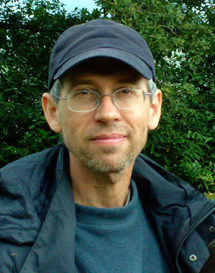 Mike King |
Soon after, I phoned Dr. Mike King (a Ph.D in Computer Graphics), who was the only one of the SMN officials readily available at that time. I asked what had happened. He was both supercilious and rude, reminiscent of his neo-Advaita inflation complex. He was a member of the SMN Council, having been present at the relevant meeting abovementioned. He said that my proposal had merely been mentioned and then set aside. He seemed to take considerable satisfaction in telling me this; there was no note of commiseration whatever. His mode of speech emphasised the insignificance of my proposal. He then very pointedly told me that he had read “most” of my autobiography (which I doubt), and made clear that he did not consider my recorded experiences to be of any consequence. The representative of the “headless way” (of Douglas Harding) also stated that many people had similar experiences to mine, occurring throughout their lives. He was strongly implying that the common nature of my experiences meant that no further time need be wasted on these - any project in relation to them was futile.
Though nothing was said about Andrew Cohen, I felt that Dr. King had been told about my objection to David’s decision regarding the selection of Cohen. As a partisan of Cohen, Mike King was no doubt very pleased that neo-Advaita had been retained on the seminar agenda. David had evidently not made a point of continuing his apologies over Cohen. My son commented that David should have cleared me of any possible stigma in relation to the Cohen issue, as the wrong selection had been David’s fault, which he had admitted at the conference. My son also pointed out that one of Dr. King’s letters to me, dated July 2003, strongly indicated an affinity with the psychedelic teachings of Grof and Bache, another possible reason for the antipathy expressed.
Dr. King has since stated on the internet: "I am a scholar, artist and spiritual teacher based in a British University." That assertion appeared at www.jnani.org (accessed 21/03/2009).
7. My Resignation from the Scientific and Medical Network
Soon after my telephone conversation with Dr. King, I commenced to write a lengthy letter of resignation from the SMN, addressed to David Lorimer (dated 07/04/04). This ran to five pages, covering several different reasons for my action of withdrawal. Those reasons were the afflicted research proposal, the churlish response of Dr. King, the Grof-Bache issue, the inclusion of Andrew Cohen at the conference, and the underlying indifference to my victimisation by the Findhorn Foundation.
In the lastmentioned respect, I stated: “Your continued patronage of the Findhorn Foundation, in the face of the known record of their behaviour towards dissidents, also leads me to believe that the ethics (of the SMN) get lost in a commercial policy.” I mentioned also David’s failure to review a recent book about the Foundation by John P. Greenaway, who had reported, amongst other things, that the Foundation had revived the officially cautioned Holotropic Breathwork.
About another issue, I stated in that letter: “Over the years, people have noticed that the SMN supports the work of Dr. Grof and Chris Bache, who advocate LSD therapy and related matters … Certain SMN officials, including a newly re-elected Council member, appear to be advocates of Grof therapy, and so it is practically useless to be a member of the SMN and to complain about matters officially sanctioned.”
I was careful to add my thanks to various persons for services performed, including Max and Julian (Dr. Candy) for their encouragement of my project, Dr. Fenwick for his offer of a video dialogue, and David himself for publishing my two articles in Network. Further, I stated at the end: “If any SMN member wishes to contact me in the future, I would be happy to hear from them.”
Copies of my resignation letter were sent to Dr. Van der Lugt, Dr. Fenwick, Prof. Chris Clarke, Dr. Leon Schlamm, Max Payne, Dr. Julian Candy, Prof. John Clarke, Dr. Mike King, Claudia Nielson, Martin Redfern, Hertha Larive, Shirley Sharpe, and Prof. Badham of the Alister Hardy Trust.
David Lorimer did not reply to my letter, instead delegating that duty to Dr. Van der Lugt. This response, dated 21/04/04, was a marvel of brevity and evasion of the issues which had been raised. I will reproduce it here:
Dear Kate,
Thank you for your letter of 7th April.
I was very sorry to learn that you have decided to end your membership with us. However, thank you for taking the time to explain your reasons – it is very much appreciated. I’m only sorry that you and the Board have not been able to see eye-to-eye on your research proposal. You have been a valued member of the Network for over a decade, and I would like to thank you for your support during this period.
If in the future you decide you would like to rejoin, just contact us and we will be more than happy to welcome you back!
We will, of course, continue to send you copies of the Network Review up to the end of this year.
With warm regards and best wishes,
Bart Van der Lugt
Chair of the Board of Directors
The Chairman had evidently been persuaded by authority to take the council cue against me. Though Van der Lugt had expressed scruple over Cohen, this did not extend to other issues. He was content to be the intermediary allowing David Lorimer to abscond from all related issues in the name of Science and Medicine. New age medicine is a blind alley. The related evasionism in new age science is prodigious enough to justify objections.
Only two of those people on the CC. list replied to my letter, namely Shirley Sharpe and Max Payne. Shirley was warmly supportive of my own position. Max expressed sorrow and regret, though without any recognition of underlying issues at stake. Max did not refer to the Bache issue, or to Cohen, or to the Findhorn Foundation. Nor indeed to Dr. King’s unmerited discourtesies. Max had gone with the crowd, habitually deferring to David Lorimer.
As for Dr. Julian Candy, I never heard from him again. Hertha Larive remained in contact with me by telephone. She informed me months later that David had told her how Dr. Candy had analysed my 1977 experience in negative terms, using the interpretation of psychosis associated with Jean Galbraith. He had thus turned full circle back to his earlier influences. He had apparently also interpreted my resignation in the light of a psychotic tendency, as any exit from the SMN was to be considered undesirable and lacking in due esteem for this accomplished organisation, which I had dared to criticise in a judgmental capacity.
When my son heard about these events, he was shocked and indignant. He emphasised that I had been correct to resign. He also emphasised that this whole matter signified a very serious threat to several areas of education, especially as David Lorimer was preparing to launch the University for Spirit Forum. This project could boast an ambitious list of fringe organisation subscribers associated with new age tendencies (including the Findhorn Foundation).
My son insisted upon writing an appendix, on the subject of my resignation, in his new book Pointed Observations (2005), pp. 405ff. He there records (page 410) how Grof was described in Network as possessing “true wisdom and compassion.” The basis for this exaltation was Grof’s commercial supervision of Holotropic Breathwork workshops. The glorifying description had appeared in a letter from a participant in a recent Holotropic Breathwork workshop conducted by Grof in Switzerland. This letter neglected to state the commercial nature of the workshop, which involved noticeable fees (ibid:362 note 34).
Such enthusiasts have no idea of the medical drawbacks involved, and ignore all warnings. Indeed, the writer of the glorifying letter evidently imagined that I was a disapproving medic who had narrow-mindedly written against Grof in my two Network articles. David Lorimer did nothing to dispel these misconceptions, which are an example of the attitudes involved in Grofian propaganda. The Grof enthusiasts frequently depict the medical profession as a major obstruction to enlightenment. This bias reflects the views of Grof and Bache and other spokesmen for the drugs lobby, which is gaining ground in the new age of pseudomysticism.
Another article by Christopher Bache was published in Network shortly after my resignation (Spring 2004, No. 84, pp. 21–3). Bache here stated that LSD therapy required the exercises of Tantric Buddhism as a stabilising factor. I did not feel obliged to continue the “dialogue” with Bache, which would have been pointless in such a situation of lethargy, indifference, and misrepresentation.
31. Correspondence with Dr. Peter Fenwick
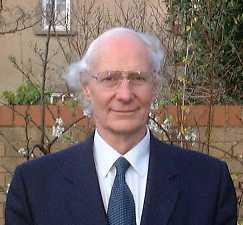 Peter Fenwick |
Apart from a sporadic contact by telephone with Hertha Larive (who would not directly confront Lorimer), Dr. Fenwick was the only other SMN member with whom I was in contact. He instigated a brief correspondence, not directly related to my resignation, which he chose to overlook. I received a short letter from his wife dated 01/07/04, bearing the address of his Neuropsychiatry Office in London. Elizabeth Fenwick did not refer to my resignation, instead saying:
Do you remember Peter talking to you about the possibility of doing a video interview with you, and with Julian Bareham who has also had a very wide experience? If you are still interested in the idea, he’d like to see if it can be done sometime this month – would you be able to get in touch with me and let me know whether you would still like to do this?
After what had transpired, this message sounded rather superficial to me, very much like an afterthought on the part of Dr. Fenwick. Was he trying to salve his conscience? He had not responded to my letter of resignation, despite his high status in the SMN as a presidential figure. I knew that he was, as ever, anxious not to offend David Lorimer. He obviously wanted to think that the video interview would somehow make matters right. I did not feel the same way. I mentioned my reservations in a reply to Dr. Fenwick dated 08/07/04. In that letter I also mentioned that my son had written a new book containing some material relevant to the SMN. This book was shortly to be published. Flyers were available for this book stating the content.
Dr. Fenwick replied to me in a letter dated 13/07/04:
Dear Kate,
Thank you so much for your letter of 8th July which I was pleased to get. You are quite right, we did discuss the possibility of a meeting and you will remember at that time that I told you the aim of the meeting was to have a discussion with you and Julian Bareham as you have both had very wide experiences and we were going to look for common grounds between you. This of course was a personal project and nothing to do with the Network. It is a very exciting idea and I’m sorry you don’t feel able to do it, but if you do change your mind, then perhaps we could go ahead.
Please don’t worry about the SMN having a view on any matter, as the SMN is only a group of like minded people who come together to have free and open discussions. It is a great relief to me that it does not have a corporate viewpoint, for it would make it a very different organisation. Your points about Chris Bache and Stan Grof are well taken, and there would be many in the Network who feel exactly as you do, but I expect there are many others who would support them. The point of course is that by asking people of different views to take part in a conference, we are not in any sense endorsing their views, but simply allowing debate on the issue. That’s why your own contribution to the debate was valuable, and why I wish you had felt able to stay in the Network to continue it. I know that many others will agree with you but, as I say, not everybody, if we have chosen a really live issue. There will always be points for and points against.
I am delighted that your son is writing a book and that you say in your letter he has good strong views, although I am not sure what he is writing on as you did not mention this in your letter. Perhaps you could send a copy of it to David so he could review it for Network if you would like this done, or if you know another Network member whom you’d like to review it, please ask them.
With best wishes
Yours sincerely
Peter Fenwick
Although I appreciated the cordial nature of Dr. Fenwick’s response, I also felt that he was being evasive, particularly in respect of my son’s new book, which he was effectively declining to read himself. Dr. Fenwick did not mention Bache’s recent article in Network, and obviously had no intention of making a published response. I had no desire to send any material for review to David Lorimer, in view of the attitude he had recently demonstrated. Also, Kevin did not want any review from that quarter, deeming the SMN to be an irresponsible party. I did not feel happy about the proposed video interview, feeling that this would come to nothing. I did not know Julian Bareham, and felt that he probably did not know much about me. I believed that something quite different was required.
My reply to Dr. Fenwick, dated 14/08/04, read as follows:
Dear Peter,
My thanks for your letter of July 13th. I have given it considerable thought. It had not been communicated to me that the video project with Julian Bareham was a personal venture – I understood it was part of the proposed research project at that time under consideration by the SMN. Although it would please me to participate, it could only in my view prove useful as part of a wider investigative programme such as the one suggested by me to David Lorimer, and which, on behalf of the SMN, he turned down.
In your letter you make certain points about ‘free and open discussions’ etc, and that there may be many in the SMN who would agree with my viewpoint on Grof and Bache but equally many who would support what they are doing. I must here point out that I have no argument with the SMN inclusion of differing viewpoints, as you appear to assume. The problem is not with the viewpoints and opinions, but with facts.
Grof’s Holotropic Breathwork and the LSD sessions he advocates for the evocation of ‘mystical’ experience, so strongly backed by Chris Bache in Dark Night, Early Dawn (a book reviewed with such enthusiasm by David Lorimer), are grave issues. Holotropic Breathwork, for instance, was utilised by the Findhorn Foundation in the early 1990s as a major commercial venture with Grof’s personal involvement, as I and others have recorded elsewhere, and the results were so disastrous and damaging to so many people that the SCO (Scottish Charities Office) were informed and sent an investigator to look into the matter (one of the foremost protesters was Dr. Sylvia Darke, an SMN member who had worked for five years with George Blaker from the time the Network was founded).
The result was that following further SCO investigation, which included a report made by Professor Busuttil of Edinburgh University, all such activities were suspended indefinitely by the SCO recommendation (though since re-presented by the Findhorn Foundation somewhat deviously, and without official sanction, at the nearby Newbold House, as Paul Greenaway reported in his recently published book so inappropriately rejected for review in Network). Greenaway looked into the matter thoroughly, even contacting Prof. Busuttil and receiving his report.
I personally interviewed a number of the Breathwork casualties when I lived near the Foundation, and through my personal protests was expelled from Associate membership without a hearing. The four members who protested against this undemocratic action were likewise blacklisted, as fully attested in Stephen Castro’s Hypocrisy and Dissent within the Findhorn Foundation.
The important issue is that what actually occurred is factual and proven, and can be checked in documentation. It is not a mere viewpoint or opinion. For the SMN, and particularly the medical personnel who are members, to ignore this is shameful, and indicates that the SMN cannot be taken seriously. The known damage caused by Holotropic Breathwork to the health and wellbeing of individuals (one man had a breakdown lasting over two years) has been recorded. Holotropic Breathwork can be harmful in the extreme.… I suspect that David does not wish to confront the issues I have since raised regarding the Findhorn Foundation, as the SMN and the Wrekin Trust are attracting Foundation members and even including them in policy-making.
I will not send anything to David for review, as he has made his attitudes abundantly clear.
With very best wishes to Elizabeth and yourself,
Sincerely,
Kate Thomas
Dr. Fenwick replied in a rather brief letter dated 21/09/04, which read:
Dear Kate,
I must apologise for not replying earlier to your letter of 14th August, but we only received it on our return from holiday.
Thank you for considering the possibility of a joint interview with Julian. I have talked to him again about this and suggested that you two discussed this by telephone before going ahead with anything, but at the moment he feels the time isn’t right for him, so I think we’ll again have to leave this in abeyance for the moment.
I note your comments about Grof and Bache and your concerns, and I’m grateful to you for bringing these to my attention. I’ll have a word with David in case either of the reviews/articles you mention are in the Network pipeline yet.
With best wishes,
Peter
I found this response disappointing, and also labouring under misconceptions. The fate of the joint interview [with Bareham] confirmed my misgivings about that suggested event. I had not actually said that I would be willing to go ahead with it. Dr. Fenwick’s rather flippant reference to Grof and Bache confirmed my feeling that he was in the habit of deferring to David Lorimer, and merely wanted to exit from any possible confrontation. I tried to make excuses for his age (Dr. Fenwick was well over eighty), while feeling unable to convince myself that all was well. His reference to reviews was not relevant. My son did not want his book reviewed by the SMN, and David had rejected the relevant book by Greenaway.
I had referred in my letter to the failure of Max Payne to review my son’s lengthy book on the history of religion, a review to which Kevin himself was totally indifferent. I had also referred to an enthusiastic promise of the physicist Stephen Phillips (a member of the SMN) three years before that he would be writing an article on my autobiography (which he had read very appreciatively). That article had also not materialised, with no further explanations. I had since accepted that SMN assurances were unreliable. For the record here, my son had told me that Dr. Fenwick was welcome to read both of his two new books if there was any disposition to do so, but that no review was being solicited. Only the flyers were stated to be available.
Far different to the SMN patronage of Grof and Bache were the communications (to Stephen Castro) of the American scientist E. Patrick Curry, also described as a computer engineer and consumer health advocate. This investigator had written a tough “no nonsense” article against Grof for a scientific journal in America. Curry was keen to obtain Hypocrisy and Dissent within the Findhorn Foundation, especially chapter six on Holotropic Breathwork. My son made reference to both the article and correspondence of Curry in his new book Pointed Observations (2005). See also Influence of Grof at Esalen.
The above letters marked the termination of my contact with Dr. Fenwick, who was obviously happy to continue with the pro-Grof status quo of the SMN. The book Pointed Observations went into oblivion insofar as the SMN was concerned, despite the Appendix about that organisation. The intellectual integrity of the Scientific and Medical Network was seriously deficient.
 Prince Charles |
In view of some events detailed above, I felt increasingly concerned about the SMN promotion of David Lorimer’s book Radical Prince: The Practical Vision of the Prince of Wales (2003). The impression conveyed was one of deep affinity, as if the author represented the royal subject. I did not believe this, despite the known latitude of the Prince towards much alternative therapy.
32. Prince Charles and the SMN
The SMN were reputed to be in close association with the Royal College of Psychiatrists (RCP). More specifically, this association involved a subdivision of the RCP known as the Spirituality and Psychiatry Special Interest Group. The founder of this controversial branch was Dr. Andrew Powell, an SMN member associated with regression therapy, a subject considered by many to rely upon unstable claims.
Dr. Powell chaired with Dr. Fenwick at the SMN conference entitled “Beyond the Brain VI,” held at the University of Lincoln in August 2005. However, Dr. Powell did not feature in the advertised video conversation profiling Dr. Fenwick, David Lorimer, and Dr. Rupert Sheldrake. The ongoing conference theme was derived from the title of Grof’s controversial book Beyond the Brain, the content of which relied upon the disputed improvisation of LSD psychotherapy. I felt that this psychedelic association was markedly inappropriate (the association dated back to the SMN hosting of Grof at Cambridge in 1995). The various controversial approaches, sanctioned (however indirectly) by SMN nonjudgmentalism, confirmed my feeling that my resignation had been the correct course for me.
I very much doubted that the SMN represented the “philosophy and work” of the Prince of Wales, contrary to the rumours that were starting. Accordingly, I wrote a letter to the Office of the Prince of Wales, some weeks before “Beyond the Brain VI” at Lincoln. I had asked my son if he thought that the Prince sponsored David Lorimer’s book Radical Prince. Kevin considered this unlikely, though we had no proof. A large number of people probably did assume a close collaboration in this respect. A response to my letter came from the Prince’s Secretary Sir Michael Peat. The reply was dated 21/06/05, including the statement:
I should make it clear that Radical Prince was a book written independently by David Lorimer and was not written in association with the Prince of Wales or his Office.
[EXTRA DETAIL from editor. In subsequent years, my mother was unable to obtain a due response from the Office of the Prince of Wales, despite some pressing issues of ethical significance (New Renaissance). In some ways perhaps, she was a royalist, an inheritance from her early years when the Royal Family had such uncontested profile in Britain. I am not a royalist, having heard many details from my Irish father about what the British Empire did in Ireland. I do not believe that royalty have any serious or sustained interest in the marginalised common people. This interpretation was confirmed by an action of the Prince of Wales in making a much advertised contribution to an edited work of David Lorimer entitled A New Renaissance (2011). This royal gesture effectively endorsed the SMN, rendering any complaint of conscience a submerged casualty. Kevin R. D. Shepherd, 2021.]
33. Christopher Bache and the SMN Website
Although David Lorimer’s edited work, published in 2004, did not contain any article from Grof or Bache, the SMN website did feature that year a contribution from Bache. This tended to confirm the SMN connection with Bache, following upon the latter’s appearance at a “Mystics and Scientists” conference the previous year. My son complained of a disparate representation (Pointed Observations, 2005, p. 410). Furthermore, the Bache article selected by the SMN (or rather David Lorimer) explicitly countered my own anti-LSD emphasis that appeared in Network. The SMN website selection thus conveyed the strong impression to observers that the SMN had chosen the pro-LSD argument and rejected the anti-LSD argument (which was not featured). The significance of this disparity has lodged with critics of the SMN.
The Bache article was retained on the SMN website as a long-term feature, continuing for six years until 2010. This represents the choice of David Lorimer in catering to IONS and LSD therapy. Many people can be misled by such preferences, the dangers of resort to illegal drugs being increasingly strong at an international level, and very much so in Britain. The SMN website reference is http://www.scimednet.org/Articles/RPbache.htm. The Bache article was entitled “Is the Sacred Medicine Path a Legitimate Spiritual Path?” My answer is still in the negative.
The fact that this very evocative Bache article was promoted by the SMN website, for several years, is sufficient confirmation of a Grofian psychedelic bias within the SMN, who totally ignored warnings about adverse social effects of their policy. David Lorimer’s desire to curry favour with the Institute of Noetic Sciences is not inspiring. [Cases of LSD users influenced by Grof propaganda are apparently widespread in America, and to a smaller extent in Britain; these people are also disposed to MDMA and cannabis, MDMA being another Grof recommendation]
As the writer demeaned by SMN psychedelic bias, I can here urge that the damage done by such tactics is extensive, subliminally undermining restraints in those who have no idea of the "auric" problems created by some drugs, not to mention the more obvious physiological and psychological repercussions. Grof’s prescribed usage of LSD is not “safe” or “transformative,” but merely a substitute for what cannot happen at armchair convenience. Subjects like the “aura” and “awakening” are not understood in the "new age" of "transformation," especially by the SMN and the Grof movement.
Bache’s “sacred medicine” article mistakenly identifies me with the so-called “sage tradition,” an academic blanket term relating to something other than my own basic experiential background. He admits to not having read my books. He defines "sage tradition" in terms of "paths that use primarily contemplation and meditation." I have never been a meditation enthusiast, though I would side with traditional "contemplatives" rather than the contemporary confusions. The inspirations of Bache in neoshamanism are named as Grof and Metzner, both of these drug exponents having been active since the 60s hippy era, when Ralph Metzner was a colleague of Timothy Leary. Such people have a great deal to answer for, having misled so many people with their indulgences.
Bache also esteems the late Terence McKenna, who is approvingly mentioned as teaching: "The modern student of sacred medicines (i.e. drugs) is often better described as a ‘visionary shaman,’ with the emphasis placed on exploring the universe." The pro-drug extremist Terence McKenna died from a large brain tumour, the cause of which is not difficult to guess. He was not, and is not, the best cue for anything visionary. The relevance of his emphases are very much in question (and I strongly repudiate them).
Bache recognises that contemporary neoshamanism is not the same as traditional shamanism. Yet he glorifies the former as a legitimate spiritual path. Others are not obliged to agree. Bache too glibly mixes references to traditional shamanism and neoshamanism, so that ultimately any critic has to confront both of these (which I did in my second article against Bache). The activities of Stanislav Grof bear no relation to traditional shamanism, despite the extreme confusions on this account that have taken root in some circles. The Grof camp does not represent any ancient tradition, but instead a trend of contemporary indulgence and experimentation (not to mention commerce) with an unplumbed ability to cause damage (see further Contesting Stanislav Grof Therapy).
34. Janice Dolley and the USF Sanction of Drug Use
In October 2005, I was left in no doubt about the attitude of nonjudgmentalism favoured in David Lorimer’s new project known as the University for Spirit Forum (USF). My telephone conversations with Janice Dolley that month were significant in that I discovered the operative ideology of the USF and the Wrekin Trust. Janice Dolley was an official in these closely related organisations, so intimately linked with Lorimer.
Janice Dolley also exercised the role of a Findhorn Foundation Trustee. Janice depicted me as the party in error, justifying the censorious attitude of the Findhorn Foundation. Further, my opposition to the Grof-Bache doctrines was clearly viewed as a problem factor unconducive to my inclusion in the newly advertised USF. Janice explicitly stated that criticisms of drug users were not welcome in the USF. [The very superficial angle of nonjudgmentalism was contradicted by Dolley's totally unreasoning judgment of Kate Thomas, a bias averse to documented events; at the Findhorn Foundation, for many years people were taught to dismiss the Castro book published in 1996, a measure calculated to offput any reading of the contents]
The USF effectively sanctioned the SMN appetite for Grof concepts, which include misfounded theories about MDMA (Ecstasy), a non-shamanist drug which has frequently precipitated young people in Britain into addiction to cocaine and heroin. The USF-SMN argument against criticisms of drug users proved convenient for the psychedelic camp. My son has observed:
The most elementary social phenomena are ignored by nonjudgmentalists like David Lorimer, who create confusions amongst wealthy indulgents and lazy academics who experiment with LSD and other psychoactive drugs. Though usually more restrained than street use, this fashionable trend is nonetheless reckless and uninformed.
My son has also stated of the SMN support for Bache:
This is one of the most serious instances known to me of discrimination by alternative organisations against valid objections relating to controversial issues. The SMN promotion of Bache at the total expense of Thomas, and with all that this implies in terms of LSD promotion and the suppression of the Thomas documents, a promotion furthermore conducted under the misleading auspices of ‘Scientific and Medical,’ begs the question as to what should be the outcome with such organisations. My own conclusion is that such organisations should be demoted to prevent them causing damage to populations unaware of the issues at stake, even if such organisations do receive generous subsidies from institutions like the Templeton Foundation. Such subsidies are all the more reason to complain against mediators of the drugs lobby and allied interests.
35. Letter of Complaint to David Lorimer
Kevin questioned me closely about my telephone conversations abovementioned with Janice Dolley, and made notes accordingly. He said that the significances involved in the interchange merited exposure. Soon after he penned his Letter of Complaint to David Lorimer (2005). That epistle is now an online document featuring some strong arguments against the USF and SMN policies, while also revealing flaws within the Findhorn Foundation. David Lorimer failed to reply. This demonstration of evasion counts very much against him in the eyes of critics, who say that his negligence confirms his errors.
The Complaint to David Lorimer was distributed in booklet form (with a bibliography) to over four hundred named persons the following year (2006), along with the Letter to BBC Radio and the First Letter to Tony Blair. The lengthy CC. list in the Letter of Complaint was swelled by additional recipients who were not named. A number of influential persons responded. There were many recipients who did not respond, including representatives of the SMN, the USF, and the Alister Hardy Trust.
36. Wrekin Forum (USF) Seeks Donations
In January 2007, I received a letter from Janice Dolley about the University for Spirit Forum (USF), also known as the Forum for Spiritual Education. This Forum, stated to have been founded by the Wrekin Trust, was also called Wrekin Trust USF [now Wrekin Forum]. David Lorimer was prominent in the USF, being listed as the Executive Vice-President, with Hertha Larive acting as President (Hertha was thus the favoured accomplice, despite her criticisms made in private). The Executive Director was Janice Dolley, while the Council included Prof. Chris Clarke, Dr. Malcolm Hollick, and the workshop entrepreneur William Bloom.
As on a former occasion, I now received a USF information pack and an application form. The letter appeared to comprise a general circular, though bearing the name of the addressee and with the signature of Janice Dolley. There was no reference to intervening events such as the fraught telephone conversations of Oct. 2005 and the Letter of Complaint to David Lorimer. The last paragraph of Dolley’s communication stated:
We look forward to hearing from you, and hope to welcome you as an associate. Our key intention is to ‘grow the field’ and we do not want money to be a barrier. The application form suggests appropriate donations for association, but some Associates contribute less whilst others generously offer more. We do need more funds to support the work, so please contribute what you can.
This fairly pointed elevation of the financial priority was not made more inspiring by a glib reference to “the amazingly generous and co-operative response to the recent global disasters,” a response having nothing to do with Wrekin Trust USF. Another justification was expressed in terms of “there is a growing movement to treat our natural environment with respect and care.” Represented here is one of the most superficial themes of new age organisations who pirate the efforts made by more responsible bodies. The economic drive in the Dolley circular states alluringly: “With your help, the Forum for Spiritual Education can foster these trends by encouraging development of core spiritual values and a more holistic consciousness.” The Forum ignored such basic standards as responding to a lengthy letter of complaint, a relevant document totally ignored by the economic drive and the lip service paid to platitudes.
37. Letter of Kevin Shepherd to Janice Dolley
I asked my son to reply to Janice Dolley on my behalf, especially as his own Letter of Complaint and First Letter to Tony Blair had been completely ignored by the USF and related organisations. The reply (25/03/07) read as follows:
Dear Janice Dolley (Executive Director),
Your recent undated letter, or circular, bears the postmark of Jan. 17th. This incongruous communication invited Kate Thomas (my mother) to become an associate of the Wrekin Trust USF, alias Forum for Spiritual Education. This gesture involves a fee, and the suggestion for a further donation. Kate Thomas has allocated her correspondence on such points to me, due to the insults and mistreatment received from your sector. You make absolutely no mention of relevant events and documents, instead preferring the promotionalism of the USF information pack, which is clearly intent upon gaining donations. An appended handwritten memo by yourself briefly states: “I found a note to send you details.” The author of that note is not identified.
It is too late to pretend that nothing is wrong, or was wrong. Your communication was sent over eight months since my own lengthy circulars were despatched, and to which none of your camp replied (except one academic, a member of the SMN who seems to be unrelated to USF). Professor Kurt Dressler was the only addressee in your sector possessing a sufficiently literate courtesy to acknowledge his inclusion in an extensive CC. list to a lengthy document (Letter of Complaint to David Lorimer). The indifference of your sector has been found wanting several months ago, and your discrepant strategy of inviting donations merits due comment.
Kate Thomas deems your recent communication to be a hypocritical evasion of the relevant events and documents. She does not wish to become an associate of Wrekin Trust USF for reasons that are obvious to close analysts of the situation. She was willing to join the USF nearly eighteen months ago, but that preparedness was negated by the explicit attitudes and ideology expressed by yourself and your colleagues.
The USF represents a backward trend in societal influences, for reasons which have been made clear. The same consideration applies to the Scientific and Medical Network (SMN), whose title is a hoax. In some respects, the USF and SMN are even worse offenders than the Findhorn Foundation, who lack the academic personnel advertised by the first two, personnel who are effectively unprincipled in their pretence at “global values” which exclude due ethics.
The three organisations named here are constantly trying to gain donations, while wasting the funds in projects that serve to confuse and miseducate the public, especially in terms of exploitive therapies and distorting pop-mysticism which extends to the drug advocates (Grof and Bache) favoured by the SMN.
The resignation of Kate Thomas from the SMN in 2004 is on published record, and in a book that was ignored by your sector. The relevant account has been supplemented by other documents, including her own detailed report of SMN events. There is no question of any future compromise on her part, as close analysts appreciate.
Your misconception about the nature of events tends to be underlined by your reference to a note from an unnamed person which evidently caused you to send your circular to Kate Thomas. Such communications from calculating unnamed persons are not sufficient reason for Kate Thomas to drop all scruple and to flatter your brand of political convenience and extortionism. The instigator of that convenience evidently chose you as the intermediary, and you are known to be a prominent representative of the Findhorn Foundation, which to date has flouted basic considerations of public relations in some directions (accompanied by constant soliciting of donations and the suppression of relevant data).
Your circular glorifies the first USF conference in London, occurring in Nov. 2006, and which bore the title “The Emerging Spirituality Revolution.” Such sentiments are now commonplace, and are the subject of ridicule amongst critics, who can see that the so-called revolution is another exercise in economic manipulation and conceptual confusion. You refer to the “development of core spiritual values and a more holistic consciousness.” These themes are sheer gush in view of the extant record of factual events as distinct from new age fantasies and commercial interests. The holistic tag signifies evasionism. The word “spirituality” currently denotes a virus that may prove more fatal than the MRSA bug. The real “revolution” will be to negate the affliction of pseudospirituality.
You have the audacity and insensitivity to send out more junk mail to Kate Thomas, who has been a victim of the internal schemes of the Findhorn Foundation, the SMN, and the USF. Please note the reference to junk mail in my Letter of Complaint to David Lorimer, page 1, line 16. The USF information pack denotes retrogressive new age activities which contribute to societal decay and the increasing illiteracy.
The presence on your Council of a commercial “workshop” exploiter like William Bloom (see Letter to BBC Radio) is no great persuasion to regard your project as an educational charity. Instead, alert citizens should contest the proliferating cancer cells of new age nonjudgmentalism which afflict the public body with all manner of deceptions and lunacies. Some feel that the pretensions should be fined. It is certainly necessary to expose deficiencies. A new form of policing is required for anomalies within registered charities and related organisations.
You may be told that the contents of this letter will become more widely known. The USF and associated groupings like the SMN basically represent a reversion to illiteracy, in which the scope for exploitation, abuses, superstition, and use of illegal drugs is too wide to ignore. Your sector has demonstrated the reversion by, e.g., ignoring lengthy documents and instead following up with a circular which invites a donation. Your sector has not yet learnt that requests for money do not amount to a spirituality revolution, however well endowed you may become.
Yours truly,
Kevin R. D. Shepherd.
There was never any response to this letter, which has been on the internet for thirteen years in 2020.
The above lengthy paper was prepared by Kate Thomas in 2005, and with subsequent amplifications prior to being made available online in 2007. The 37 headings in red were also added later for internet presentation, along with most of the images incorporated. A few additions to the text have since been made, accompanied by a number of editorial improvements.