 CITIZEN INITIATIVE HOME PAGE
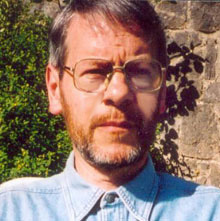
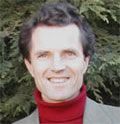
Kevin R. D. Shepherd
Citizen Initiative (CI) is my internet project commenced in 2007. I am a British author, born in 1950; more specifically, I am Irish-English, my father being Irish. My formulation of a citizen philosophy (in Pointed Observations, 2005) is ongoing. I view citizen independence in philosophy as a relevant option in the current situation, though without negating various traditional factors in the philosophical heritage.
My version of citizen initiative has included confrontation with drawbacks in “alternative” thought and practice relating to “new spirituality.” This website (my first) appeared in August 2007, including various documents which dispute factors in malfunctioning British organisations. Evasive political and bureaucratic agendas were also encountered. Issues relating to drugs and alternative therapy are incorporated in the coverage. There is also an entry on Wikipedia issues, arising from a problem of sectarian activist editing.
In relation to British events and epistolary efforts, some assessors have generously credited me with starting an unprecedented form of confrontation with trends and doctrines that are elsewhere beginning to be accepted without question, to the detriment of the public. Whatever the case, I hope that the information provided will be of interest and use. My other websites include:
Webpage Summaries:
PHILOSOPHY, RICHARD TARNAS, AND POSTMODERNISM
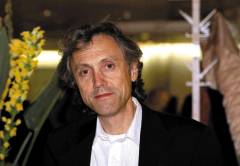 Richard Tarnas |
A citizen encounter with the provocative and widely read book by Professor Richard Tarnas entitled The Passion of the Western Mind (1991). That work reviews Western philosophy from a perspective positing a contemporary "epochal transformation." There is scope for disagreement in some of the themes employed. The controversial Epilogue favours a neo-Jungian trend as the current solution, and more specifically, the psychedelic and related therapy of Stanislav Grof. The book ends with the reflection: "Today we are experiencing something that looks very much like the death of modern man, indeed that looks very much like the death of Western man" (p. 445).
Such themes can obviously evoke a critical response. Some forms of academic literature create confusions amongst the public. The related "postmodernist" trend is a source of confusion in academic circles, let alone the popular media. There is also the factor that Grof holotropic therapy became part of the commercial "workshop" vogue. Despite the original "new age" intention to detour materialism and capitalist habit, contrary tendencies mean that the favoured word "holistic" is acutely devalued by diverse entrepreneurial "workshop" enthusiasms that are critically viewed by many observers.
Among the topics covered in this webpage is the argument of Immanuel Kant (d.1804) in his Critique of Pure Reason, a book which proved influential in the formation of academic philosophy. Tarnas tends to depict Kant as being part of a sequence in science and philosophy that led to contemporary alienation. Despite certain limitations of viewpoint and the consequences, Kant may have possessed some redeeming features by comparison with commercial "holistic" workshops. He was not a major cause of contemporary problems.
Tarnas tends to glorify Friedrich Nietzsche and Carl Gustav Jung, who represent "Romantic" factors that are open to dispute. The contemporary Nietzsche myth is not realistic, concealing a very disturbing mentality. The confusion about these subjects is currently extensive. Furthermore, the attendant theme of postmodernism allows for critical treatment of a subject notorious in some academic quarters for a relativist attitude, a drawback associated with Jacques Derrida and other exponents.
WIKIPEDIA ISSUES AND SATHYA SAI BABA

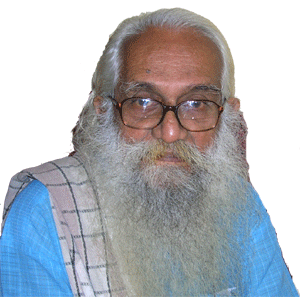
l to r: Sathya Sai Baba, Basava Premanand
Sathya Sai Baba (c.1926-2011) created the wealthy ashram of Puttaparthi in South India. His many devotees included politicians and court judges. His followers celebrate the multi-volume work Sathya Sai Speaks. He claimed to be a God-man, to perform miracles, and to be a reincarnation of Shirdi Sai Baba (d.1918). From the early 1970s, many Westerners became devotees of the "miracle" guru. However, there were numerous defections in the West after adverse internet reports commenced in 2000. Strong allegations emerged that many Indian boys, and also Western males, were the victims of homosexual molestation. Sathya Sai Baba has even been called a paedophile. There are other accusations also. The allegations are denied by the Sathya Sai movement.
Basava Premanand (1930-2009) was the representative of a growing Indian Rationalist party in reaction to Sathya Sai Baba. He pioneered exposure of the “miracles” claimed by the guru. Premanand complained of a terrorist dimension to local support for the guru, himself suffering violent beatings as reported to the BBC. However, the notorious “bedroom murders” of 1993 are more salient in the web archives. A lengthy book on those controversial murders was contributed by Premanand (Murders in Sai Baba’s Bedroom, 2001). A basic complaint of the Indian Rationalists is that socially prominent devotees in India obstructed the due investigation of allegations.
Influential devotees like Dr. Michael Goldstein repudiated many allegations of sexual abuse made against Sathya Sai Baba. These allegations were strongly profiled in the BBC documentary The Secret Swami (2004). Details also appeared in numerous web commentaries. A problem emerged on Wikipedia during 2006, caused by an American defender of Sathya Sai. In my case, the attacking Wikipedia User page of SSS108 was contrived; this was deleted several years later by Wikipedia manager Jimmy Wales.
My original Citizen Initiative webpage (of August 2007) was a defence against the Wikipedia User page of 2006. The Pro-Sai activist Gerald Joe Moreno (SSS108, Equalizer) countered with another attack resorting to libel. The extension entitled Kevin R. D. Shepherd in response to Gerald Joe Moreno answered the renewed offensive of Pro-Sai activism. See further Internet Terrorist Gerald Joe Moreno and Analysis of a Cultist Defamation.
The role of Wikipedia as an internet encyclopaedia has met with a strong degree of criticism, primarily because of the "anyone can edit" policy. See Wikipediocracy and Wikipedia Flaws.
GROF THERAPY AND MAPS
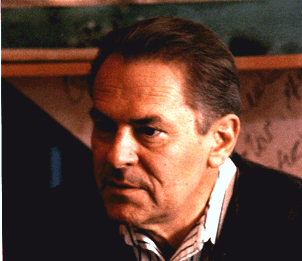
Stanislav Grof
Dr. Stanislav Grof is the author of numerous controversial books such as LSD Psychotherapy (1980) and Beyond the Brain (1985). His name is strongly associated with LSD therapy and MDMA therapy, two very disputed practices which became illegal in America many years ago. The most commonly visible Grof "therapy" is now Holotropic Breathwork, a trademark exercise which is also contested. This very commercial package was developed by Dr. Grof at the Esalen Institute in California when LSD therapy became illegal. Grof Transpersonal Training Inc. is no proof that radical therapies are valid.
The original title of this webpage was Criticism of Holotropic Breathwork and MAPS. There are many references to Holotropic Breathwork in my letters described below. The ideology of MAPS (Multidisciplinary Association for Psychedelic Studies) is also described, MAPS being a Grof-related project of Rick Doblin. MAPS depicted the legal restriction on psychedelic drugs in terms of political misinformation, urging that those drugs should be used in "scientific research and spiritual exploration."
In another avenue, Grof’s influential disciple Dr. Christopher Bache advocated LSD therapy to a considerable extent. A critical response to Grof theory is necessary, not least because there are current indications that many people are resorting to psychoactive drugs in the belief that these confer spiritual experiences. This deceptive belief is insidiously furthered by Grof and his disciples.
THE FINDHORN FOUNDATION: MYTH AND REALITY
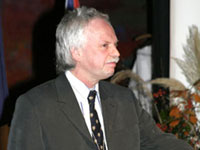
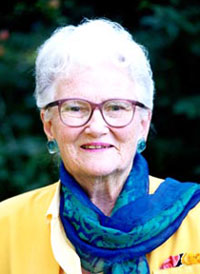
l to r: Alex Walker, Eileen Caddy, Craig Gibsone
This webpage analyses the Findhorn Foundation from their inception in 1962, together with antecedents. The co-founders of the 1960s were Eileen and Peter Caddy, who established themselves in the Findhorn Bay caravan park of Moray, Scotland. The account describes accumulating problems and discrepancies attending this “new age” community, becoming acute during the 1990s and after. One feature that emerges is the contradictory role of Eileen Caddy (d. 2006); details supplied by dissidents serve to accentuate omissions in the Times online obituary and other sources. Factors covered include community economic problems, the promotion of commercial therapy by the management, and the severe treatment of dissidents.
The article also mentions a disputed elevation of the Findhorn Foundation to CIFAL status via the Ecovillage extension (the Company status of CIFAL Findhorn Ltd, and the successor, was one of the issues). The presiding personnel, named in promotionalism for the Ecovillage project, included individuals associated with suppression of the dissident Kate Thomas and her maligned friends. The dissident problem tends to strongly contradict Findhorn Foundation sentiments and catchphrases relating to intentional communities and the commercial “conflict resolution.” A society or grouping which stifles dissent and creates stigma is basically questionable. See further Findhorn Foundation Discrepancies.
CIFAL FINDHORN LTD – A CRITICAL STATEMENT
CIFAL Findhorn Ltd emerged in 2006. This business occurred via UNITAR, the UN branch based in Geneva. Critics have shown that relevant data was suppressed by the various bodies involved. The “low carbon footprint” theme, promoted by CIFAL Findhorn Ltd, was not regarded as proof of surpassing accomplishment. The Findhorn Foundation was not ecologically sustainable. Anomalies were observed in the closely attendant commercial workshops of “new spirituality,” occurring within the Findhorn Foundation, an ongoing activity persisting over decades. CIFAL Findhorn Ltd was a facet of the Findhorn Foundation, existing on the same territory.
CIFAL Findhorn Ltd claimed to be “an International Training Centre for knowledge sharing on integrated sustainable development and other global goals of the United Nations.” The fantasised training centre never materialised. Such descriptions proved embarrassing to CIFAL Findhorn Ltd (subsequently CIFAL Scotland Ltd). The operative patron was UNITAR (United Nations Institute for Training and Research). UNITAR are officially “the UN training arm for social and economic development, environmental services and multilateral diplomacy.” The diplomacy involved total neglect of varied complaints about the inauguration of CIFAL Findhorn Ltd, including a warning from a professional accountant about former Findhorn Foundation accounts.
The official departments ignored complaints, heedless of any public disadvantages caused by commercial "therapy," which they effectively endorsed. The BBC also ignored dissidents, proving totally unreliable, serving to support the myth preferred by alternative therapists. The discrepancies continued over the years. In 2018, the Findhorn Foundation lost the officious shield afforded by CIFAL auspices. CIFAL Scotland Ltd terminated. Suicides were subsequently reported at the Foundation.
SEVEN LETTERS OF KEVIN R. D. SHEPHERD

Tony Blair
These seven epistles of complaint revolve around deficiencies visible in “new age” or “alternative” trends. The seven letters are reproduced in their entirety, along with introductions for the guidance of readers. Those letters include two to Tony Blair during his term as Prime Minister in Britain.
The First Letter to Tony Blair (April 2006) argues against the partiality for controversial Grof therapy doctrines visible in the Scientific and Medical Network (SMN). This drawback is associated with the nonjudgmentalism of David Lorimer, a key figure in both the Wrekin Trust and the SMN. These prominent “new spirituality” organisations in Britain are not beyond criticism. In addition, an extension dwells upon alternative trends of “Mind, Body, Spirit” that are commercially misleading.
The Second Letter to Tony Blair (September 2006) continued the identification of problems attaching to “new spirituality” in Britain, while complaining at bureaucratic inefficiency. The primary argument is pitched against the Findhorn Foundation, who are strongly associated with the promotion of alternative therapy and pop-mysticism of a lucrative kind. Findhorn Foundation promotions were observed to charge high fees for these indulgences. Yet this organisation gained the benefit of closely related CIFAL status in 2006, via the Ecovillage project associated with Craig Gibsone, Alex Walker, and other Findhorn Foundation celebrities. This project amounts to a telling compromise when the situation is closely analysed. Several of the other epistles also dwell upon the discrepancies involved.
I was a supporter of the Club of Rome in my first published work Psychology in Science (1983), and have commented upon the vindication of that approach in Pointed Observations (2005), Part 8. I have urged that purist ecology is not reducible to, and nor compatible with, the cause of alternative therapy (which has created misleading doctrines and health problems in some directions). It is now well known that alternative therapy relies heavily upon the subscription of affluent people who are beguiled by the ads for weight loss and other presumed benefits. The ecological cause should be separated from such commercial considerations.
In 1983, the ecological cause was viewed as speculative (even in the most sober versions) by politicians and industry. The cause has since been validated by climate scientists (after costly and potentially fatal delays). See further Climate Change Complexities and Climate Science. My conclusion is that ecology must comprise a science, not a convenience supporting commercial “workshops” of the Esalen variety. There are also other considerations which support the verdict that UNITAR, based in Geneva, did not accomplish due research into events occurring in north Scotland by 1996. Busy bureaucrats frequently overlook relevant data from other countries.
A document sent to the Home Office was About the Findhorn Foundation and United Nations (2006). That message was also circulated to various other bodies, including Moray Council, who failed to respond, economic (and tourist) gains being too much for them to surmount. The political and economic agenda, created to support CIFAL Findhorn Ltd, was committed to ignoring details that contradicted Findhorn Foundation promotionalism. The Home Office document affords information about obscured matters consigned to oblivion elsewhere. The oblivion was preferred by the Office of the Scottish Charity Regulator (OSCR).
The two Letters to OSCR (2006) attest the reluctance of that body to duly intervene in some doubtful tactics of the Findhorn Foundation, even though this organisation was officially discovered to be evasive about the promotion of Holotropic Breathwork. The OSCR was overawed by UNITAR and Moray Council, declining to reply further. The status of Scottish Charity regulation is currently in dispute. Money talks louder in official channels than more important considerations.
Two earlier epistles were circulated to a wide audience of politicians, academics, and other categories. The results are still ongoing. Noticeably failing to respond (save in one isolated instance) were the Scientific and Medical Network (SMN), whose pivotal figure was addressed in the Letter of Complaint to David Lorimer (2005). This lengthy epistle is now considered to be significant in British commentary pertaining to the “nonjudgmentalism” and “new spirituality” trends (also known as "anything for economic convenience").
The accompanying Letter to BBC Radio (2006) queries the activities of alternative therapy as visible in the curriculum of the Findhorn Foundation and their exemplar William Bloom, both being linked to the SMN and the Wrekin Trust. That letter arose in response to a radio chat programme considered to be misleading by some assessors. The chat fictions continued; there was no BBC interest in real life events. As for the SMN, Lorimer continued talk of the facile perennial philosophy and the evils of science in videos and online features. The perennial philosophy is a dead subject in the "new epoch" of discontinuum supplied by alternative therapy and related trends. There is more truth in science.
NEGLECTED PAPERS AGAINST GROF THERAPY
This article relates to the “LSD neoshamanism” issue associated with Stanislav Grof’s American disciple Dr. Christopher Bache. The LSD propaganda was contested by the British writer Kate Thomas, whose contributions were neglected by the British organisation known as the Scientific and Medical Network (SMN). The SMN chose to favour a contribution by Bache on their website for six years, ignoring the warnings against LSD therapy (and the strongly associated recreational use of LSD and MDMA in Grof circles). The Grof movement is inseparable from the subject of psychoactive drugs. The books of Stanislav Grof are based upon LSD sessions, which are given misleading neo-Jungian interpretations in the “perinatal” idiom devised by Grof. An influential book by Bache enthusiastically describes experiences arising in LSD sessions and Holotropic Breathwork (hyperventilation). Thomas supplied a different interpretation of those experiences.
The Thomas version of mysticism is attended by an unusually realistic assessment of shamanism in counter to new age romanticism. SMN “nonjudgmentalism” discarded the Thomas version in preference for Bache's LSD neoshamanism, which remained an influence in public view on the SMN website for six years until 2010. SMN appetites and partialities were here demonstrated. The two neglected but relevant articles of Thomas are reproduced on the present site. In addition, a paper by Stephen Castro, appearing in 1995, is included as testimony to the drawbacks in Holotropic Breathwork that were observed at the Findhorn Foundation during 1989-93, before official intervention occurred.
Shortly after, Castro wrote his significant book Hypocrisy and Dissent within the Findhorn Foundation (Forres, 1996). That work was published in the face of overwhelming misconception, created by deceptive promotionalism. Nevertheless, the Castro critique gained acknowledgment from close analysts as a courageous stand against bad management. The Castro report was favourably reviewed in some well known journals before the devious Findhorn Foundation internet ploy of 2002. This superficial tactic discrepantly declared that Hypocrisy and Dissent was not worthy of review, a dogmatic verdict which showed no awareness of other published viewpoints, including the endorsement from ICSA.
SCIENTIFIC AND MEDICAL NETWORK AND THE FINDHORN FOUNDATION

l to r: Dr. Peter Fenwick, David Lorimer, Kate Thomas
The Scientific and Medical Network (SMN) is a British organisation having the anomalous reputation of a haven for alternative therapy and “new spirituality.” Kate Thomas was a member for some years until she resigned in 2004. She here describes her encounters with the SMN, the Wrekin Trust, and the Findhorn Foundation. These three organisations were interlinked in terms of affiliations and some degree of shared conceptualism. The account of Thomas has been considered a rare insight into the problems denoted by “new spirituality.” In particular, she describes her contact with David Lorimer, the leading organiser of the SMN and a major official of the Wrekin Trust.
A crisis occurred when Lorimer sanctioned the inclusion of Dr. Christopher Bache as a speaker in 2003, making no objection to Grof doctrines of LSD therapy. Lorimer had penned an enthusiastic review of Bache’s LSD book Dark Night, Early Dawn (2000). The eminent neuropsychiatrist Dr. Peter Fenwick, a presidential figure of the SMN, was in private agreement with the counter-argument of Thomas. However, he was not prepared to openly contradict David Lorimer.
When Thomas resigned in 2004, Lorimer instigated the inclusion of a controversial pro-LSD article by Bache on the SMN website. In this psychedelic enthusiasm, Lorimer neglected to include the opposing article by Thomas which had appeared in the SMN journal in 2003. The pro-Bache tendencies of David Lorimer were thus confirmed in an obvious gesture of favouritism. The Bache article advocates LSD therapy as a spiritual path, and is far more decisive on this issue than the questioning title suggests ("Is the Sacred Medicine Path a Legitimate Spiritual Path?").
The extremist pursuit of LSD therapy, via the Bache article, was still being openly promoted on the SMN website (www.scimednet.org) in 2010. This was the sixth year running that the SMN were openly celebrating LSD therapy, despite a trite disclaimer of responsibility for views expressed on their website. The general impression gained was SMN approval. The absence of appropriate social responsibility was perturbing. That same year, the Articles Archive was moved from public view to a log-in procedure for SMN members, with only the article titles being publicly visible. The title of the Bache article was still openly listed, with no accompanying details.
Critics say that the SMN form of “new spirituality” nonjudgmentalism is potentially disastrous for the younger generation, and also very inadvisable for the older generation (especially the gullible sector frequently recruited by the SMN, the Wrekin Trust, and the Findhorn Foundation). The absence of a due sense of moral responsibility is a frequent hallmark of new age nonjudgmentalism. Six years of public view web advocacy of LSD ingestion, ignoring all the complaints made during that period, is something not easily forgotten. See further David Lorimer, SMN and Contesting New World Values.
LETTER OF KATE THOMAS TO UNESCO
In September 2007, Kate Thomas sent a substantial letter of complaint to the Director General of UNESCO at Paris. That document describes discrepant policies and attitudes maintained by the Findhorn Foundation, an organisation here revealed in a very different light to the promotionalism favoured by the management. This promotionalism influenced official parties who ignored the issue of due accountability for drawbacks in a suppressive milieu, one which undertook continual commercial expansion since the 1970s. However, the dissident complaint did gain some support. A belated reply from the indifferent UNESCO was evoked in an ongoing confrontation with the Findhorn Foundation, a situation involving a complaint via British solicitors. See further Kate Thomas and the Findhorn Foundation.
None of the written materials on this website may be copied for public use or posting without written permission.